Most people buy a mattress the way they buy a used car: they lie on three of them for four minutes each, ask which one is "medium," and sign the paperwork. Then they spend the next eight years wondering why their lower back aches by Thursday afternoon.
Learning how to choose a mattress is not about finding the softest surface you can afford. It is about finding the one that holds your spine in the same shape it takes when you stand up straight. In eighteen years of practice, that single idea has settled more sleep complaints than any pillow, topper, or stretching routine I have ever recommended.
This guide is the process I run, in order, plus the two items worth putting at the top of your list before you walk into a showroom: a book that teaches the vocabulary, and a budget foam mattress that makes the vocabulary concrete.
Why you should trust me
I am a chiropractor in Charlottesville, Virginia. Eighteen years in, I stopped counting the patients who came in with low back pain that traced back to a mattress they had owned for a decade. The conversation always ended the same way: "my mattress is fine," said by someone sleeping on a surface with a visible body impression in it.
So I started reviewing mattresses instead of just talking about them. I have slept on more than 60 of them, each for at least 30 nights, and I keep a logbook of what happened and which patients stopped complaining. I test with a pressure map sensor pad, not a marketing label. I check edge support by sitting on the edge the way you sit when you tie your shoes. I come back at six months and look for sag.
Two things I will not do. I will not tell you a mattress cures back pain, because nothing cures back pain and I know better. And I will not tell you a mattress is firm or soft based on what the box says. Show me the pressure map.
How I judge a mattress
Every mattress that gets a real review from me goes through the same four checks.
A 30-night trial, minimum. Four minutes on a showroom floor tells you almost nothing. Your body adapts for the first two weeks and then it tells you the truth. Anything shorter than a month is a first impression, not a review.
A pressure map. This is a sensor pad that shows where your weight concentrates. A good mattress spreads that load across your hips, shoulders, and rib cage instead of spiking it in one place. If you wake up with a numb arm or a sore shoulder, the map usually explains why.
Foam density and coil gauge. Density is the weight of the foam per cubic foot, and it is the single best predictor of how long a mattress lasts. Low-density foam feels great in month one and sags by month twenty. Ask for the number in writing. If a brand will not give it to you, that is your answer.
Edge support and motion transfer. Sit on the edge. If it collapses under you, you will hate the mattress within a year, because you sit on the edge every single morning. Then have your partner roll over while you stay still. If you feel it, you will feel it every night for a decade.
None of that has anything to do with the word "medium." That word is a marketing decision, not a measurement.
Two things worth buying before you shop
You cannot run a pressure test in your head. Get the vocabulary first, then get a mattress you can learn on without spending a fortune.
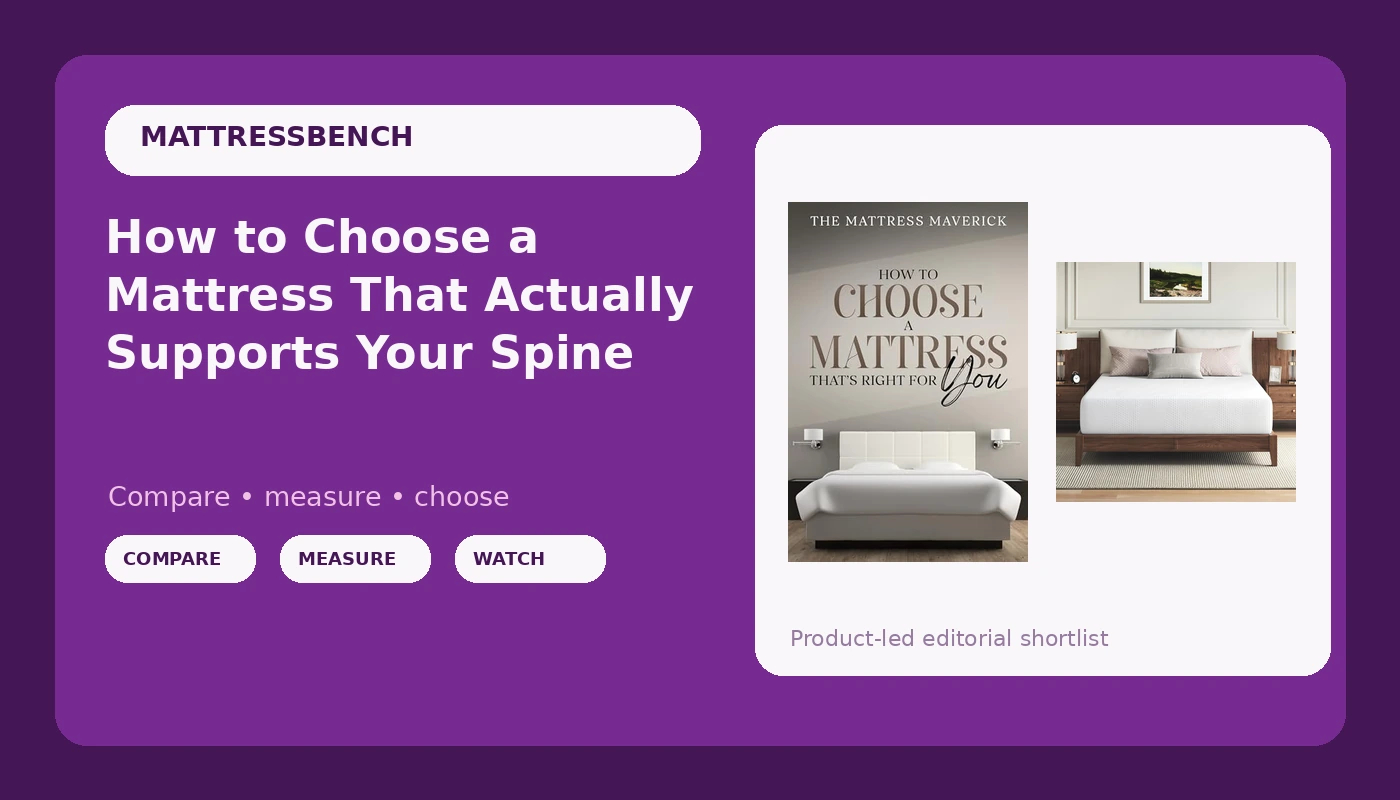
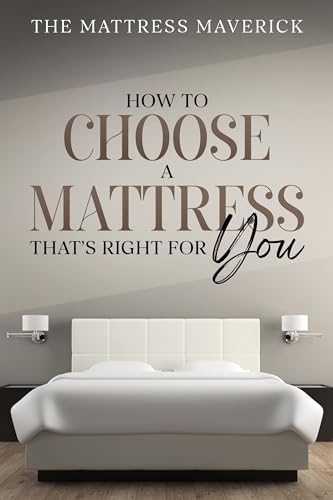
The reference: The Mattress Maverick: How to Choose a Mattress That's Right for You
 Visit on Amazon →
This is a book, not a mattress, and that is the entire point. The hardest part of buying a bed is not the money. It is that the person selling it knows the vocabulary and you do not. You end up asking "is this one soft?" while the salesperson talks about density, gauge, and transition layers, and you nod at all of it.
A book-length walk through the decision gives you the words back. Support versus comfort. Foam density versus foam thickness. Coil gauge. What a trial period actually covers and what a warranty actually promises. Those are the questions that decide whether you are happy in year three.
Read it before you shop, not after. Check current Amazon price.
Flaws but not dealbreakers: A book cannot tell you how your shoulder feels at 3 a.m. on a specific slab of foam. It hands you the questions. Your own body supplies the answers.
Anyone buying a first mattress, or a first mattress in a decade, will get their money's worth out of the two hours it takes to read.
The budget candidate: Novilla Queen Size Mattress, 14 Inch Gel Memory Foam Mattress for Cooling
 Visit on Amazon →
The Novilla is a 14 inch gel memory foam queen, and it is a useful teaching example because it puts the two most overhyped words in this industry right in the product name: gel and cooling.
Here is what those words do and do not mean. A gel infusion can move heat around inside the foam a little. It is not air conditioning, and no mattress with foam in it is going to feel like a cold side of the pillow at 2 a.m. If you sleep hot, the things that actually matter are how much airflow the construction allows, what you put between you and the surface, and how much of your body is in contact with it. A 14 inch profile does something more useful than the gel does: it gives the mattress room to layer, with softer foam up top for pressure relief and denser foam underneath for support.
Before you order, ask two questions in writing. What is the density of the support foam? And what does the trial and return policy actually cover, including who pays return shipping? Check current Amazon price.
Flaws but not dealbreakers: Memory foam is a warm material by nature, and edge support on a foam mattress is rarely as strong as a good innerspring. If you sit on the edge of your bed every morning, put your full weight on that edge before you commit.
Anyone furnishing a guest room, or replacing a first apartment mattress on a tight budget, should look here. If you already have a diagnosed spine issue, spend more and start with a mattress that publishes its pressure and density data.
The five questions that decide everything
Does it hold your spine in neutral? Lie on your side, which is how most people actually sleep. Your hips and shoulders should sink enough to relieve pressure, and your waist should stay roughly level with the rest of your spine. If your waist sags into the mattress, it is too soft. If your shoulder is jammed up toward your ear, it is too firm. This is the whole ballgame.
Where does your weight concentrate? Heavier hips and broad shoulders need more give in the top layers and more support underneath. A pressure map shows this instantly, but you can feel it too: any spot that goes numb or hot after twenty minutes is a pressure spike.
Does the edge hold you? Sit on the corner with both feet off the floor. A good mattress holds most of your weight. A bad one folds you toward the floor and takes the usable sleeping surface down with it.
Does it move when your partner moves? Foam isolates motion better than coils. If you share a bed with someone who gets up at 5 a.m., this matters more than anything else on the list.
Will it still be a mattress in year seven? That comes down to density in the foam and gauge in the coils. Everything else is comfort preference.
The actual choosing process
Step one: write down how you sleep. Side, back, stomach, or a mix. Side sleepers need more pressure relief at the shoulder and hip. Stomach sleepers need a flatter, firmer surface so the lower back does not arch. Most people guess wrong about this, so ask your partner.
Step two: set a range, not a number. Decide what you can spend and refuse to be talked above it. A mattress is a seven to ten year purchase. The cheap one that sags in year two was never cheap, but neither is the one you financed for four years and hate.
Step three: test in your sleeping position. Not on your back for thirty seconds with your shoes on. Lie down the way you actually sleep and stay there for fifteen minutes. Bring your own pillow if the store will let you.
Step four: sit on the edge. Every time. Both sides if you share the bed.
Step five: get the numbers in writing. Foam density, coil gauge, layer thicknesses, and the height of the mattress. If the salesperson cannot produce them, that is information too.
Step six: read the trial policy before you pay. How many nights, who pays return shipping, is there a restocking fee, does the mattress have to be unmarked, and does the warranty require a specific foundation.
Step seven: sleep on it at home for the full trial. Keep a note each morning for the first two weeks and again at night thirty. Memory of how a bed felt is unreliable. A log is not.
Step eight: check your foundation. A sagging box spring or bowed slats will make a good mattress sag with it. Foam mattresses usually want a solid platform or closely spaced slats, and using the wrong base can void the warranty.
Step nine: rotate it and protect it. A waterproof protector keeps sweat and oils out of the foam, which is what actually shortens a mattress's life. Rotate head to foot every few months.
Step ten: measure the sag at six months. Put a straightedge across the surface and look for the dip. If there is a visible impression where you sleep, document it while the warranty is still fresh.
The caveats nobody tells you
"Medium" means nothing. Every brand's medium is different, and some are bricks with a pillowtop stapled on. Ignore the label and trust the pressure test.
Cooling claims are the most overhyped thing in this industry. A gel layer is not air conditioning. If you sleep hot, look at airflow through the construction and what you put on top of it.
A warranty is not a lifespan guarantee. Most warranties cover manufacturing defects, not the normal softening that happens to every mattress. Read what counts as a defect.
No mattress cures back pain. I say this as a chiropractor. A mattress that holds your alignment removes one aggravating factor. It is not treatment, and anyone selling it as treatment is selling you something.
The trial period is not free if you pay return shipping. A "100 night risk free trial" with a shipping charge and a restocking fee is a rental with extra steps.
A boxed mattress needs time. Give it a full day to expand, let it air out if the smell bothers you, and do not judge it on night one.
What this costs you over ten years
Do the math per night, not per purchase. Divide what you pay by the number of nights you expect to sleep on it. A mattress that lasts ten years spreads its cost across roughly 3,650 nights. A cheaper one that develops a body impression in year two spreads its cost across 730 nights and then costs you another mattress on top of it.
That is the whole argument for spending up front. Not luxury. Arithmetic.
The book costs less than a dinner out and takes an evening. The mattress is the part where the pressure map, the density number, and the edge test do the deciding. Run those three checks on anything you are considering, and you will not need a salesperson to tell you what is right for you.
That is the job. Your spine does not care what the label says.