Most people shop for a mattress for spinal alignment by reading a firmness label. Firm, plush, medium, pillow top. None of those words are measurements. They are categories, and every brand draws the lines in a different place, which is why two beds both labeled medium can feel like a park bench and a marshmallow.
I have been a chiropractor for 18 years, and a good chunk of the back pain I treat traces back to a mattress that is either too old, too soft where it matters, or set up wrong from day one. The fix is rarely a new bed. It is an order of operations.
This guide walks through that order: how to size the pieces, what has to happen before you sleep on a new foam mattress, how to run the alignment and pressure checks at home, and when a comfort layer helps versus when it just delays a replacement. It is built around two specific pieces, one base layer and one comfort layer, because it is easier to explain the method with real examples than in the abstract.
Why you should trust me
I keep a logbook of which mattresses my patients stop complaining about. It started as a clinical habit and turned into a decade of sleeping on more than 60 mattresses, each one run through the same protocol: a 30-night trial, a pressure-point check with a sensor pad, and a durability assessment after six months of real use.
That protocol is why I will not tell you a bed is supportive because the box says so. Firmness is personal. Support is not. A mattress that lets your hips sink out of line with your shoulders is a mattress that hurts you, no matter how it feels in the first ten minutes.
I also have a bias worth naming up front. I think cooling claims are the most oversold thing in this industry. A gel layer is not air conditioning. If you sleep hot, airflow and surface breathability matter far more than the word "gel" on a label, and the piece in this guide that actually addresses heat is a textile, not a foam.
How I picked and how I tested
Everything that earns a full review here goes through 30 nights on my own frame, a pressure map, and a six-month durability check. Neither of the two pieces below has cleared that bar yet, so what follows is a fit-and-spec assessment: what each piece is, what it is for, how it should be sized and installed, and where I expect it to fall short. When the trials are logged, the pressure maps go in.
Here is what I looked at while choosing them for this guide:
- Sizing. A setup fails at the sizing step more often than anywhere else. Twin XL and queen are both 80 inches long and nowhere near the same width, and a pad built for one will not stay on the other.
- Material role. A base layer holds alignment. A comfort layer changes surface feel. Confusing the two is how people end up buying a topper to rescue a mattress that has already broken down.
- Depth and fit. Toppers and pads have a pocket depth range. If your mattress is thicker than the range, the corners pop off every night, and you will blame the pad for a measurement error.
- Heat. Breathable covers and airflow matter to hot sleepers. Foam, including gel foam, traps heat. That is physics, not marketing.
- Edge support. If you ever sit on the edge of your bed, and you do, the perimeter has to hold you. This is the first thing that fails on many foam beds.
The two pieces of the setup
A bed is a stack. Support comes from the bottom, feel comes from the top. These two products sit at different levels of that stack, and they are not interchangeable or competing with each other.
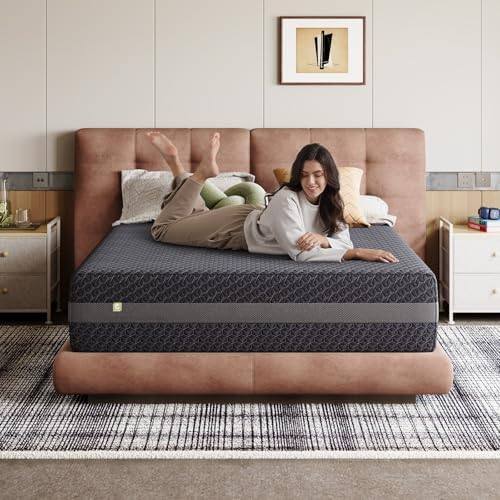
The base layer: Novilla Queen Gel Memory Foam Mattress 12 Inch for Spinal Alignment
 Visit on Amazon →
This is the foundation piece: a 12 inch gel memory foam mattress in queen size, built and named around spinal alignment. Twelve inches gives you a meaningful comfort layer over the support core, which is the profile that usually reads as a softer surface with a firmer base under it. That split is exactly what you want for alignment, because the top layer conforms to shoulders and hips while the base keeps your midsection from dropping.
Two honest notes. First, memory foam sleeps warm. The gel infusion is not going to change that in any way you would notice on a July night, so plan for a breathable cover and a cooler room. Second, foam perimeters are the weak point on beds in this class. Sit on the edge for a full minute before you commit to the setup, and if the corner collapses under you, that tells you what you need to know about the bed's construction.
Check current Amazon price before you decide, and confirm the queen dimensions against your frame. A 12 inch queen needs a foundation that can carry it without flexing.
Flaws but not dealbreakers: Foam density is the number that predicts how long a bed lasts, and it is rarely printed on the box. Ask, or assume a shorter service life and plan to rotate.
Anyone starting fresh, or replacing a mattress that has already developed a dip, should be looking at this layer first.
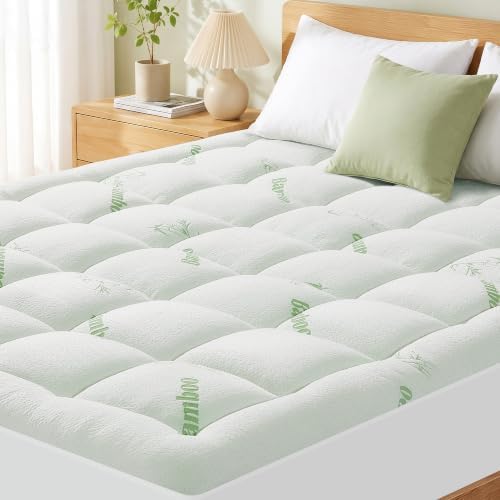
The comfort layer: Mattress Pad Twin XL Size, Cooling Pillow Top Mattress Topper, Ultra Soft Viscose Made from Bamboo, Breathable for Hot Sleepers, Deep Pocket 8"-20", White
 Visit on Amazon →
This is the comfort layer, and it is a textile rather than a slab of foam. The cover is viscose made from bamboo, which is a breathable fiber, and that matters more for a hot sleeper than any gel bead ever will. The deep pocket is listed at 8 to 20 inches, which covers nearly every mattress sold today, including the 12 inch bed above if the sizes matched.
They do not match. This pad is Twin XL, and the mattress above is queen. That is not a flaw in either product, it is a sizing fact you need to catch before checkout. Twin XL is 38 inches wide and 80 inches long, the same length as a queen but 22 inches narrower. If you are outfitting a queen, order the queen pad. If you are outfitting a Twin XL, this one is the right call.
There is also a claim here I want to translate. A pillow top pad softens the surface you sleep on. It does not add support, and it cannot fix a mattress that sags, because the pad follows the dip rather than filling it. If your bed is too firm and your shoulders or hips hurt from pressure, a pad like this is a legitimate fix. If your bed has lost its structure, this is a cover for a problem.
Check current Amazon price, and measure your mattress depth before ordering so the pockets actually grip.
Flaws but not dealbreakers: A thick pillow top changes the feel of a bed enough that your sheets may fit tighter and your mattress may run warmer underneath. Wash it before the first night and it will sleep cooler.
Anyone with a too-firm mattress, or a hot sleeper who wants a breathable surface, gets the most out of this piece.
The actual setup workflow
Now the part that matters. This sequence works whether you bought something new or you are trying to figure out what is wrong with the bed you already own.
Step one: Measure before you buy anything. Write down your mattress width, length, and depth. Queen is 60 by 80. Twin XL is 38 by 80. Depth determines whether a pad's pockets will grip. Half of the returns I hear about are measurement errors, not product failures.
Step two: Check the foundation. Foam needs a rigid, ventilated base. Slats should be close together, no more than a few inches apart, and a solid platform beats a flexing box spring every time. A supportive mattress on a flexing foundation is a supportive mattress that will not stay supportive.
Step three: Let the mattress expand. If it shipped compressed, give it 24 to 72 hours in a warm room before you judge it. Sleeping on a bed at hour four is not a review. It is a compressed mattress, and it will feel firmer and flatter than it actually is.
Step four: Sleep on the bare mattress first. No pad, no protector, just a fitted sheet, for at least a week. You cannot evaluate a mattress through a comfort layer. Get your baseline, then add the pad if you need softer.
Step five: Do the alignment check. Lie on your side. Have someone look at you, or take a photo from across the room at hip height. Your ear, shoulder, hip, and ankle should form a straight line. If your hips sink noticeably below that line, the surface is too soft. If there is a visible gap under your waist, it is too firm.
Step six: Run the pressure check. Twenty minutes on your back, twenty on each side. Note where you go numb or hot: heels, hips, shoulders. Pressure points that show up in the first half hour will wake you at 3 a.m. This is the cheap version of the sensor pad I use, and it catches most problems.
Step seven: Test the edge. Sit on the edge of the bed with your feet on the floor for a full minute. If the perimeter collapses to the point where you slide forward, the bed will feel smaller than it is every morning when you get dressed.
Step eight: Give it 30 nights. Firmness perception changes over the first month as foam warms and softens. Judge it at day 30, not day three. Return windows exist for exactly this reason.
Step nine: Rotate, then check at six months. Rotate the mattress head to foot at the 30-day mark and every three months after. Foam beds get rotated, never flipped. At six months, lay a straight edge across the surface where you sleep. A visible dip of an inch or more is a mattress that is already failing, and no topper will save it.
What this guide leaves out
The two pieces above cover a foam base layer and a textile comfort layer. They do not cover innerspring construction, latex, adjustable bases, or pillow selection, all of which change alignment and all of which deserve their own guide. If you are a traditionalist who wants coils under you, that is a different shopping trip.
I also left out the competing categories on purpose. A gel foam queen and a Twin XL bamboo pad are not rivals. One is the bed, one is what goes on top of the bed, and the only decision that connects them is size.
What it all costs
I do not quote prices here, because they move. Check current Amazon price on both pieces and do the math yourself, because the math is the easy part.
The number that matters is cost per night. A mattress is a 7 to 10 year purchase. Divide what you pay by roughly 2,500 nights and you get the real number, and it is almost always smaller than people expect. The pad is a fraction of the mattress and a fraction of that fraction, and it is the cheapest way to change how a bed feels without replacing it.
What is not cheap is the sagging mattress you keep for a third year because you already paid for it once. The bed that fails in year two was never the bargain it looked like. That is the whole argument for doing the setup right the first time: measure, foundation, expansion, bare-mattress baseline, alignment check, pressure check, 30 nights, rotate, and a six-month straight-edge inspection.
That is the job. Your spine does not care what the label said. It cares whether the bed holds the line.