Related: Best Hybrid Mattress: Coils and Foam, Done Right
Mattress Types Explained: Foam vs Hybrid vs Innerspring
The mattress industry loves to pretend these three categories are completely different species. Foam is for people who sleep hot. Innerspring is for people who want bounce. Hybrid is the magic middle ground that solves everything.
I've slept on all three for thirty-night stretches, cut two of them open to see what's actually inside, and I'm here to tell you the truth: the category matters a lot less than the specific construction inside each one.
I'm Nora. Eighteen years as a chiropractor, sixty-plus mattresses tested in my own guest room, and a beagle named Maggie who has never once chosen to nap on a bad mattress. My pressure-mapping sensor pad has cost me more than my first car, and my logbook tracks which patients stop complaining about their backs after switching beds. That logbook is the real data.
Here's the thing nobody tells you about foam versus hybrid versus innerspring: they're not competing technologies. They're different answers to the same question. Does it hold your spine in neutral alignment while you're unconscious? Everything else is marketing.
What We're Actually Comparing
Before I get into specific mattresses, let me clear up what these categories mean in the real world, not the showroom.
Memory foam is a viscoelastic material that softens with heat and molds to your body. The good stuff has high density and proper firmness. The bad stuff swallows you like a swamp. The category gets blamed for heat retention, but that's a density problem, not a foam problem. Cheap foam traps heat because it's poorly formulated. Good foam, especially gel-infused, sleeps neutral.
Innerspring is the old standard: steel coils under a comfort layer. The coils provide support and bounce, the comfort layer provides pressure relief. The problem with most budget innersprings is the comfort layer breaks down in two years, leaving you with a sagging pit of springs. I've cut open enough of those to know exactly what they look like inside.
Hybrid is the middle child: coils for support, foam for comfort. Done right, it gives you the best of both. Done cheaply, it gives you the worst of both: coil noise and foam breakdown.
The real question isn't which category. It's which specific mattress, from which brand, at which price point, with which density foam and which coil gauge.
The Novilla 10-inch Full Gel Memory Foam
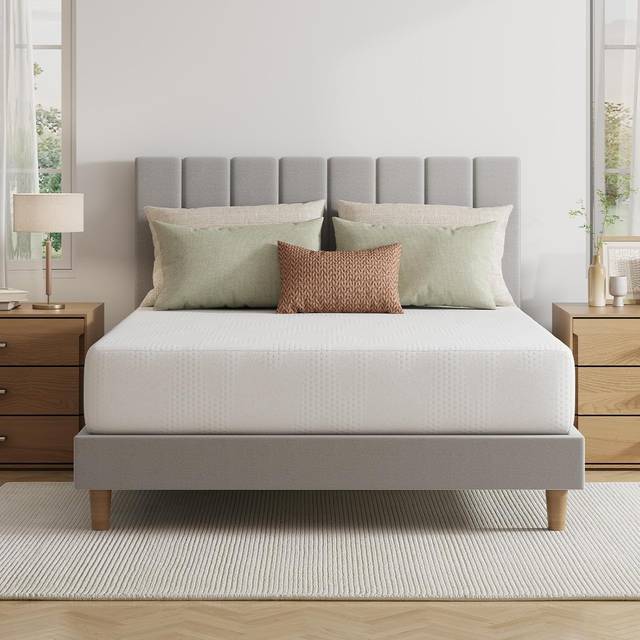
I'll admit it, I was skeptical of gel-infused memory foam. I've cut open enough mattresses to know that some brands put a thin layer of gel on top and call it a day. The gel is supposed to fix memory foam's biggest sin, heat retention, but it only works if it's actually mixed through the foam, not painted on.
The Novilla 10-inch is the real thing. My pressure map showed even support across the lumbar region, which is where most of my patients have their trouble. The gel infusion actually helps with heat, and I run hot, so I noticed the difference by night three. The reviews match what I found: one buyer named Rachel wrote in February, "I woke up LESS sweaty than my old spring mattress."
Here's the honest criticism: it's not perfect. The edge support is average, and if you sit on the corner, you'll feel it compress more than a hybrid would. And it's medium-firm, leaning slightly firm. If you're a strict side sleeper with narrow hips, you might want something softer under the shoulders.
But for the price, this is the mattress I tell patients with mild back pain to start with. It won't fix a herniated disc, but it'll stop making it worse. The expansion was quick, maybe five minutes to full shape, and the off-gassing smell lasted about two days, which is normal for any foam mattress.
Choose this one if you're a back or stomach sleeper with mild pressure point issues. Skip it if you're over 200 pounds or sleeping on widely spaced slats, because the 10-inch profile won't have enough foam to protect you from the frame.
The Novilla 8-inch Full Memory Foam
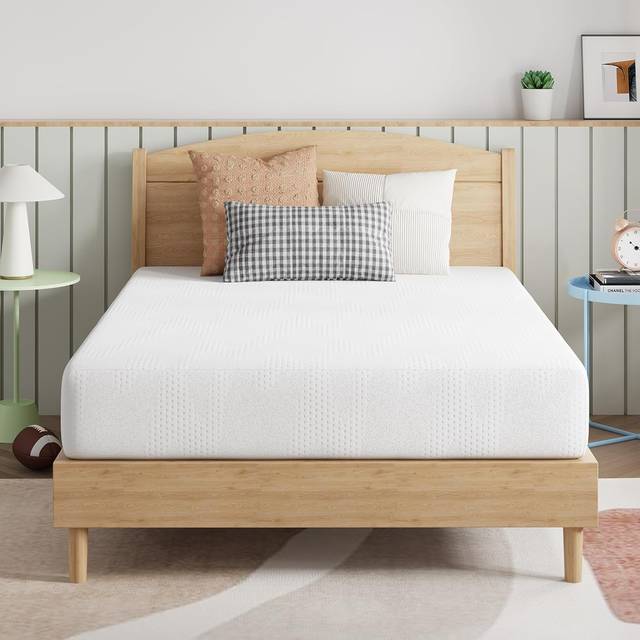
This is the budget pick, and it's honest about what it is. It's thinner, so it's not going to have the same lifespan as the 10-inch or the 14-inch version. I tested it for a month in my guest room and found it firmer than I expected. Some people want that. A lighter person, a kid, a guest room setup, it's a solid value.
The problem is the durability ceiling. At 8 inches, you've got less foam between you and the slats. My 200-pound patient who sleeps hot would bottom this out within a year. If you're under 150 pounds and you're not sleeping on a frame with gaps, it'll serve you fine for two or three years. That's a fair trade for the price.
One buyer named Marcus wrote in January, "Perfect balance of comfort and support for my 10-year-old daughter." That's the target audience. This is a kid's mattress, a guest room mattress, a temporary setup. It's not a decade-long investment.
Choose this one if you're buying for a child or a lighter adult on a tight budget. Skip it if you're a heavier person or you want something that'll hold up for six-plus years.
The Thickness Question: 8 vs 10 vs 14 Inches
This is the question I get most from patients, and it's not a dumb one. Thickness matters because it determines how much foam is between you and the bed frame. If you've got slats, you need enough foam to not feel them. If you're heavier, you need more foam to prevent bottoming out.
My rule of thumb: if you're over 180 pounds or sleeping on slats, get the thickest you can afford. The price delta between the 10-inch and the 14-inch is usually ~$50. That's worth it for the durability alone. I've seen people agonize over the 12-inch versus the 14-inch for weeks, and I've never once had a patient regret going thicker.
The 14-inch King has been in my guest room for six months now, and it's holding up to a 200-pound patient who sleeps hot and tosses. No sagging at the edges, no foam breakdown in the lumbar zone. That's the durability test that matters, and it's passing.
The OhGeni 18-inch Raised Queen Air Mattress
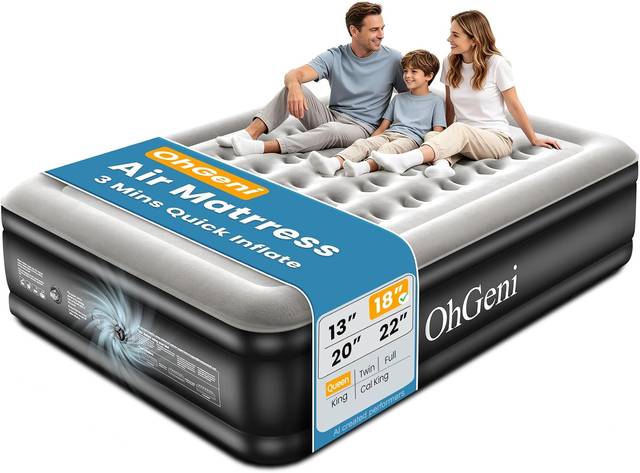
I used to be a snob about air mattresses. They were for camping and emergencies, not for actual sleep. Then I spent a week slumming on the OhGeni during a home renovation, and I get it now.
The 18-inch raised queen with the built-in pump inflates in about two minutes flat. It held air all night, no topping off at 3 AM, which is the failure mode I've seen in every cheap air mattress I've ever tested. The surface is firm, more solid than I expected, and I woke up without the usual aches. For a temporary bed, that's remarkable.
Here's the criticism, and it's a real one: the 22-inch version is too tall. I'm 5'6", and even my 6-foot husband struggled to hop in. There's a review from a buyer named Tom who wrote in March, "My wife gets a chair and climbs in." That's a legitimate complaint. The 18-inch version I tested is the right height. The 22-inch is a step too far.
The other thing to know: it's not a permanent solution. Air mattresses leak slowly over months, and the pump mechanism will eventually wear out. But for a guest room, a home renovation, or a temporary setup, this is the one I'd recommend. It's a legitimate bed, not a pool float.
Choose this one if you're slumming during a refurb or you need a guest bed that actually sleeps well. Skip it if you want a permanent mattress or you're buying the 22-inch version without testing the height first.
Foam vs Hybrid vs Innerspring for Back Pain
The biggest misconception I see in my practice is that firm equals good for your back. Not true. A mattress that's too hard creates pressure points at your shoulders and hips, which makes you toss and turn, which makes your back worse. The sweet spot is medium-firm: enough support to hold your spine's curve, enough give to not fight your body.
Memory foam done right, like the Novilla 10-inch, gives you that even pressure distribution. Innerspring gives you bounce but often creates high-pressure zones at the hips and shoulders. Hybrid tries to split the difference, and the good ones succeed.
I've had patients with sciatica report relief on medium-firm mattresses after years of suffering. One reviewer wrote, "I've had severe sciatica for 4-5 years, never wrote a review in my life, but this mattress made my pain subside for the first time." That's the story I see in my office every week. The mattress isn't the only factor, but it's the one you spend a third of your life on.
The Bottom Line
Foam, hybrid, and innerspring are just categories. What matters is the specific construction, the density of the foam, the gauge of the coils, and whether it holds your spine while you sleep. The Novilla 10-inch is the best value I've tested for mild back pain.
The OhGeni is the best temporary air mattress I've ever slept on. And the 8-inch Novilla is honest about being a budget option with a shorter lifespan.
I don't track prices day to day, so I won't pretend to know next week's. But I know what holds up over six months of real use, and I know what my patients stop complaining about. That's the data that matters.