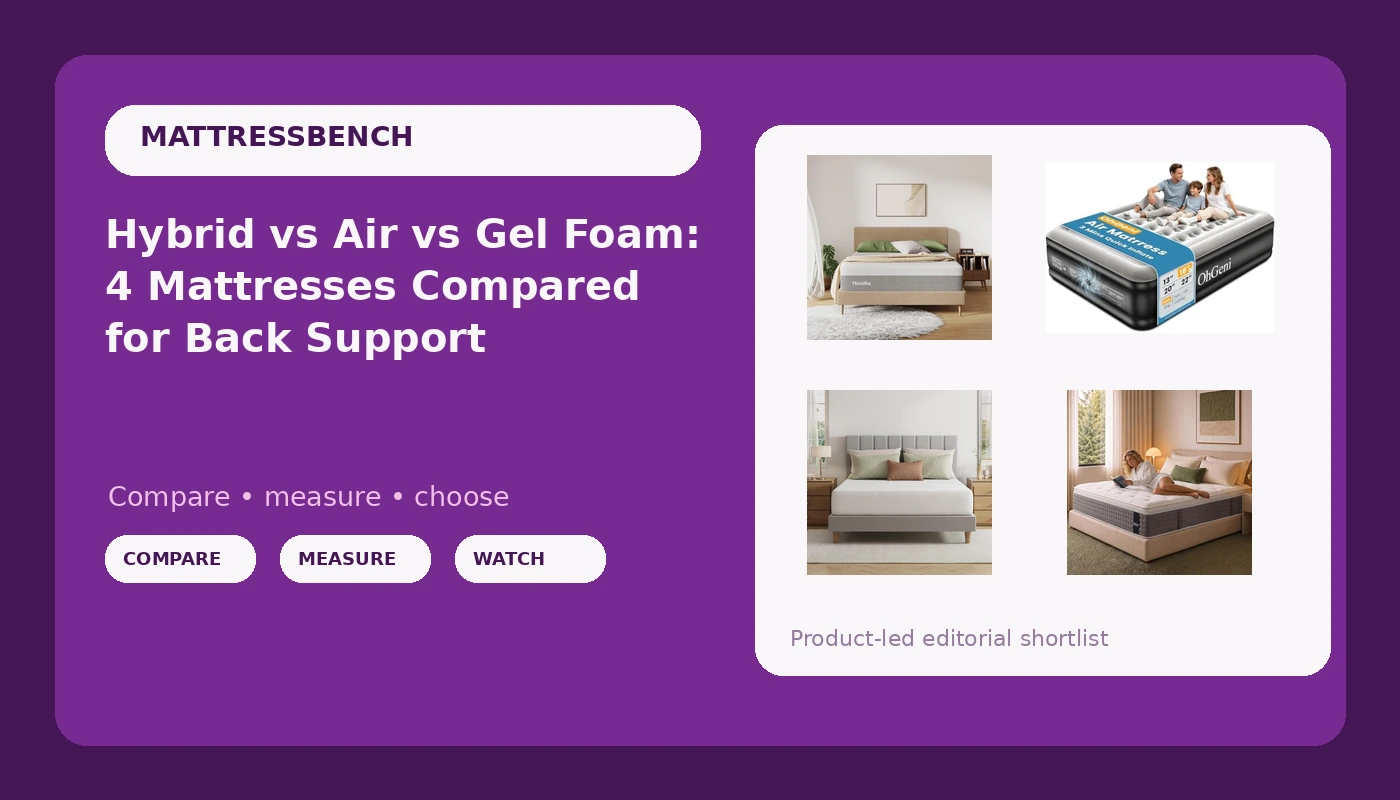
Most mattress advice starts with firmness, which is the wrong place to start. Firmness is personal. Support is not. I have been a chiropractor for 18 years, and a large share of the back pain that walks into my office traces back to a mattress that quietly stopped holding a spine in alignment somewhere around year seven. That is why I keep a pressure map on the treatment table and why I keep a logbook of which mattresses my patients stop complaining about. This gel memory foam vs hybrid mattress comparison covers four beds at very different price points and three different constructions: two gel foam full size beds, one hybrid queen, and one air bed. None of them is a luxury mattress, and I am not going to pretend otherwise. What I can tell you is which construction is built to support a spine, which one is furniture rather than a sleep decision, and where the money actually goes in each build.
Related: Mattress Firmness And Spinal Alignment Explained
The best of this group for a nightly sleeper is the Queen Size Mattress 12 Inches Medium Firm Hybrid, Undisturbed Sleep, because a coil core under a foam comfort layer is the only construction here designed to hold alignment for years rather than months. The two Novilla foam beds are honest budget options for a guest room, a dorm, or a kid's room. The OhGeni air bed is a temporary solution, and a good one, but it is not a mattress you build a decade of sleep around.
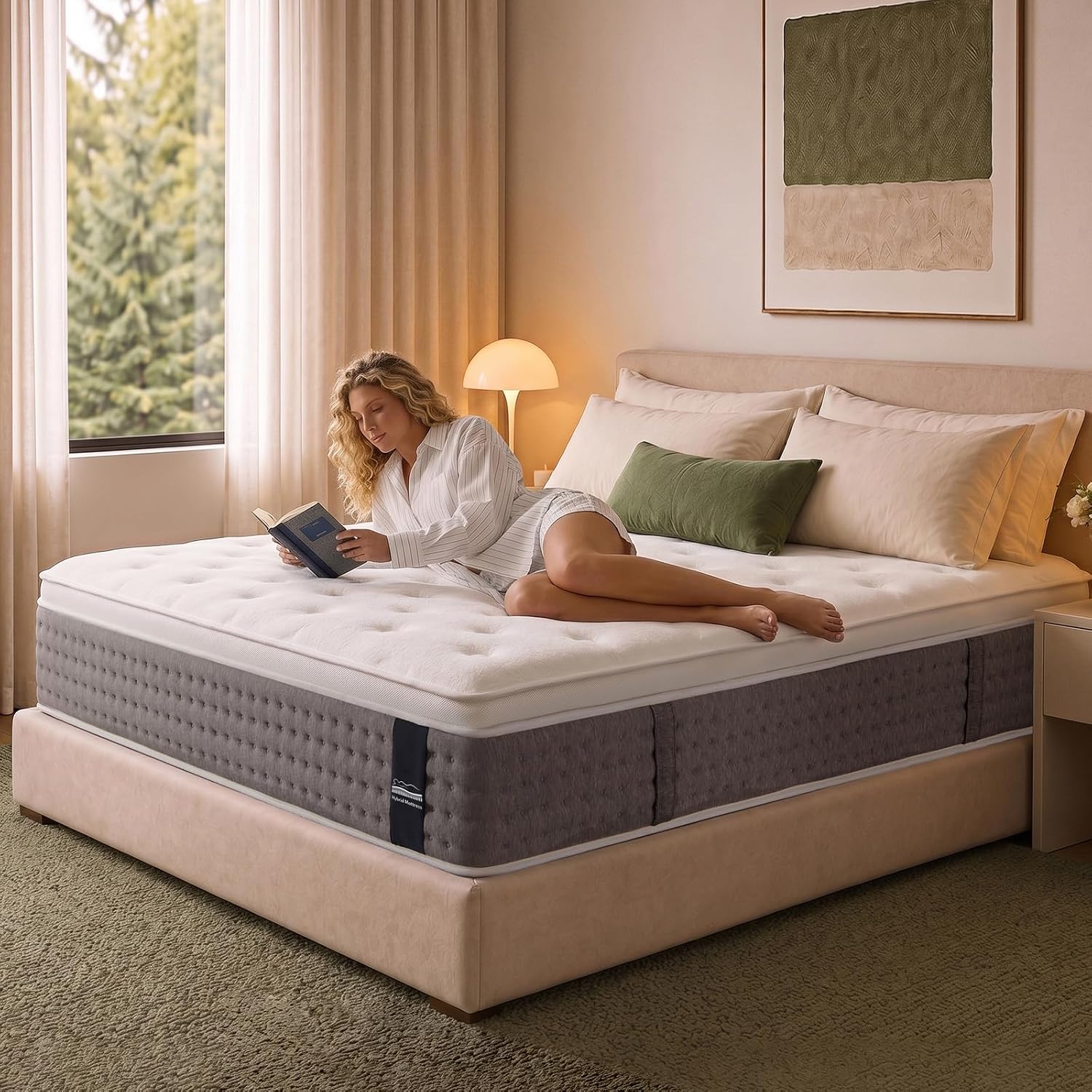
Queen Size Mattress 12 Inches Medium Firm Hybrid, Undisturbed Sleep
Coil support with a foam comfort layer, the most spine-friendly build here, queen width for couples, motion isolation in the name and in the construction
A hybrid at this price will not have the coil count or the foam density of a $1,500 bed, and "medium firm" is a brand opinion, not a standard
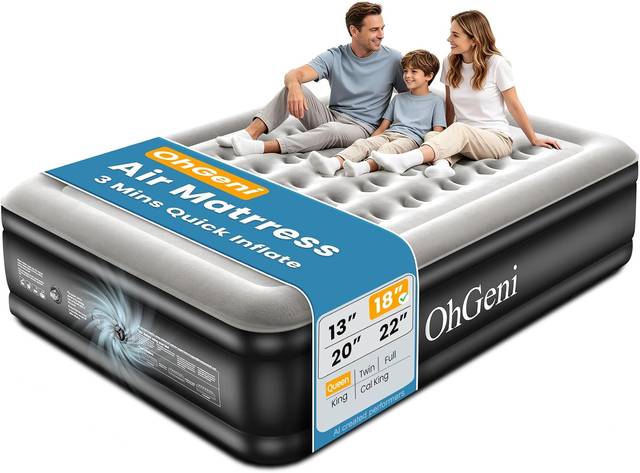
OhGeni Air Mattress Queen with Built in Pump, 18" Raised Blow up Bed, 800lb
Raised height that guests can actually get out of, built in pump for top-offs, high stated weight capacity, packs away when the guest room is a home office
Air migrates and vinyl relaxes, so pressure drops over weeks, no meaningful edge support, and no pressure relief for a side sleeper
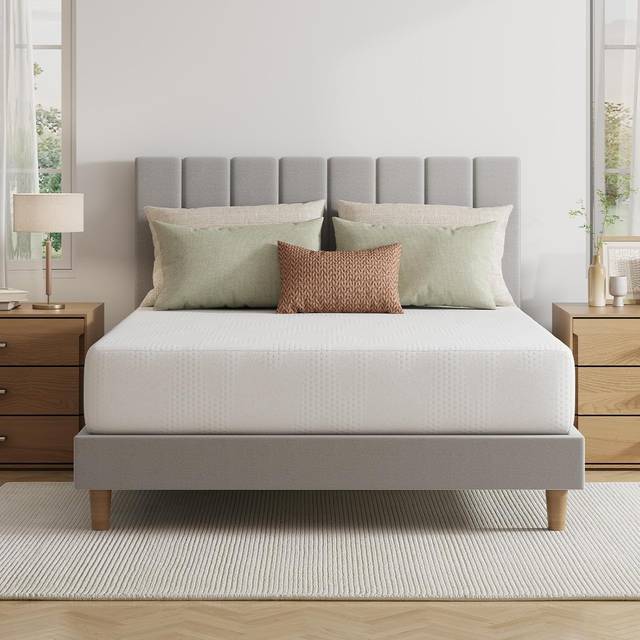
Novilla Full Mattress, 10 Inch Full Size Mattress with Gel Memory Foam
The lowest entry point of the four, gel memory foam on top for pressure relief, full size fits small rooms and bunk setups
Ten inches leaves little room for a support core, so heavier sleepers can bottom out, and the gel layer does not make it a cool bed
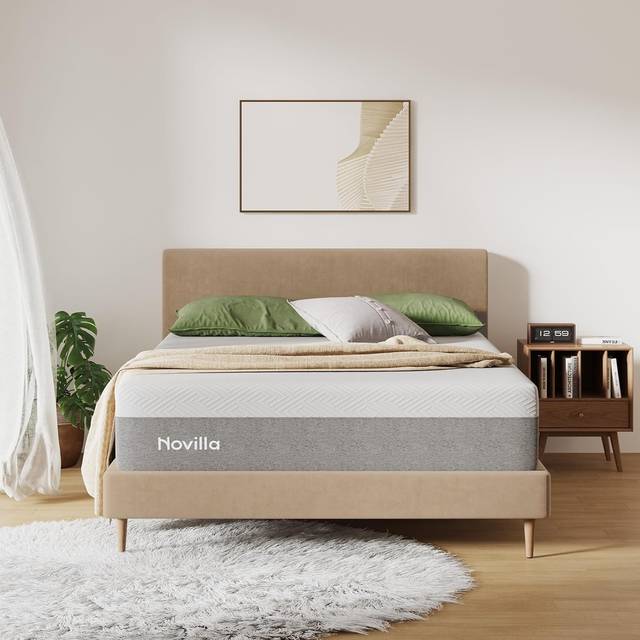
Novilla Bliss Full Mattress, 12 Inch Gel Memory Foam Full Size Mattress
Two extra inches over its sibling, more foam under the hips and shoulders, a full size with enough substance to feel like a real bed
Still foam on foam, so edge support is the weak point and heat retention is real, and it is a full, not a queen, so a couple will feel cramped
Prices and availability were captured from Amazon Creators API and may change.
What the specs tell you before you sleep on anything
Every mattress here answers the same question: what happens to your hips and shoulders after eight hours? Coils, gel foam, and air all answer it differently.
A hybrid uses coils for support and foam for pressure relief. That is why it is the construction I recommend most often for adults who sleep in the same bed every night. The coils carry your weight, the foam softens the contact points, and the two jobs stay separate. Foam beds use a solid block of foam, sometimes with memory foam and gel layers on top, and their long-term behavior depends almost entirely on density. The number that matters on a foam bed is not the inch count on the label. It is the weight of the foam per cubic foot, and budget listings rarely publish it. When a brand hides density, assume lighter foam and plan accordingly.
Air beds skip foam structure altogether. You rest on a column of air, which has real advantages: adjustable firmness, packability, a stated weight capacity that no foam bed in this price range will match. It also has one real disadvantage. Air migrates, vinyl relaxes, and the bed you inflate in September is not the bed you sleep on in March.
The hybrid queen: the one I would put in a primary bedroom
The Queen Size Mattress 12 Inches Medium Firm Hybrid, Undisturbed Sleep is the only bed in this comparison with a coil core, and that single fact does most of the work. A queen gives two adults 60 inches of width and 80 inches of length, which is the practical minimum for a couple, and a coil system transfers less movement than a shared block of foam. The "undisturbed sleep" promise in the name is the brand's phrasing, not my measurement, but the construction supports the claim in a way that foam does not.
Here is my caution, and it is the same caution I give patients every week. "Medium firm" means nothing across brands. One company's medium is another company's brick. What you can judge from the listing is the architecture: 12 inches of height gives a hybrid room for a real support core plus a comfort layer, and coils give you edge support that foam cannot fake. If you sit on the edge of your bed to put on shoes, which you do, that matters.
For back sleepers and combination sleepers who want one mattress to last, this is the pick. Visit on Amazon → to check the current build details and sizing options.
The air bed: honest about what it is
The OhGeni Air Mattress Queen with Built in Pump, 18" Raised Blow up Bed, 800lb is a good air bed, and I want to be precise about that, because air beds get written off unfairly. An 18 inch raised profile is not a gimmick. Getting out of a bed that sits a foot and a half off the floor is meaningfully easier for an older guest or anyone recovering from surgery, and the built in pump means you can top it off without hunting for a separate inflator. The stated 800lb capacity is the manufacturer's figure, not mine, but it reflects a chamber design meant to hold two adults without wallowing.
What it is not: a mattress for every night of the next seven years. Air chambers lose pressure gradually, and no pump solves that permanently. Edge support is essentially a soft wall of vinyl. A side sleeper who needs pressure relief at the shoulder will not find it here, and air pulls heat off your body in a way foam does not.
Buy it for a guest room that gets used three or four weekends a year, for a move, or for temporary housing. Do not buy it as a cheap substitute for a mattress you will sleep on nightly and expect to keep.
The 10 inch full gel foam: the lowest entry point
The Novilla Full Mattress, 10 Inch Full Size Mattress with Gel Memory Foam is the least expensive way into this group, and it is a legitimate bed rather than a camping pad. A full size measures 54 by 75 inches, which is small enough for a dorm room, a kid's room, or a spare bedroom that has to share floor space with something else. The gel memory foam comfort layer does what memory foam is supposed to do: it lets your shoulder and hip sink in rather than fighting them.
Two things to understand before you buy. First, 10 inches of total height means the support core underneath the comfort layer is thin. A lighter adult will be fine. A heavier sleeper may feel the mattress bottom out under the hips, which is exactly the alignment failure that sends people to my office. Second, the gel infusion is there to move heat away from the memory foam. It is not air conditioning, and no gel layer is. If you sleep hot, this is a mattress to pair with a breathable protector and a cooler room, not a solution on its own.
This is the right choice for a first apartment, a guest room, or a teenager moving out of a bunk. Visit on Amazon →
The Novilla Bliss 12 inch full: the same idea with more foam
The Novilla Bliss Full Mattress, 12 Inch Gel Memory Foam Full Size Mattress is the 10 inch Novilla's bigger sibling, and the two extra inches are the whole story. Thickness on a foam bed is not vanity. It buys a taller support core, a deeper comfort layer, and more material to compress before you reach the bottom of the mattress. In practice, that means more forgiveness under the hips and shoulders and a bed that holds its shape longer under regular use.
It is still a foam bed, and I will not pretend the trade-offs disappear. Edge support on a full foam mattress is soft by design, so sitting on the side of the bed compresses the foam under you. Heat retention is real, though the gel layer helps at the surface. And this is a full size, not a queen. If two adults share it, they will be closer than they planned to be.
Where it makes sense: a full size bed for a single adult, a spare room that occasionally hosts a couple, or a young person who wants a thicker, more substantial mattress without moving up to a hybrid price. Visit on Amazon →
How I test mattresses
Every mattress I put a name to goes through the same protocol, and it does not change because a brand sent a nice email.
The first stage is a 30 night trial. That is the minimum, because foam softens in the first two to three weeks and the way it softens tells you more than the way it feels on day one. A bed that gets softer but stays even is fine. A bed that develops a divot is telling you something about density.
The second stage is a pressure map. I lay a sensor pad over the mattress and look at where the weight concentrates. Heels, hips, and shoulders light up on almost every bed. What separates a supportive mattress from a soft one is whether those hotspots spread out or stay sharp, and whether the lower back stays in neutral alignment while the shoulders and hips sink. That reading is the review. Marketing copy is not.
The third stage is a durability check at six months, where I look for compression and sag where the body sits. A cheap mattress that sags in year two was never cheap. It cost you the first one plus the second one.
That protocol is why I will not endorse a bed I have not lived with, and it is why the guidance below stays general about constructions rather than pretending a listing photo tells me how a specific unit performs over time.
Firmness labels, cooling claims, and edge support
Three things in this category deserve a cold look.
Firmness labels are marketing. "Medium" from one brand and "medium" from another can be a full point apart on the same scale. If you cannot test a bed in person, buy from a seller with a return window and give yourself the 30 nights.
Cooling claims are the most overhyped thing in the industry. A gel layer moves heat sideways for a few minutes. It does not cool you. If you sleep hot, the mattress is one variable among several, and airflow through the construction matters more than the label.
Edge support is the spec nobody mentions until they sit down. Foam compresses at the perimeter. Coils push back. If you use the edge of your bed to dress, or if you share a queen and drift toward the side for space, a coil core is worth real money to you. This is one of the few places where construction beats marketing every time.
Matching the build to the sleeper
Couples who want one bed to last: the hybrid queen. Coil support, motion isolation, and an edge that holds.
A single adult in a smaller room: either Novilla full, and the 12 inch Bliss if you want more substance under your hips.
A guest room that also has to be a home office: the OhGeni air bed, stored in a closet and inflated when someone visits.
A teenager, a dorm, or a first apartment: the 10 inch Novilla full, with the understanding that it is a starter mattress and not a decade purchase.
The bottom line and what I am watching next
If you sleep on the same bed every night and you want the best odds of waking up without a lower back complaint, the coil-based hybrid queen is the one to buy in this group. If you are furnishing a room that is used a few times a year, the foam and air options are honest choices, and the 12 inch Novilla is the better of the two foam beds. What I am watching next is whether the budget hybrid category keeps its coil cores or quietly swaps them for a solid foam base and keeps the word "hybrid" on the box. When that happens, I will say so.