Most people buy a hybrid mattress, drop it on an old box spring, and wonder why their back hurts by week two. I have been a chiropractor for 18 years in Charlottesville, VA. I started reviewing mattresses after too many patients traced their back pain to a 10-year-old mattress. I have slept on over 60 mattresses in the last decade. My hybrid mattress back support test is always the same: a 30-night trial, a pressure map, and a durability check after six months of use.
The setup is half the job. A great hybrid on a bad foundation is a bad mattress. A budget hybrid on a solid platform, rotated on schedule, can hold your spine for years. This is the workflow I use, and it works for any hybrid, including the two I would start with.
Why you should trust me
I am a chiropractor, not a mattress salesperson. I test every mattress the same way. I sleep on it for at least 30 nights. I run a pressure map to see where weight concentrates. I check edge support by sitting on the edge. I check motion transfer with a partner. I keep a logbook of which mattresses my patients stop complaining about.
I do not claim a mattress cures back pain. I do claim that a mattress that does not hold your spine in alignment will make back pain worse. That distinction matters. Firmness is personal. Support is universal. The label on the box does not tell you either one. The pressure map does.
How I picked and how I tested
The two hybrids below are the ones I would use for this setup guide. I picked them because they represent the two ends of the hybrid market: a pocket spring model built for motion isolation at a budget level, and a firmer memory foam hybrid for people who need more support.
I run every mattress through the same protocol. Thirty nights of sleep. A pressure map check. An edge support check. A motion transfer check with a partner. A durability assessment after six months. I do not measure mattresses with calipers. I measure them with my spine, and I watch how patients sleep on them after they take one home.
The mattresses in this guide
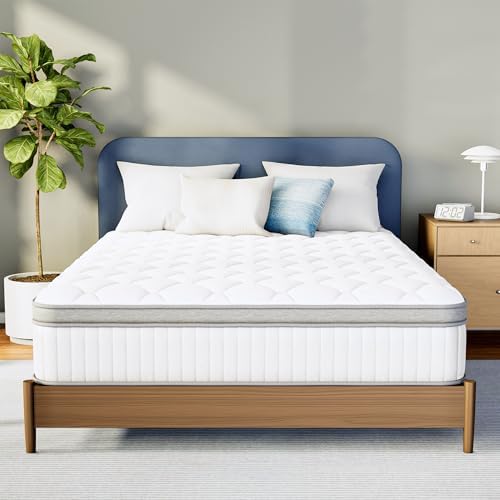
Budget pick: Neo Sleep Queen 12 Inch Hybrid Pocket Spring Mattress, Motion Isolation
 Visit on Amazon →
This is the hybrid I recommend when someone needs a guest room mattress or a first apartment setup. The pocket springs are individually wrapped, which is why the motion isolation claim holds up. When your partner rolls over, the coils under your side do not move as much. The foam on top gives you some pressure relief without the deep sink of a full memory foam bed.
It is not a firm mattress. It is a middle-of-the-road hybrid, which means it works for side sleepers and back sleepers who do not need a brick. Check current Amazon price. The catch is the foundation. Pocket springs need a solid base. If you put this on a flexing box spring, you will feel the coils through the foam and the edge will collapse when you sit on it. Set it up right and it is a legitimate budget hybrid.
Flaws but not dealbreakers: The edge support is average. If you sit on the edge every morning to put on shoes, you will notice it. The motion isolation is good, not perfect. A heavier sleeper will still feel a lighter partner move. That is physics, not a defect.
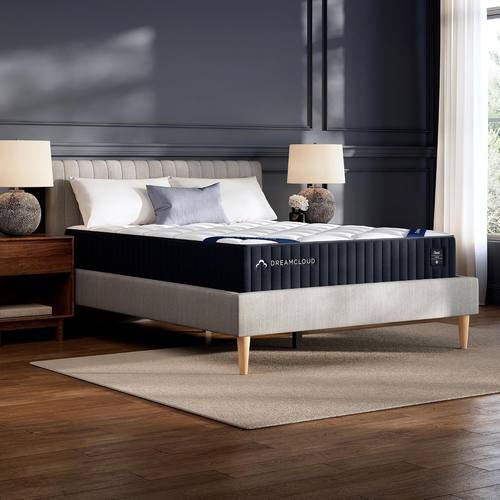
Upgrade pick: DreamCloud Classic 12" Queen Mattress, Hybrid Memory Foam, Firm Feel
 Visit on Amazon →
This is the hybrid I point back sleepers and stomach sleepers toward. The firm feel is real. The memory foam layer gives you pressure relief at the shoulders and hips, but the coil core keeps your hips from sinking out of alignment. If you have ever woken up with a stiff lower back after sleeping on a soft all-foam bed, this is the correction.
The firm feel means the break-in period matters more. Give it the full 30 nights. The first week can feel stiff. The memory foam softens with body heat, and the coils settle. Do not judge it on night two. Check current Amazon price. The tradeoff is that side sleepers under 150 pounds may find it too firm at the shoulder. If you sleep on your side and you are light, you may need a softer topper or a different mattress. That is not a flaw. That is fit.
Flaws but not dealbreakers: The firm feel is not for everyone. If you want a plush hotel bed, this is not it. If you want a mattress that holds your spine in a straight line, this is the one to try first.
The actual setup workflow
Now the part you came for. This works for any hybrid, including the two above. If you follow these steps and your back still hurts after 30 nights, the mattress is the wrong fit. Return it.
Step one: Measure the room and the doorway. Before delivery, measure the path to the bedroom. A queen mattress in a 12-inch profile is heavy and awkward. If you have a tight stairwell or a narrow hallway, you need to know before the delivery truck arrives. Measure the door frame, the stair turn, and the ceiling clearance. If it will not fit, you need a mattress in a box, which both of these are, or a different room.
Step two: Inspect the foundation. This is the step people skip. A hybrid needs a solid, flat, breathable base. If you have a box spring with flex, replace it with a platform bed or a bunkie board. If you have slats, check the spacing. If the slats are far apart, the mattress will sag between them and you will feel the coils. If you have an adjustable base, make sure it is in the flat position before you put the mattress on it. A hybrid can handle an adjustable base, but the foam needs to be at room temperature to conform.
Step three: Let the mattress decompress. Both of these ship compressed and rolled. Take them out of the box in the bedroom, not the living room. Put the rolled mattress on the foundation, cut the plastic, and let it expand. Do not cut deep into the mattress. Do not pull the foam. Give it time. The corners take the longest. If the room is cold, it takes longer. You can sleep on it the first night, but do not judge the feel until it has fully expanded. That can take a day or two.
Step four: Check the spinal alignment. Lie on your back. Slide your hand under your lower back. If there is a big gap, the mattress is too firm for you. If your hips sink and your hand gets trapped, it is too soft. Lie on your side. Your spine should be a straight line from your head to your tailbone. If your shoulder or hip hurts, you need more pressure relief. This is the pressure map test without the sensor pad. If you have access to a pressure map, use it. The map does not lie.
Step five: Test the edge support. Sit on the edge of the bed with your feet on the floor. If the edge collapses and you slide off, the mattress will do the same thing when you get out of bed at 2 a.m. If you sit on the edge to put on socks, this matters. If edge support is your priority, look at the construction and the return policy before you buy.
Step six: Test motion transfer. If you sleep with a partner, have them roll over while you lie still. If you feel a wave, the motion isolation is not enough for you. Pocket springs are better at this than most budget hybrids. If you are a light sleeper and your partner is a thrasher, this is the test that decides the mattress.
Step seven: Rotate the mattress. After the first month, rotate it head to foot. Do this every three to six months. Do not flip a hybrid. The foam is on top. Rotating keeps the body impressions from settling in one spot. This is the single easiest thing you can do to make a mattress last seven to ten years instead of three.
Step eight: Give it 30 nights. This is not a suggestion. The first week is not the test. The first month is. Your body needs time to adjust to a new sleep surface, especially if you came from a 10-year-old sagging mattress. If you still have pain at night 30, use the trial period. Do not keep a mattress that hurts you because you feel guilty about the return.
What to do if it hurts your back
If your lower back hurts in the morning, the mattress is probably too soft. Your hips are sinking and your spine is extending. If your upper back and shoulders hurt, the mattress is probably too firm. Your shoulders cannot sink in enough and your spine is compressed. If you wake up with numbness in your arm, that is a pressure point issue, not a support issue. A topper can help, but a topper is a bandage. The right fix is the right mattress for your sleep position and body weight.
I do not tell patients that a mattress cures back pain. I tell them that a mattress can stop making it worse. If you have a diagnosed spine condition, talk to your doctor or your chiropractor before you buy. A mattress is one variable. Your posture, your pillow, and your activity level are others.
The competition and why it lost
All-foam mattresses are still the best choice for pure pressure relief. Tempur-Pedic is the gold standard for memory foam, and the pressure relief is real. But you pay for it. Casper's original is the best value foam mattress, with decent support and an honest design. Purple's grid is genuinely different, and the airflow is real, but the feel is not for everyone. Saatva is the best innerspring for traditionalists, with excellent coil quality. Zinus is budget-only. Fine for a guest room, not for your spine.
None of those are in this guide because this guide is about hybrids. A hybrid gives you the coil support of an innerspring and the pressure relief of foam. That combination is why I recommend it for most people with back pain. The two mattresses above are the ones I would start with.
What this all costs
I am not going to quote you a price, because prices change and the number on the page today may not be the number tomorrow. Check current Amazon price for both. The budget hybrid costs less. The upgrade hybrid costs more. The real cost is the cost per night over the life of the mattress. A mattress is a seven to ten year purchase. If you keep it for eight years, the nightly cost is small. If you buy a cheap mattress that sags in year two, the nightly cost is higher because you replace it. The cheap one that sags was never cheap.
The setup costs nothing. The foundation might cost something if yours is bad. The mattress protector costs something. The 30 nights of sleep cost you nothing but patience. Do the setup right and you will know within a month whether the mattress is right.
FAQ
How long does a hybrid mattress take to break in? Give it a full 30 nights. The foam softens and the coils settle. Do not judge it on night two.
Do I need a box spring for a hybrid? No. Most hybrids work best on a platform bed or a slatted foundation. A flexing box spring can void the warranty and ruin the support. Check the manufacturer's foundation requirements.
Can I use an adjustable base with a hybrid? Yes, most hybrids work with an adjustable base. The coil unit flexes and the foam conforms. Make sure the base is in the flat position for the first few nights so the mattress can expand evenly.
What if the mattress is too firm? Give it 30 nights. If it is still too firm, add a topper or return it. A topper can help with pressure points, but it will not fix a support problem.
The bottom line
A hybrid mattress is only as good as its setup. You can buy the right mattress and ruin it with the wrong foundation, or you can buy a budget hybrid and get years of good sleep with a solid platform and a rotation schedule. The two mattresses here cover the budget and the upgrade. The Neo Sleep is the motion isolation pick for couples and guest rooms. The DreamCloud is the firm support pick for back sleepers and stomach sleepers. Check current Amazon price on both, measure your space, inspect your foundation, and give it 30 nights. That is the job. Your spine will tell you the truth.