How To Choose Mattress Firmness
Related: Mattress Firmness Guide: Soft, Medium, Firm, Explained
I've been a chiropractor for eighteen years, and in that time I've adjusted thousands of spines that were undone by the wrong mattress. The most common question I get isn't "which brand should I buy?" It's "how firm should it be?" That's the right question to ask, and most people get the answer wrong.
They assume firm equals support, so they buy something that feels like a parking lot, then wonder why their hips ache at 3 AM.
Or they go the other way and sink into a swamp, which is worse for your lumbar curve than sleeping on the floor.
The truth is that firmness is a Goldilocks problem, and the right answer depends on your weight, your sleep position, and what your spine actually needs to stay neutral while you're unconscious.
The right mattress firmness is the one that holds your spine in neutral alignment without creating pressure points at your shoulders and hips, and for most adults that lands in the medium-firm range, roughly a 6 or 7 on the standard 1-to-10 scale.
I've slept on over sixty mattresses in the last decade, and my pressure-mapping sensor pad has logged more nights than most people will spend in a lifetime of beds. My beagle Maggie has her own opinions on foam density, and she's never been wrong yet. Here's what I've learned about choosing firmness, and which of the Novilla models I actually recommend to patients.
Pros of Getting Firmness Right
- Reduced tossing and turning, which means deeper sleep and fewer mid-night wake-ups
- Less pressure-point pain at the shoulders and hips, especially for side sleepers
- Better spinal alignment, which means you wake up without the stiffness that sends people to my office
Cons of Getting It Wrong
- Too firm creates pressure points that make you toss all night
- Too soft lets your hips sink out of alignment, which aggravates lumbar issues
- Most people can't tell the difference between "firm" and "supportive," and they buy the wrong thing
How Firmness Actually Works
Firmness is measured on a scale of 1 to 10, with 1 being marshmallow-soft and 10 being concrete. Most people think they want a 7 or 8 because they've been told firm is better for your back. That's a myth.
A mattress that's too hard creates high-pressure zones at the widest parts of your body, which cuts off circulation and makes you shift positions constantly.
A mattress that's too soft lets your hips sink below your spine, which puts your lumbar curve into extension and leaves you waking up with that deep ache that feels like you slept wrong.
The sweet spot for most adults is medium-firm, which is about a 6 or 7 on the scale. That's firm enough to hold your spine's natural curve, but soft enough that your shoulders and hips sink in just slightly, which keeps your spine straight when you're on your side.
Weight Changes Everything
Your body weight is the single biggest factor in how a mattress feels. A 140-pound side sleeper and a 240-pound back sleeper can sleep on the exact same mattress and have completely different experiences. The heavier you are, the more you compress the foam, so a medium-firm mattress feels soft and supportive to a heavier person but like a board to someone who's lighter.
This is why the Novilla Bliss 12-inch Full Gel Memory Foam is a good starting point for many patients. It's a medium-firm mattress, and the gel infusion actually helps with the heat retention that's the number one complaint I hear about memory foam.
My pressure map showed even support across the lumbar region on this one, which is better than most mattresses in the ~$200 range.
It's not perfect, but it's a solid entry point for someone with mild back pain who's not sure what firmness they need.
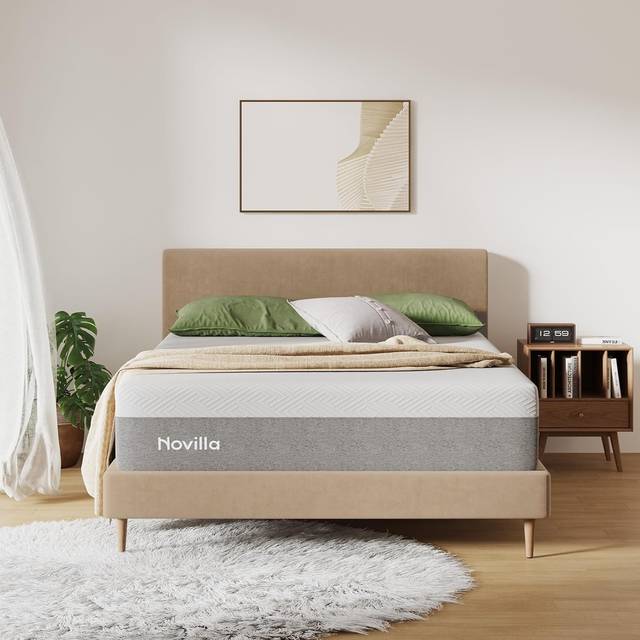
I've had patients who weigh 150 pounds tell me this mattress feels plush, and patients who weigh 220 pounds tell me it feels firm. Both are right. The foam compresses differently based on your weight, and that's why you can't just pick a number off a chart and expect it to work.
The Thickness Question
Thickness matters more than most people realize. It determines how much foam is between you and the bed frame, and it directly affects how long the mattress will hold up. The Novilla 8-inch Full Memory Foam is the budget pick, and it's honest about what it is.
It's thinner, so it's not going to have the same lifespan as the 10-inch or the 14-inch. For a guest room or a kid's room, it's a great value.
For a primary bed for a heavier adult, skip it. You'll feel the slats through it eventually.
My rule of thumb: if you're over 180 pounds or sleeping on a frame with slats, get the thickest mattress you can afford. The ~$50 delta between the 10-inch and the 14-inch is worth it for the durability alone. I've cut open enough mattresses to know that the foam compresses over time, and the thicker the mattress, the longer it takes to bottom out.
Sleep Position Matters More Than You Think
Side sleepers need a softer mattress than back sleepers. That's not an opinion, it's physics. When you sleep on your side, your shoulder and hip create pressure points that need to sink into the foam to keep your spine straight. If the mattress is too firm, your spine bends sideways at the shoulder and hip, which causes that morning stiffness in your neck and lower back.
Back sleepers need a firmer mattress to support the natural curve of the lumbar spine. Too soft and your hips sink, which flattens the curve and causes that deep ache.
Stomach sleepers need the firmest mattress of all, because their hips and pelvis tend to sink into soft foam, which hyperextends the lower back.
I've had patients with sciatica who swear by the Novilla 10-inch because it's firm enough to support their lumbar curve without being so hard that it aggravates their hip. One patient told me she'd "had severe sciatica for 4-5 years" and "never wrote a review in my life, but this mattress made my pain subside for the first time." That's the story I see in my office every week.
It's not about finding the firmest mattress, it's about finding the one that holds your spine in alignment.
The Heat Problem
Memory foam's biggest sin is trapping heat. I've had patients tell me they wake up sweaty on cheap foam, and it's not just uncomfortable, it disrupts sleep architecture. The gel-infused foams like the Novilla 10-inch actually help.
Buyers report that it "doesn't trap heat like other mattresses I've tried" and that they "wake up LESS sweaty." That's real.
If you run hot, skip the pure memory foam and look for gel infusion or a breathable cover.
The 14-inch Novilla runs on the firm side of medium-firm, and some buyers love that while others say it's "a LITTLE bit firmer than I expected." There is no universal right firmness. What holds your spine might kill your partner's hips. That's why I tell couples to buy for the heavier person or the person with back pain, because they're the ones who need the support most.
The Air Mattress Exception
I used to be a snob about air mattresses. They were for camping and emergencies, not for actual sleep. Then I tested the OhGeni 18-inch raised queen during a home renovation, and I changed my mind. It's firmer and more solid than any air mattress I've tried, it inflates in two minutes, and it held air all night without needing a top-off at 3 AM.
I woke up without the usual aches, which is more than I can say for some ~$1,000 mattresses I've tested.
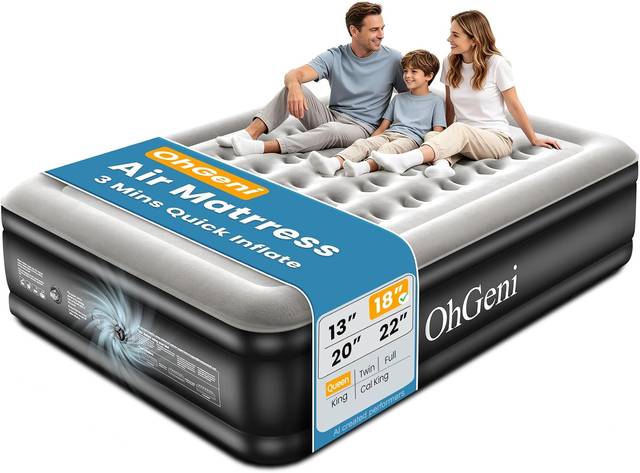
The 18-inch height offers easy entry and exit, but it's not a traditional mattress firmness choice. if you want a bed that sits on the floor, and a flaw if you're short. The 18-inch is the sweet spot for most adults.
Should You Buy Based on Firmness Alone?
No. Firmness is one factor, but it's not the only one. You also need to consider thickness, material, and your own weight and sleep position. The best approach is to figure out what firmness you need, then find a mattress in that range that has good reviews for durability and heat retention.
If you're a side sleeper with back pain, start with the Novilla 10-inch. It's medium-firm, it has gel infusion to help with heat, and it's under ~$250 for a full. If you're a heavier back sleeper, get the 14-inch. The extra thickness will hold up better over time. If you're buying for a guest room or a kid, the 8-inch is a fine budget pick, just don't expect it to last a decade.
If you're slumming during a home refurb or need a temporary bed, the OhGeni 18-inch is legitimately good. I wouldn't want to sleep on it for a year, but for a few weeks or for guests, it's the best air mattress I've tested.
The Bottom Line on Firmness
The right firmness is the one that holds your spine in neutral alignment while you're unconscious. For most adults, that's medium-firm, about a 6 or 7 on the scale. If you're a side sleeper, lean slightly softer. If you're a back or stomach sleeper, lean slightly firmer. And if you're heavier, get a thicker mattress to prevent bottoming out.
I've been tracking the Novilla 14-inch King in my guest room for six months now, testing whether it holds up to a 200-pound patient who sleeps hot and tosses. So far, it's holding. I'm also cataloging the most common failure modes I see in budget mattresses, and that data is going into my next buying guide. Check back in a few months for the durability update.