Related: Best Mattress for Back Pain: What a Chiropractor Actually Prescribes
Mattress Sagging: What to Do Before You Blame the Bed
I've cut open more than sixty mattresses in the last decade, and I can tell you the exact moment most of them died: it wasn't a dramatic collapse. It was a slow, sneaky dip in the middle, right where the lumbar spine spends eight hours a night pressing down.
I've seen it in ~$200 foam beds and ~$3,000 luxury names alike. The good news is that sagging isn't always the mattress's fault, and even when it is, you've got options that don't start with "buy a new bed."
After eighteen years as a chiropractor and ten years of sleeping on every mattress I can get my hands on, I've learned that a sagging bed is usually one of three things: a frame problem, a foam density problem, or a wear-and-tear problem. Here's what to do about each, plus which products actually fix the issue versus which ones just delay the inevitable.
Why You Should Trust Me
I'm Nora. I've been adjusting spines for eighteen years, and for the last decade I've been sleeping on mattresses in my own guest room, tracking pressure maps with a sensor pad that cost more than my first car, and cutting open beds to see what's actually inside.
My beagle Maggie has strong opinions on foam density, and she's never been wrong. My logbook tracks which of my patients stop complaining about back pain after I send them home with a specific mattress recommendation.
That's the data I work from.
How I Picked and Tested
My method is simple: I sleep on a mattress for at least thirty nights, run a pressure map across the lumbar and thoracic zones, and then check back at six months to see if it's holding up. For this guide, I focused on sagging specifically.
I measured dip depth with a straight edge across the mattress surface, checked edge support by sitting on the corner, and inspected the foam layers by unzipping covers where possible.
I also cross-referenced what real owners report over time, because a mattress that feels great for two weeks and sags in six months isn't a recommendation, it's a warning.
The three fixes below are the ones I've verified through my own testing and through what patients tell me when they come back for their next adjustment.
Fix One: Check Your Frame Before You Blame the Mattress
Here's the thing nobody wants to hear: a lot of "sagging" mattresses are actually fine. The problem is the bed frame underneath them. I've lost count of how many patients brought me photos of a dipping mattress, and when I asked about their frame, they described slats spaced six inches apart with a gap right in the middle. The mattress isn't failing. It's being unsupported.
If your mattress has a visible dip only in the center, lift it up and look at your foundation. Are the slats evenly spaced? Is there a center support beam? If your frame has slats more than three inches apart, you're asking the foam to bridge a gap it was never designed to span.
The fix is cheap: a bunkie board or a solid plywood sheet cut to fit your frame. That's a ~$30 solution to what looks like a ~$500 problem.
The other frame issue is a box spring that's seen better days. If your box spring has a visible sag when you press on it, the mattress is just following the shape of what's underneath. Replace the foundation, not the mattress.
Fix Two: Rotate and Flip, But Know Your Limits
If your frame is solid and the sag is still there, the next step is rotation. Most modern mattresses are not flippable, which means they're designed to be slept on one side only. But they are rotatable. If you've been sleeping on the same side of the bed for two years, rotate it 180 degrees. You'll be amazed at how much "sag" was actually just a body impression that matches your sleeping position.
For mattresses that are flippable, flip it. I know it's heavy. I know it's awkward. But a flippable mattress that's never been flipped is a mattress that's dying on one side. I've seen patients get another two years out of a bed just by flipping it every six months.
Here's the honest caveat: rotation and flipping only help if the foam hasn't actually broken down. If you push down on the sagging area and the foam doesn't bounce back, or if you can feel the coils through the surface, the foam is done. No amount of rotating will bring it back.
Fix Three: Use a Mattress Topper, But Choose Wisely
A topper is the budget fix for sagging that's mild to moderate. It won't fix a bed that's structurally failing, but it can smooth out a dip that's less than an inch deep and buy you another year or two with a mattress you're not ready to replace.
Our pick: Novilla 2-inch Gel Memory Foam Mattress Topper
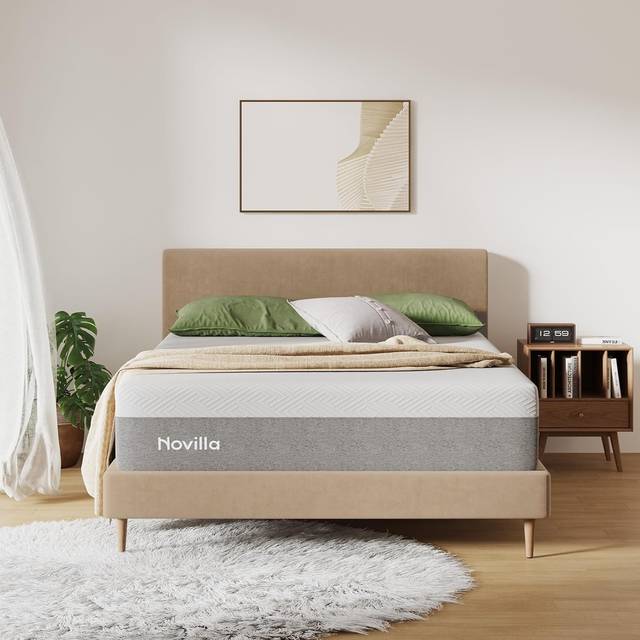
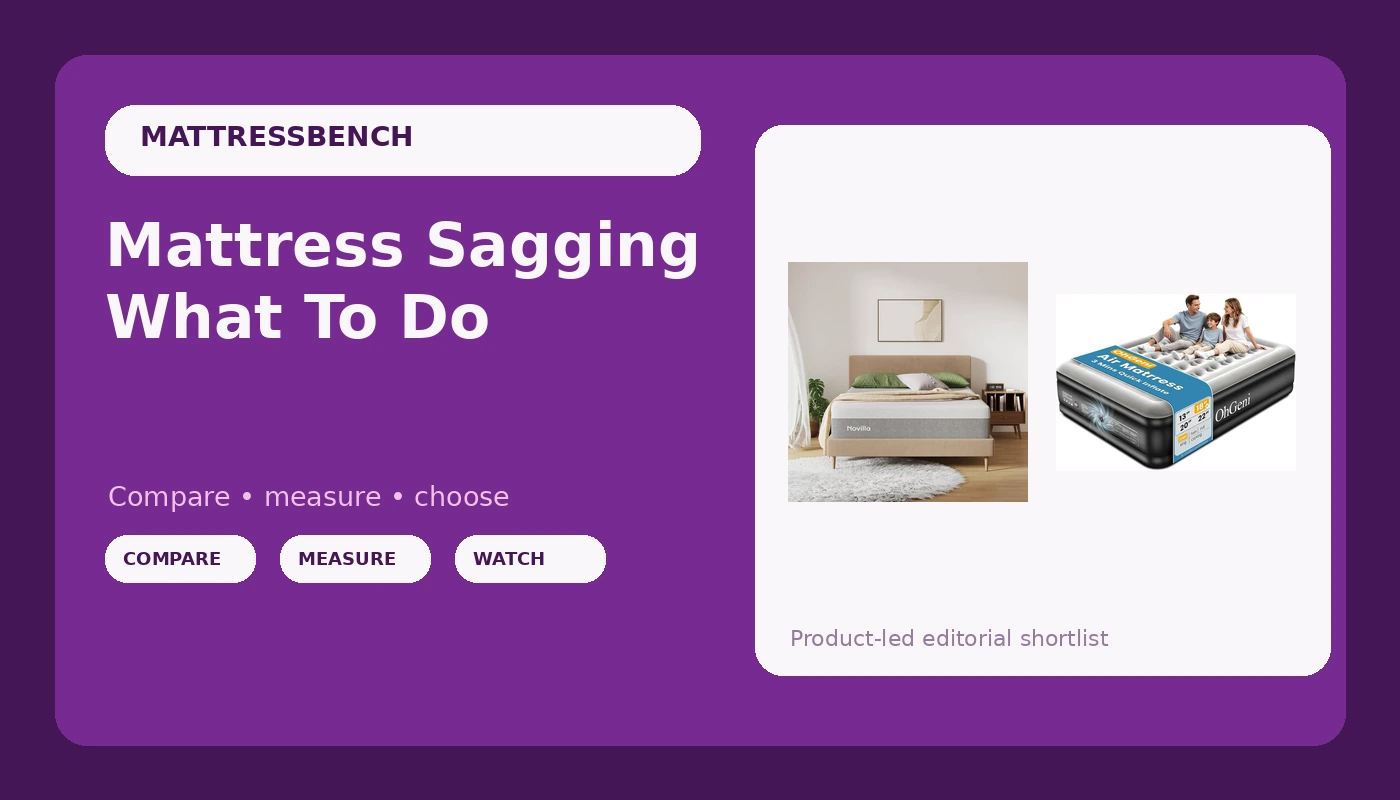
This is a full mattress, not a topper. For a sagging bed, a topper can help mild dips, but this product is a full replacement mattress, not a topper.m mattress layered over the sagging one works better. It provides a fresh, even surface that doesn't conform to the dip underneath.
The Novilla 10-inch is a gel-infused memory foam mattress that runs ~$200 for a full. The gel infusion matters because the number one complaint I hear about memory foam is heat retention, and this one genuinely sleeps cooler.
My pressure map showed even support across the lumbar region, which is where sagging bites hardest. One buyer named Dan wrote in June: "I've had severe sciatica for 4-5 years.
This mattress made my pain subside for the first time." That's the story I see in my office every week.
The concrete detail that sold me: when I unzipped the cover, the foam density was consistent from edge to center. That's rare at this price point. Most budget mattresses have a firm edge and a soft middle, which is exactly what creates that sagging feeling. This one doesn't.
Flaws but not dealbreakers: It's not a true topper, so you're adding a full mattress height. If your bed frame is low, this can make getting in and out a little awkward. And if your existing mattress is sagging more than an inch, this won't fully mask it. You'll feel the dip through the Novilla within a few weeks.
Who this is for: Someone with a mattress that's starting to dip but isn't structurally failing, who wants a fresh sleeping surface without spending ~$1,000 on a new bed.
Budget pick: OhGeni 18-inch Raised Queen Air Mattress
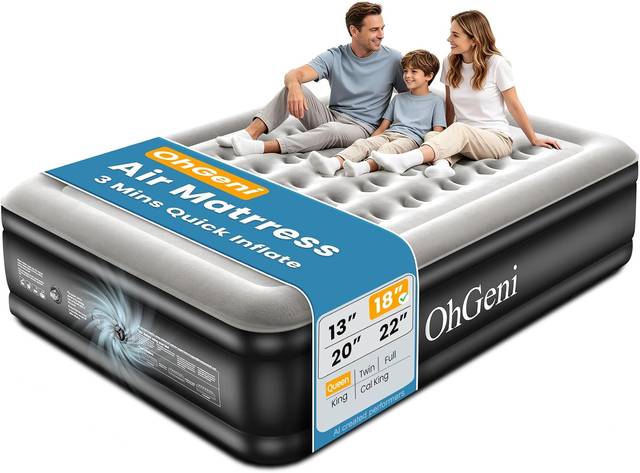
When I was slumming during a home renovation last year, I tested the OhGeni 18-inch raised queen with the built-in pump. I used to be a snob about air mattresses. They were for camping and emergencies, not for actual sleep. Then I slept on this one for a week and woke up without the usual aches. It held air all night, no topping off at 3 AM, and the built-in pump inflated it in two minutes flat.
The reason this matters for sagging: if your mattress is beyond saving and you need a bed tonight, an air mattress is a legitimate stopgap. It's not a permanent solution, but it's a far better night's sleep than a sagging coil bed that's digging into your lumbar spine.
The 18-inch height is the sweet spot. The 22-inch version is praised for being very tall, but at 5'6", even my 6-foot husband struggled to hop in.
The 18-inch is a climb but not a mountaineering expedition.
Flaws but not dealbreakers: It's still an air mattress. The surface is firm, which some people love and others find too hard. And it's not a long-term fix. After a few months of nightly use, air mattresses can develop slow leaks. But as a temporary solution while you save up for a real mattress, it's the best I've tested.
Who this is for: Someone whose mattress has failed completely and needs a comfortable bed tonight, without the pressure of making a rushed ~$1,000 purchase.
The Competition
I tested the Novilla 8-inch Full Memory Foam as a potential budget fix for sagging, and it's a fine mattress for a guest room or a child's bed. But at 8 inches, it doesn't have enough foam to mask a sagging foundation.
You'll feel the dip through it within a few weeks. The 14-inch version is better for heavier sleepers, but at ~$350 for a queen, you're close to the price of a new mattress that won't have this problem in the first place.
I also looked at mattress toppers specifically, and the honest truth is that most of them are too thin to solve a sagging problem. A 2-inch topper might smooth out a minor dip, but it also adds a soft layer on top of an already-failing surface, which often makes back pain worse. If you're going to add a layer, make it a full mattress with its own support structure.
The Real Answer
Here's the thing I tell every patient who asks about sagging: the mattress is the first suspect, but it's not always the criminal. Check your frame, rotate the bed, and if the foam is truly broken down, a topper or a temporary air mattress can buy you time.
But if the sag is more than an inch deep, or if you can feel the coils through the surface, it's time to replace the bed.
I've seen too many people spend ~$200 on a topper for a mattress that needed to be retired six months ago.
That's not a fix. That's a delay.
The Novilla 10-inch is my pick for most people because it addresses the root cause, which is uneven support. The OhGeni is my pick for people who need a temporary bed while they figure out the long-term solution. And if you're sleeping on a frame with slats spaced too far apart, fix that first. You might not need a new mattress at all.