I have been a chiropractor for 18 years, and the most common thing I find in a patient with stubborn low back pain is not a weak core. It is a mattress that stopped holding their spine in a neutral line somewhere around year seven. That is why I keep a logbook of which beds my patients stop complaining about, and why the question of hybrid vs memory foam mattresses matters more to me than thread counts, "luxury" labels, or whatever a brand decided to name its foam that year.
Related: Mattress Firmness Labels Explained
The best pick for most people in this group is the 14 inch queen hybrid, because it pairs zoned coil support with a fiberglass free build, a 365 night trial, and a 10 year warranty. But the queen hybrid is not the right answer for every bedroom, and the two foam beds here are genuinely better choices for some sleepers. What follows is how I read each of these four, what the spec sheets get right, and where each one gives something up.
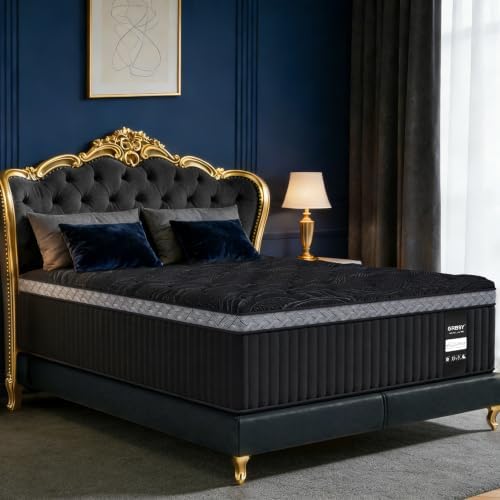
14 Inch Queen Size Mattress, Upgraded Luxury Hybrid Queen Mattress In A Box with 7-Zone Support for Cool Night & Pressure Relief, Fiberglass Free, 365 Nights Trial, 10 Years Warranty, Medium Firm
The most complete package here: zoned coil support, fiberglass free construction, a 365 night trial, and a 10 year warranty
"Medium firm" still means whatever this brand wants it to mean, and cooling claims deserve skepticism
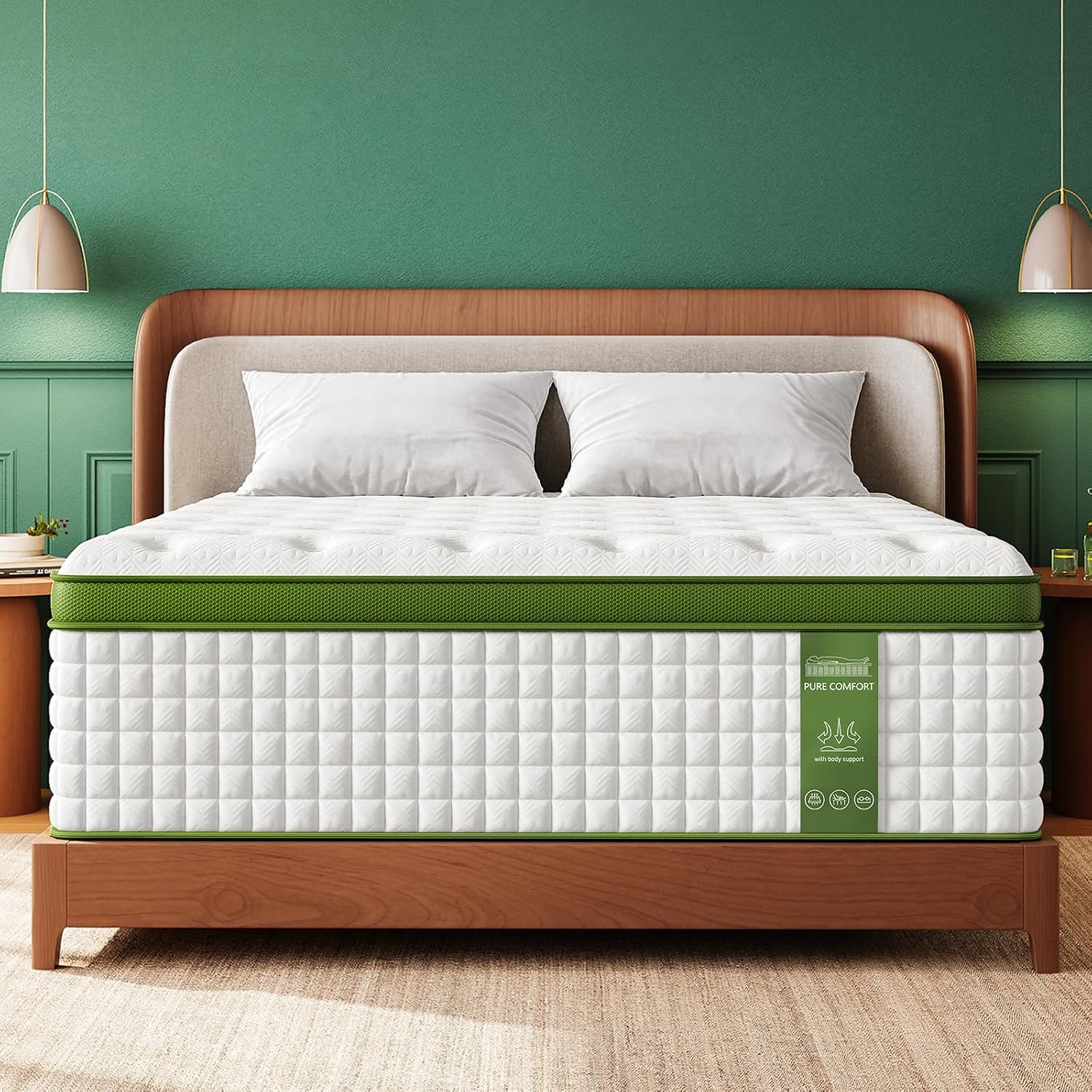
14 Inch Mattress King Size, Luxury Hybrid Mattress for Zoned Support
Zoned support in the hardest size to build well, which is exactly where cheap kings sag first
A king needs real center support underneath, and the price of admission is higher
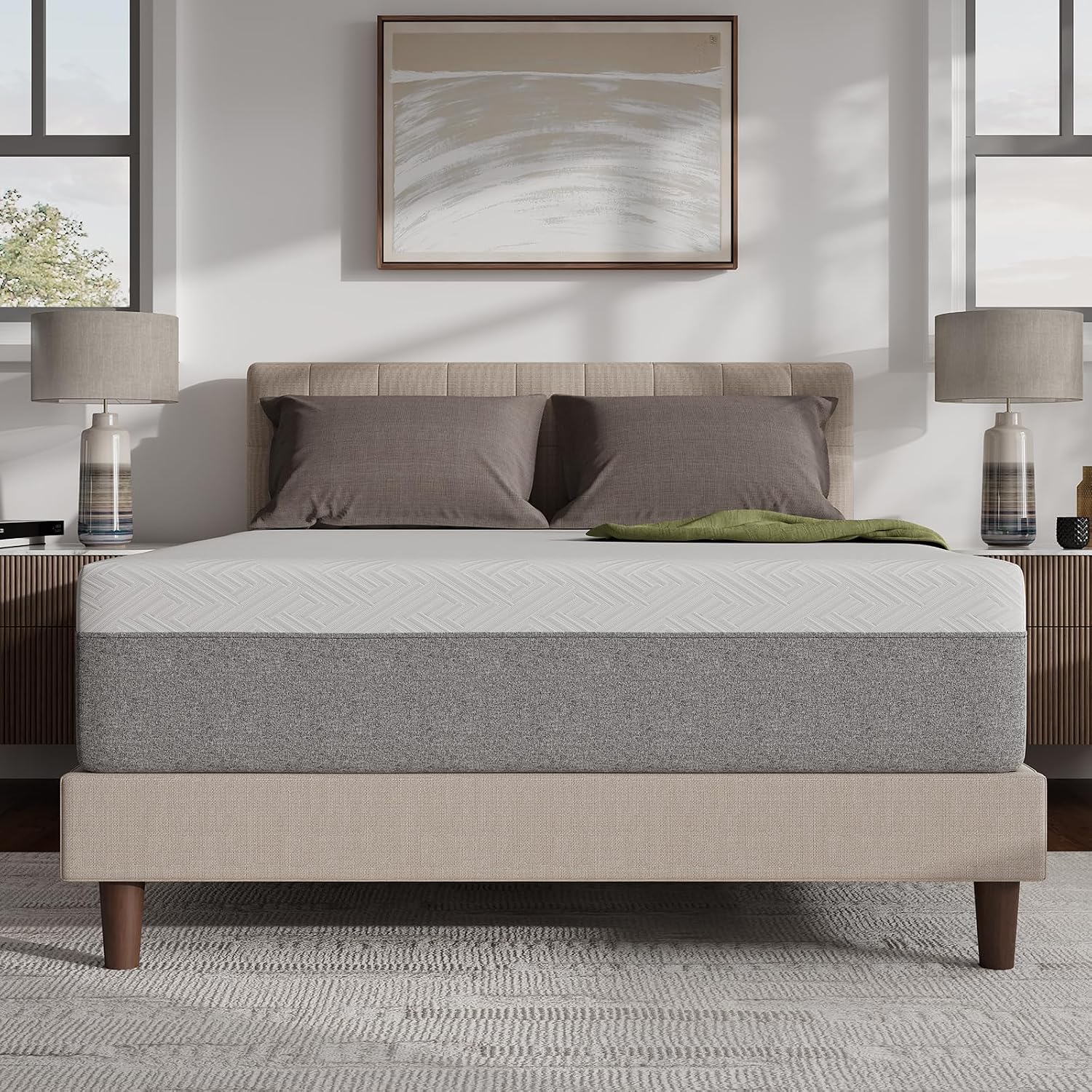
Novilla Queen Mattress, 12 Inch Gel Memory Foam Mattress Queen in a Box
Twelve inches of gel memory foam gives side sleepers real pressure relief and excellent motion isolation
Foam sleeps warmer than coils, and edge support is the weak point of every all foam bed
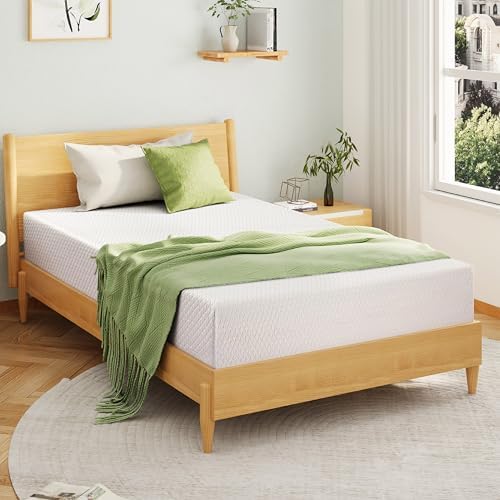
EGOHOME Full Size Memory Foam Mattress 8 Inch, Green Tea, Medium Firm
A simple, honest build for a guest room, a kid's room, or a single sleeper in a small space
Eight inches is thin, and thin foam bottoms out under heavier sleepers
Prices and availability were captured from Amazon Creators API and may change.
How I judge a mattress, in four checks
I do not trust the word "medium." Every brand's medium is a different number, and a label tells you nothing about whether your hips will sink below your shoulders. So everything that comes through my house goes through the same four checks.
First, the pressure map. A sensor pad under a sleeper shows where body weight concentrates. Even distribution across shoulders, hips, and heels is the honest test of support, and it is the only support claim I will repeat. If a brand cannot describe its own support in terms of pressure, it is describing furniture.
Second, spine alignment in side sleeping, which is the position most adults spend most of the night in. If a mattress lets the hips drop relative to the ribcage, the lumbar spine sits in extension for seven hours, and no amount of morning stretching undoes that.
Third, edge support. Sit on the corner of the bed and watch what happens. If the perimeter compresses more than about an inch, you will feel it every time you sit down to tie your shoes, and a bed you cannot sit on is a bed you slowly start to resent.
Fourth, durability. Foam density is the number that predicts whether a bed is still flat in year six. Higher density costs more to manufacture, which is exactly why budget mattresses rarely advertise it.
The hybrid pair: one design idea in two sizes
The two hybrids here share a philosophy. Coils carry the load, foam handles the pressure, and the surface is zoned so it is firmer under the hips and softer under the shoulders.
The 14 inch queen is the one I would send most people toward. Seven zone support is a real design choice rather than a marketing phrase, because the middle of the bed, under the heaviest part of the body, is where a uniform coil unit gives up first. The details I actually care about are the ones that are easy to verify. It is fiberglass free, which matters more than most shoppers realize, it carries a 365 night trial, and it carries a 10 year warranty. In a category where a lot of beds are sold with a 100 night window and a five year promise, those two numbers are the strongest consumer protection in this group. The cooling language is where I get skeptical. Every hybrid in 2026 claims cool nights, and a gel layer is not air conditioning. What genuinely helps is airflow through the coil unit, which hybrids have and all foam beds do not. Treat the cooling claim as a small bonus, never as the reason to buy.
The 14 inch king is the same idea in the hardest size to build well. A king spans a wider gap between supports, so the center of the bed is where inexpensive kings sag first. A zoned hybrid is the right architecture for a king, especially for two sleepers of different weights, because the zone layout lets the lighter sleeper stay on top of the surface while the heavier sleeper compresses the hip zone instead of dragging the whole bed down. If you are buying a king, ask what holds up the center. If the answer is "the frame," keep shopping.
The foam pair: pressure relief without the coils
Memory foam does one thing better than any other material: it spreads pressure. That is why I still recommend foam for side sleepers with shoulder pain and for anyone who wakes up with a numb arm.
The 12 inch gel memory foam queen is the middle of the road option here. Twelve inches is enough thickness to keep a heavier sleeper off the base layer, which is exactly where thin foam beds fail. The gel infusion is meant to pull heat away from the surface, and it does help a little, but do not expect it to fix a warm bedroom. The question I would ask about this one is foam density, because density is what separates a foam bed that lasts from a foam bed that develops a body-shaped trench by year three. If a foam mattress will not tell you its density, assume the lower number.
The 8 inch full size green tea foam bed is the smallest and simplest build in this group, and I want to be straight with you about what that means. Eight inches is thin. For a child, a guest room, or a single adult under about 160 pounds, it is fine, and the green tea infusion is a reasonable answer to the new foam smell that bothers people in the first week. For a heavier sleeper or a couple, eight inches will bottom out at the hip, and bottoming out is the opposite of support. The full size is also the footprint that fits a small bedroom or a bunk room without swallowing the floor space. Match the bed to the body and the room, and this one does its job quietly. Ignore that and you will be replacing it in two years.
The trade-offs, stated plainly
Hybrids win on edge support, airflow, and long term durability. Coils do not pack down the way foam does, and the perimeter of a hybrid is usually reinforced, which is why you can sit on the edge without sliding off. The cost is weight, price, and the requirement of a solid foundation. A hybrid on a sagging box spring is a hybrid that will feel like a hammock, and no warranty covers that.
Foam wins on motion transfer and pressure relief. If your partner rolls over at 3 a.m. and you wake up, foam is the fix. If you wake up with a sore shoulder, foam is usually the fix. The cost is heat retention, weak edges, and a shorter useful life at the budget end of the range.
That is the whole decision in two paragraphs. Everything else is marketing.
Motion transfer and the partner test
Motion transfer is how much movement carries across the bed, and it is the single most underrated spec for couples. Foam isolates motion almost completely. You can get out of a foam bed at 5 a.m. and your partner will not know. Coils transfer more, but a well built hybrid with individually wrapped coils and a dense foam transition layer is close enough that most couples will not notice.
Here is the honest test. Lie on the bed with your partner, have them roll from their side to their back, and pay attention to whether you feel it in your hips. If you do, and you are a light sleeper, the foam beds in this group have an advantage. If you sleep alone and run warm, the hybrids have the advantage.
Who each mattress is for
The 14 inch queen hybrid is for the couple or single sleeper who wants a bed that will still be supportive in year eight, who sits on the edge of the bed, and who wants the safety net of a long trial and a long warranty.
The 14 inch king hybrid is for two sleepers in a large bedroom, particularly two people of different weights, who need the center of a wide bed to hold up rather than dip.
The 12 inch gel memory foam queen is for the side sleeper with shoulder or hip pressure, the light sleeper with a restless partner, and anyone who wants pressure relief without paying hybrid money.
The 8 inch full size green tea foam bed is for the guest room, the kid's room, the dorm, or the small bedroom where an eight inch profile is a feature rather than a compromise.
What I tell patients
Firmness is personal. Support is universal. A mattress that does not hold your spine's alignment is a mattress that is working against you, no matter how good it feels in the showroom for eight minutes.
I also tell them to stop shopping by label. "Medium" from one brand is a brick from another, and the only way to know is to lie on the thing in your actual sleeping position for longer than a showroom nap. Buy from a seller with a real return window, use the trial, and keep the box until you are sure.
And I tell them not to chase cooling claims. Airflow is the only cooling mechanism that shows up on a measurement, and airflow comes from coils and breathable covers, not from a gel bead story.
The bottom line
If you want one answer: the 14 inch queen hybrid is the most complete mattress in this group, and the 365 night trial plus the 10 year warranty make it the lowest risk purchase here. If you sleep hot and sit on the edge of your bed, buy a hybrid. If you sleep on your side with shoulder pain, or you share a bed with someone who moves a lot, buy foam. If you are furnishing a guest room or a small bedroom on a tight budget, the 8 inch full size foam bed is the sensible, honest choice.
Every mattress in this group is a seven to ten year purchase if you match it to the body sleeping on it. Get that match right, and your spine will tell you within a month. Get it wrong, and I will probably see you in my office.