Most people shop for a mattress for back pain by lying on one for four minutes in a showroom with their shoes on, then buying it, then spending two weeks deciding it is fine because they have nothing to compare it to. That is not a test. That is a guess with a credit card attached.
I have been a chiropractor for 18 years in Charlottesville, Virginia, and I have lost count of the patients who walked in with a back that hurt every single morning and a mattress that was 11 years old. The mattress is not always the villain. But it is almost always the variable nobody actually measured.
Here is the part the industry does not want you to sit with: firmness is personal, support is not. A mattress either holds your spine in a neutral line or it does not. That is a mechanical question, and mechanical questions have answers. This guide is how you find yours, using a pressure check, a 30-night window, and a short list of things to look at before you hand anyone your money.
Why you should trust me
I have slept on more than 60 mattresses in the last decade, which sounds like a boast until you realize it means I have also spent 60 nights waking up at 2 a.m. on a bed that turned out to be a brick with a nice cover. Every mattress I evaluate gets the same protocol: a full 30-night trial, a pressure-point check with a sensor pad, and a durability assessment at the six-month mark.
I also keep a logbook of which mattresses my patients stop complaining about. That logbook is the most honest data set I own, because patients do not care about brand names. They care whether their lower back hurts when they get out of bed. When I say a mattress passed, I mean it passed that test, not that it photographed well.
I do not take free mattresses, I do not publish a review before 30 nights, and I do not tell anyone a mattress will cure back pain. I am a chiropractor. I know better. What a mattress can do is stop adding to the problem every night.
How I picked the two mattresses in this guide
The two beds below are on my shortlist because of how they are built, not because of a marketing claim. I have not personally put 30 nights on either one yet, and by my own rule that means I am not calling them winners. What I can tell you is why their construction earns them a spot in the trial, and what to check while you run it.
A note on the word medium. It is meaningless. Every brand's medium is a different number on a different scale, and I have pressure-mapped "medium" mattresses that measured firmer than some "firm" mattresses. Do not shop by the label. Shop by construction, then test with your own body.
The two mattresses worth putting through the protocol
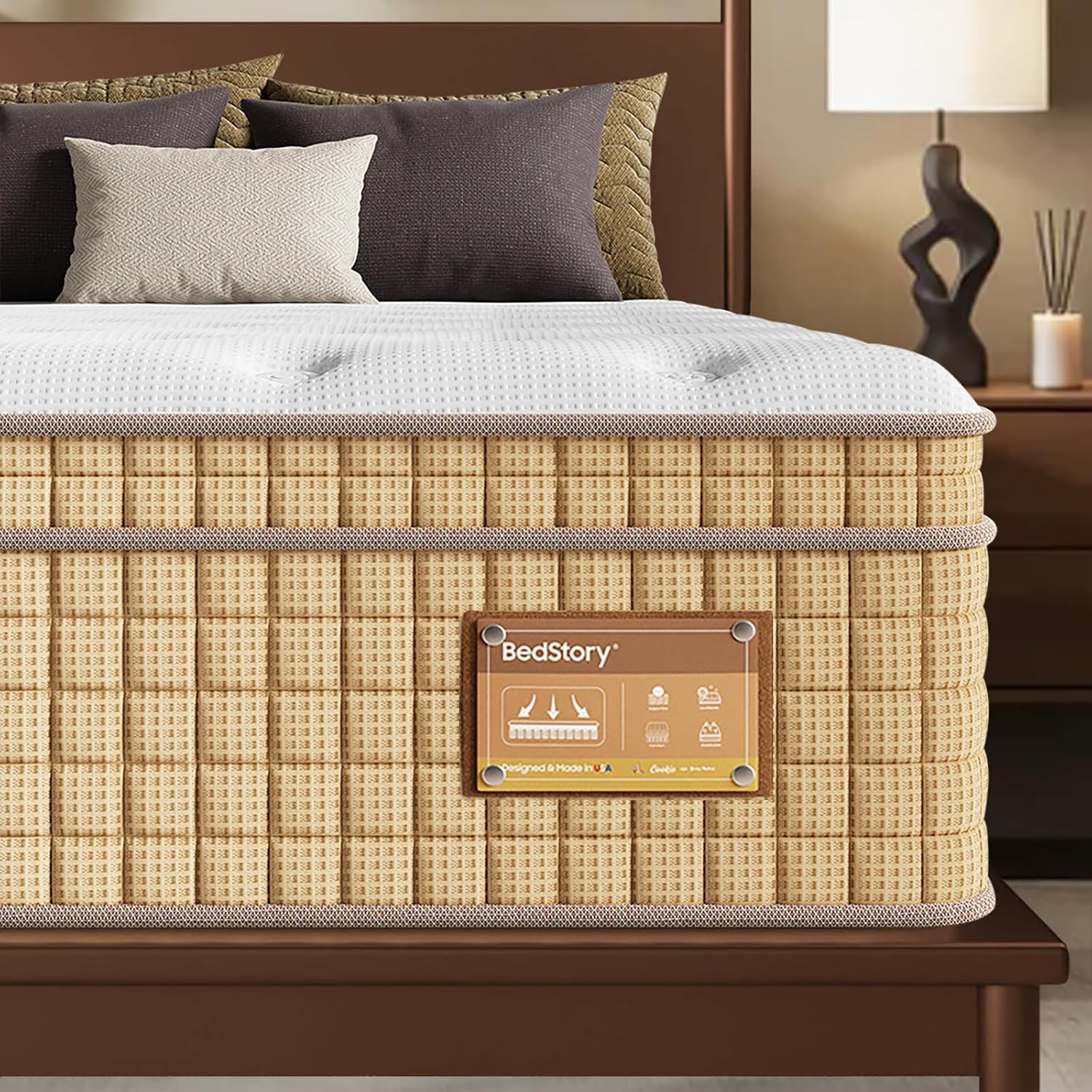
The support pick: BedStory Firm Queen Mattress 13 inch, Deep Sleep Hybrid Mattresses in a Box, Zoned Lumbar Support for & Back Pain Relief, Made in USA, CertiPUR-US Certified, 365 Night Trial, 10-Year Warranty
 Visit on Amazon →
Check current Amazon price, then look at what you are actually getting. This is a hybrid, which means coils under foam, and that combination is the reason it is first on my list for anyone whose complaint is a lower back that aches in the morning. Coils do the load-bearing work, and the foam on top keeps the surface from feeling like a floor.
The zoned lumbar support is the detail that matters most to me. A zoned build makes the middle third of the mattress firmer than the head and foot, which is exactly where a back sleeper needs the push and exactly where a stomach sleeper needs the hips to stay level. It is the closest thing to a spine-alignment feature you will find in a boxed mattress.
The 365-night trial is the number that makes this an easy call to test. My rule is 30 nights minimum, and this gives you 12 times that. The 10-year warranty and the CertiPUR-US certification are the durability and materials answers I want before I recommend a foam layer to a patient.
Flaws but not dealbreakers: Firm is not the same thing as supportive, and a firm surface can create pressure at the shoulders and hips if you sleep on your side. Side sleepers should run the pillow test below and be ready to add a topper. Listing pages also cannot tell you anything about edge support, so test that yourself during the trial.
Back sleepers, stomach sleepers, and anyone who has been told they need a firmer bed should start here. The queen size keeps it practical for a guest room or a primary bedroom.
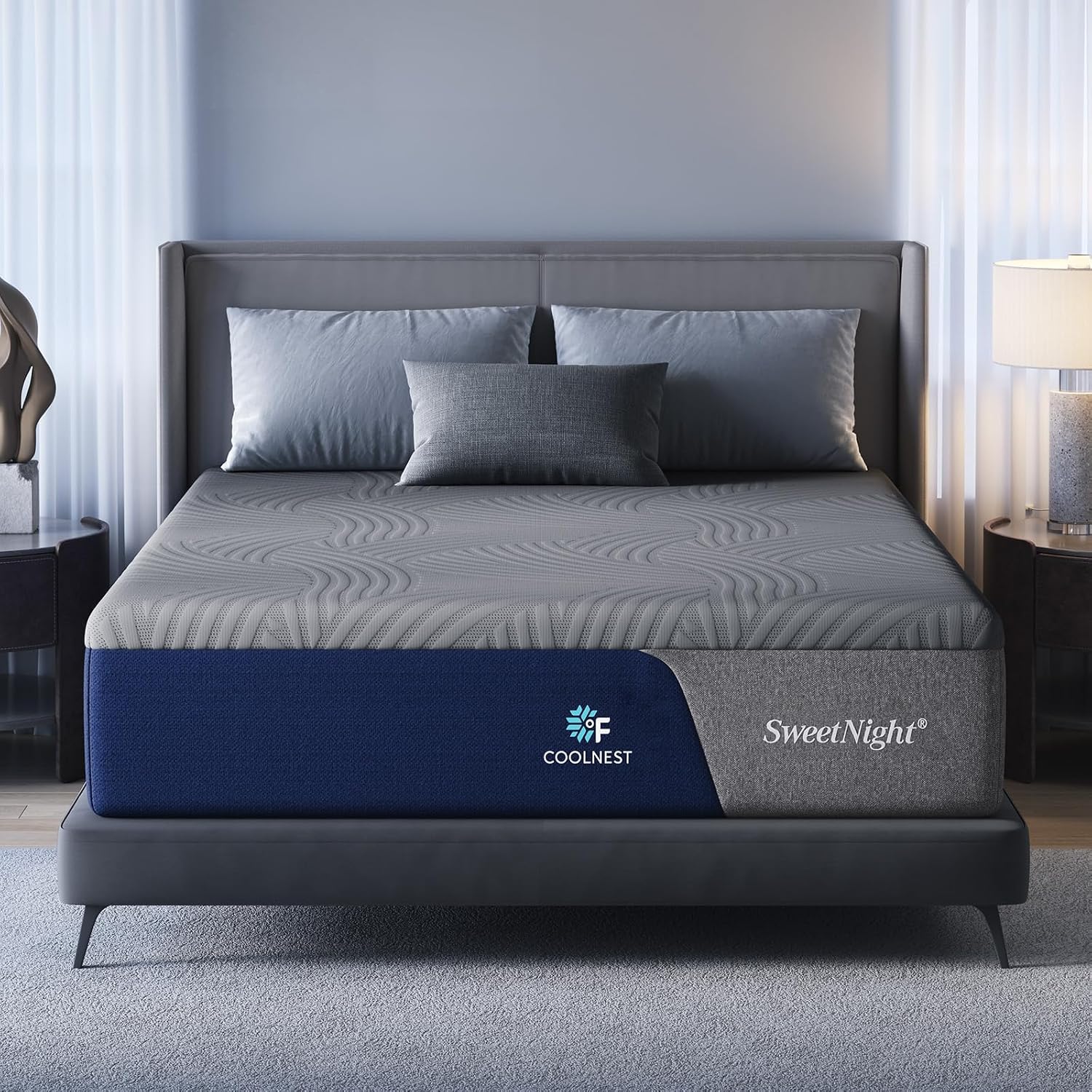
The cooling pick: Sweetnight CoolNest 14 Inch King Size Mattress, Cooling Memory Foam Mattress
 Visit on Amazon →
Check current Amazon price. This one is the king, and the king matters, because a king is a two-person decision and two-person decisions are where most mattress returns come from.
Cooling is the most overhyped claim in this industry, so let me be precise about what a cooling memory foam mattress can and cannot do. It cannot air condition your bedroom. No gel layer has ever lowered the temperature of a room by one degree. What it can do is move heat away from your body faster than a standard memory foam would, and that is the difference between waking up at 3 a.m. damp and sleeping through.
Memory foam's real strength is pressure relief, and pressure relief is what a side sleeper with a sore shoulder actually needs. The trade-off is motion transfer, and a king gives two people enough distance that one person rolling over does not wake the other.
Flaws but not dealbreakers: Memory foam runs warmer than a coil-forward hybrid by nature, which is the entire reason this build exists. If you sleep hot and you are also a stomach sleeper who needs a flat, firm surface, look at the BedStory first. And 14 inches is a thick mattress, so check that your fitted sheets and your bed frame can handle the height before it arrives.
Couples who sleep warm, side sleepers, and anyone upgrading to a king should put this at the top of the shortlist.
The actual testing workflow
Now the part you came for. This works on any mattress, boxed or showroom, and it takes about 30 nights of patience and 20 minutes of actual work.
Step one: Measure the mattress you have now. Lay a straight edge across the middle of your current bed and look for the dip. If the sag is deeper than about an inch and a half, you are not testing a new mattress, you are testing your spine against a hammock. Most mattress complaints I hear are a mattress-age complaint in disguise.
Step two: Identify your sleep position before you identify a firmness. Back sleepers need lumbar fill, which is what a zoned build provides. Side sleepers need the shoulder and hip to sink without the waist sagging. Stomach sleepers need a flat surface so the hips do not drop and pull the lower back into extension. Write your position down. Then shop.
Step three: Build a pressure map with a phone. You do not need a sensor pad to do the basic version. Lie on the mattress in your normal position, have someone kneel at mattress level and photograph you from the side. Then draw a line from your ear through your shoulder to your hip. If the line is straight, the mattress is holding you. If your waist is sagging into the bed or your hips are propped up, it is not.
Step four: Sit on the edge for a full minute. Edge support is the most ignored spec in mattress shopping and the one you will notice every single morning when you sit down to put your socks on. If the edge collapses more than a couple of inches under your weight, you will feel it for the next seven years.
Step five: Read the trial terms before you order, not after. A trial is only as good as its fine print. Look for a full refund, not a store credit, and look for who pays return shipping. The 365-night trial on the BedStory is the kind of term that gives you room to be wrong, which is what you want when you are buying a bed you cannot lie on first.
Step six: Commit to 30 nights, and do not judge before night 10. Your body is adapting to a new surface. Nights one through seven are adjustment, not verdict. I have seen people return a perfectly good mattress on night three because it felt different from the 10-year-old bed it replaced. Different is the point.
Step seven: Rotate at 30 days and write it down. Put the date in your phone. Rotation spreads the load and buys you years of life. If you cannot remember when you bought the mattress, you will not rotate it, and you will be back here in year two wondering why it sags.
Step eight: Run the partner test. Lie down together. Have one person roll over, sit up, and get out of bed while the other stays still. If you feel every movement, that is motion transfer, and it is the number one reason couples replace a mattress early. This is where the king earns its space.
The mistakes that burn your return window
The first mistake is deciding too fast. The second is deciding too slow. If you sleep on a mattress for 40 nights and the trial was 30, you own it now.
The third mistake is buying a mattress for cooling alone. A gel layer is not air conditioning, and if your bedroom runs at 78 degrees, no cover is going to fix that. Fix the room first, then buy the bed.
The fourth is buying firm because someone told you firm is better for your back. A mattress that is too firm for your sleep position creates pressure points at the shoulders and hips, and pressure points wake you up, and waking up is what keeps your back tight. Firm is not a virtue. Aligned is a virtue.
What this all costs
I am not going to quote you a price, because prices move and I would rather you check the current listing than trust a number I typed in October. Here is the math you should run instead.
Take whatever the mattress costs today, divide it by 2,555 nights, which is seven years of nightly use. That is your cost per night. A bed you keep for seven years and wake up rested on is the cheapest thing in your house on that math. A cheaper bed that sags in year two and gets replaced is the most expensive.
The other number is the trial window. A 365-night trial costs you nothing but patience. A 30-night trial costs you attention, because you have to actually decide inside it. Either way, the price of getting this right is the 30 nights you were going to spend sleeping anyway.
Do the pressure check. Sit on the edge. Sleep on it for a month. Your back will give you an answer, and it will be a better answer than any showroom nap ever gave you.