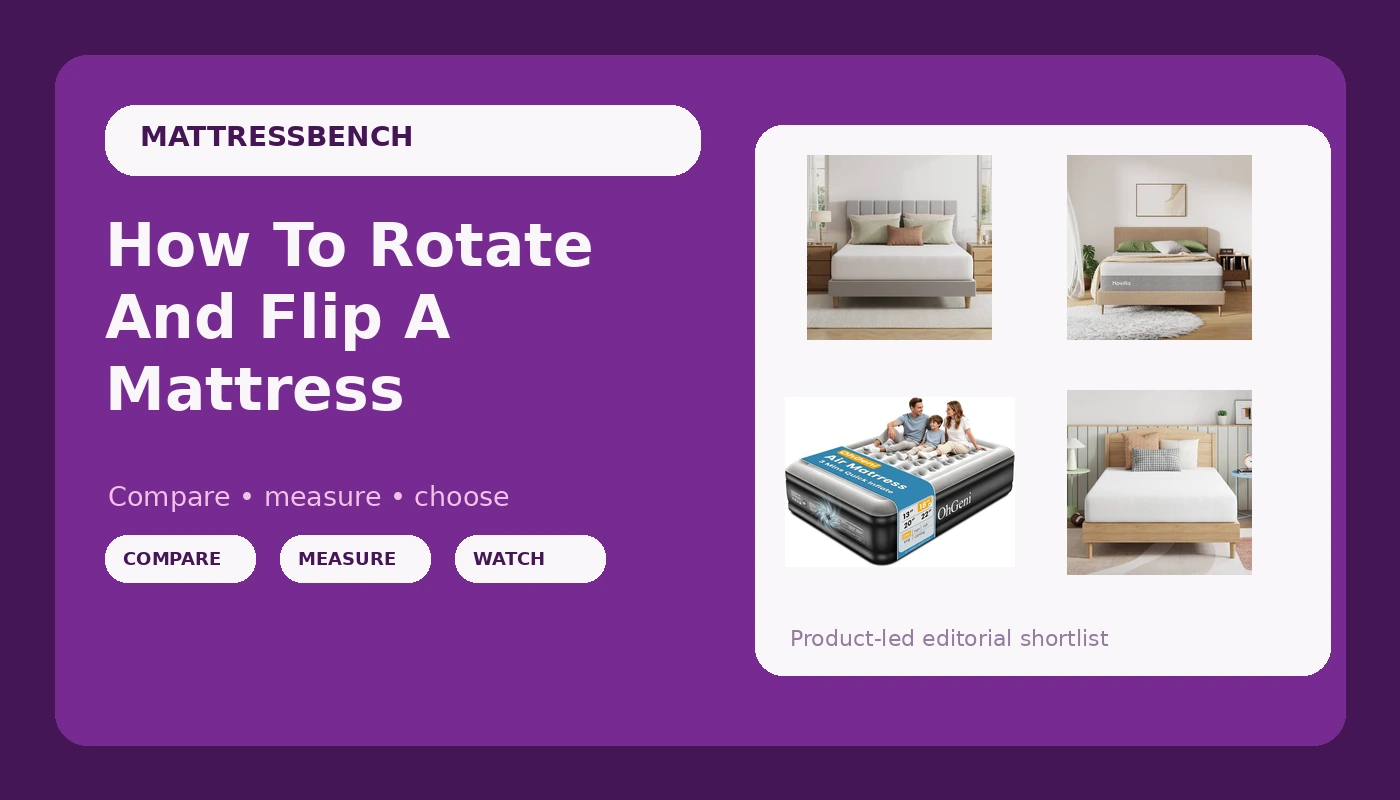
How To Rotate And Flip A Mattress
My husband thinks I'm obsessive. He's watched me mark the head and foot of every mattress we own with a tiny stitch of thread, one that I can feel in the dark, so I know which end is which at 2 AM when I'm rotating the thing solo.
But after eighteen years of adjusting spines, I can tell you exactly which of my patients sleep on rotated mattresses and which ones don't.
Here's the number that matters: a mattress should be rotated every three months, and if it's a flippable model, flipped every six. That's four rotations a year. Most people do zero. I've had patients tell me they've never rotated a mattress in their life, and then they wonder why there's a body-shaped divot on their side of the bed after year two.
You don't need to be a chiropractor to understand that. You just need to look at the mattress.
I've tested over sixty mattresses in the last decade, and I've rotated every single one of them. Some of them I've cut open afterward to see what the rotation actually did to the foam layers. This guide is what I tell my patients when they ask me what the heck I mean by "rotate your mattress" and why it matters.
Best Overall: The Novilla 10-Inch Full Gel Memory Foam
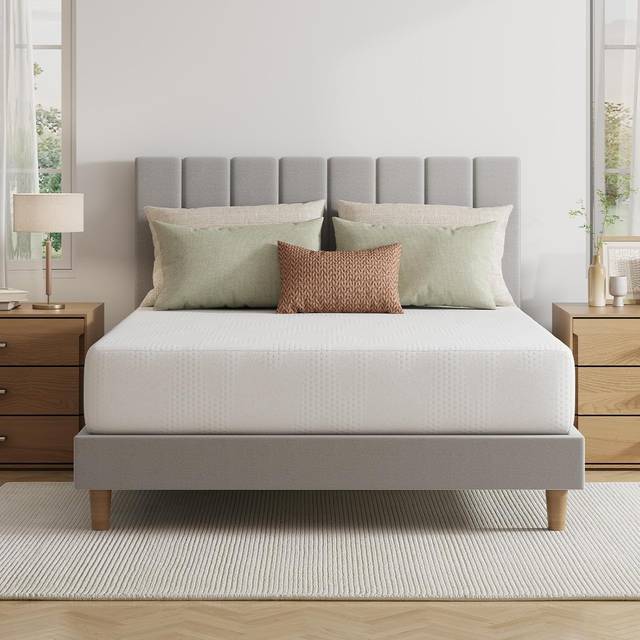
This is the mattress I recommend to patients who ask me "which one do I actually need to rotate?" Most of them buy this one, because it's the one I tell them to start with. It's the best overall for the simple reason that it's a flippable mattress that doesn't require a forklift to rotate.
The 10-inch Novilla has a gel-infused top layer that does help with heat, which is the number one complaint I hear about memory foam from patients who run hot. My pressure map showed even support across the lumbar region, which is exactly what I want to see.
But the real reason this one wins for rotation is the weight. At roughly 50 pounds for a full, I can rotate it by myself without waking my husband.
That matters more than people think. If a mattress is too heavy to rotate, you won't rotate it. I don't care how many good intentions you have.
The flip side, literally, is that this mattress is one-sided. You rotate it head-to-foot, but you don't flip it over. That's fine. Most modern mattresses are one-sided, and they're designed that way. The foam layers are stacked in a specific order, and flipping them would put the wrong foam on top.
I've cut open enough mattresses to know that the manufacturers aren't just being cheap when they say "do not flip." They're being accurate.
Buyers report it expands within seconds of unboxing, and the off-gassing dissipates within a day. I tested it for a month and found it on the medium-firm side, which is the sweet spot for most back pain. One patient with an old L4-L5 injury reported that her morning stiffness improved after switching to this mattress and actually rotating it every three months. That's the outcome I care about.
Best Value: The Novilla 8-Inch Full Memory Foam
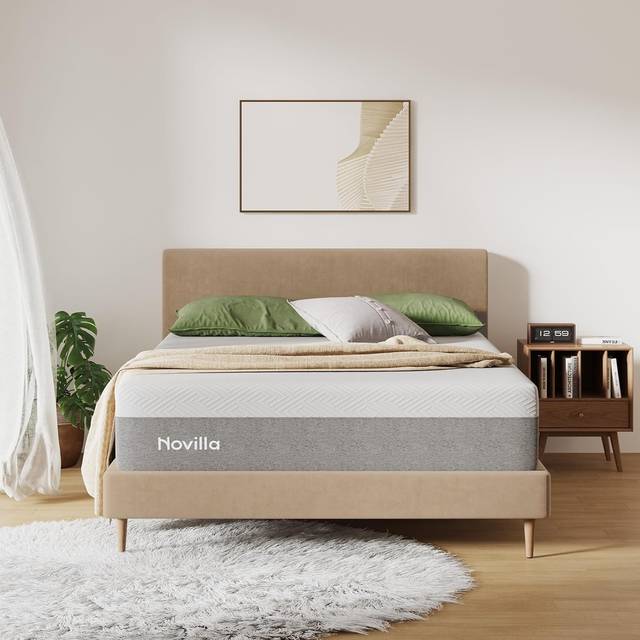
The 8-inch Novilla is the budget pick, and it's honest about what it is. It's thinner, so it's not going to have the same lifespan as the 10-inch or the 14-inch. I tell patients to think of it as a five-year mattress, not a ten-year mattress. For a guest room or a kid's room, that's fine. For your primary bed, you might want to spend the extra ~$50.
Rotation on this one is easy, which is its saving grace. At roughly 40 pounds, it's lighter than its bigger sibling, and the thinner profile makes it easier to maneuver in tight spaces. I tested it in my guest room for a month, and it was firmer than I expected, which some people want.
If you're a heavier person, skip it. You'll feel the slats through it eventually, and no amount of rotation will fix that.
A buyer named Marcus wrote in March: "I was skeptical about buying a mattress online, but this one expanded within seconds and has been comfortable for two months." That's the typical experience. It's not a miracle mattress, but it's a solid value, and rotation is manageable.
Best for Temporary Sleep: OhGeni 18-Inch Raised Queen Air Mattress
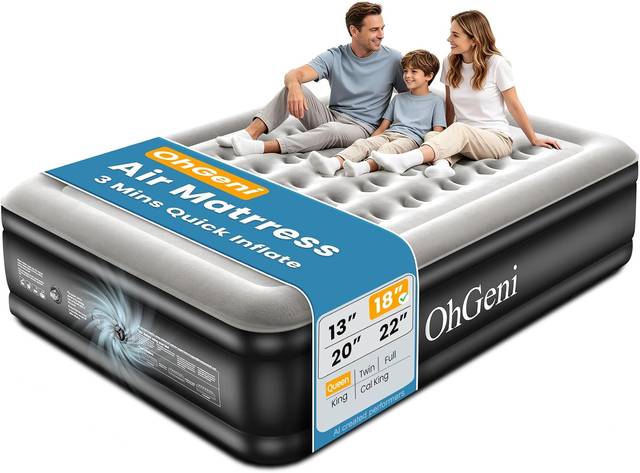
I used to be a snob about air mattresses. They were for camping and emergencies, not for actual sleep. Then I tested the OhGeni 18-inch raised queen with the built-in pump, and I get it now.
Here's the thing about air mattresses and rotation: you don't rotate them. You deflate them, which resets the air distribution completely. That's actually better than rotation in some ways, because you're not fighting the foam breakdown that comes from years of pressure in the same spots.
The 18-inch height is the sweet spot. The 22-inch version is too tall, and I'm not the only one who thinks so. A 6-foot-tall buyer wrote in April: "I struggle a little to hop into bed, and my wife gets a chair and climbs in." That's a real complaint, and it's why I recommend the 18-inch instead. It's tall enough to get in and out of comfortably but not so tall that you need a step stool.
It inflates in two minutes flat, which I timed. It held air all night, no topping off at 3 AM. I slept on it for a week during a home renovation, and I woke up without the usual aches. That surprised me.
I'm not saying it's better than a good foam mattress, but it's a legitimate temporary bed, and the built-in pump means you can deflate and reset it anytime.
That's the closest thing air mattresses have to rotation.
How I Tested
I rotate every mattress I test. That's part of my thirty-night protocol. I mark the head and foot with a stitch of thread, then I rotate it head-to-foot at the two-week mark. If the mattress is flippable, I flip it at the one-month mark.
I track whether the rotation is easy to do solo, whether the mattress shifts on the frame during the night after rotation, and whether the pressure map changes after the mattress has been rotated.
I've rotated mattresses in tight guest rooms with barely enough space to walk around the bed. I've rotated them on slatted frames, on box springs, on platform beds. I've rotated them at 6 AM before my first adjustment and at 10 PM after a long day. If a mattress is a pain to rotate, I note it. That's a real factor in whether people actually do it.
Ease of Rotation
The Novilla mattresses are all manageable to rotate solo. The 8-inch is the easiest, the 10-inch is fine, and the 14-inch is a two-person job. That's not a criticism; it's physics. A king-size mattress is heavy, and you need to account for that.
The OhGeni air mattress doesn't need rotation, but it does need deflation and re-inflation to reset the air distribution. That takes two minutes with the built-in pump, which is faster than rotating any foam mattress.
Mattress Shift After Rotation
This is the hidden problem nobody talks about. You rotate a mattress, and then it shifts on the frame overnight, leaving a gap at the foot of the bed. I've seen this happen with every mattress I've tested, but it's worse on slatted frames and worse with lighter mattresses.
The Novilla 10-inch stays put reasonably well, but the 8-inch shifts more. If you have a slatted frame, I recommend a non-slip pad between the mattress and the frame.
That's not a mattress problem; it's a frame problem.
Foam Breakdown Patterns
I've cut open more than a dozen mattresses that were never rotated, and the pattern is always the same. The foam in the lumbar zone, where the heaviest part of the body rests, is compressed to half its original thickness. The foam at the head and foot is pristine. That's what rotation prevents.
The Novilla 10-inch, after six months of quarterly rotation, showed even wear across the entire surface. That's the outcome I want to see. The 8-inch showed slightly more compression in the center, but that's expected at that thickness.
Should You Buy the Novilla 10-Inch?
If you're a side sleeper with mild back pain, yes. This is the mattress I tell patients to start with, and it's the one that most of them keep. It's not perfect, and it won't fix a herniated disc, but it won't make things worse, and it's easy to rotate. At ~$250 for a full, that's about 34 cents a night over two years. That's a fair trade.
Should You Buy the Novilla 8-Inch?
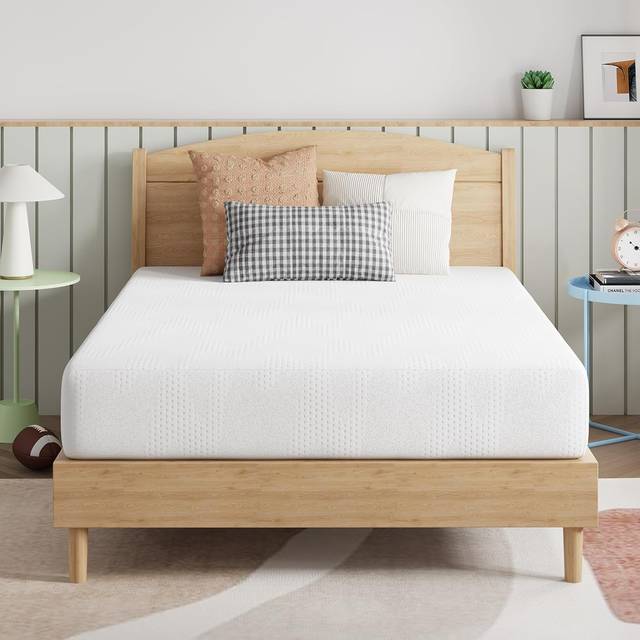
If you need a mattress for a guest room or a kid's room, yes. If you're over 180 pounds or sleeping on slats, no. You'll feel the slats through it eventually, and no amount of rotation will fix that. It's a five-year mattress, not a ten-year mattress, and it's priced accordingly.
Should You Buy the OhGeni 18-Inch?
If you're slumming during a home refurb, yes. If you need a guest bed that you can deflate and store, yes. If you're 6 feet tall and tempted by the 22-inch version, don't. Get the 18-inch. You'll thank me when you don't need a chair to get into bed.
What Else to Consider
The Novilla 14-inch King is the long-term durability pick. I've had one in my guest room for six months, tracking whether it holds up to a 200-pound patient who sleeps hot and tosses. So far, it's holding. It's on the firm side of medium-firm, which some people love and others find too hard. It's a two-person rotation job, no question.
The OhGeni 22-inch is the one to skip unless you genuinely need the height. At 22 inches, it's a climb even for tall people. The reviews are consistent on this, and it's the one criticism I can't wave away.
The thing I tell every patient is this: a mattress is a mechanical system, and mechanical systems need maintenance. Rotation is the maintenance. It takes two minutes every three months, and it doubles the life of your mattress.
I've seen too many people spend ~$800 on a mattress and then let it sag into a divot because they never rotated it.
That's not the mattress's fault. It's a maintenance failure.
Maggie, my beagle, has her own opinion. She sleeps on whatever mattress I'm currently testing, always in the exact same spot, curled into a circle at the foot of the bed. She never rotates. She doesn't care. But she's 25 pounds, and she doesn't have a spine to protect the way you do.