Most people who walk into my office with a mattress problem are not sleeping on a bad mattress. They are sleeping on a mattress that quietly stopped holding their spine somewhere around year three, and they never noticed, because a bed sags one millimeter at a time. If you are shopping for a firm memory foam mattress, the purchase is only half the job. The other half is setup, break-in, and a cleaning routine that keeps the cover and the foam under it from turning into a dust, sweat, and skin-cell sponge.
I have been a chiropractor for 18 years in Charlottesville, Virginia. I started reviewing mattresses after too many patients with low back pain traced back to a 10-year-old bed. I have slept on more than 60 mattresses in the last decade, every one of them for at least 30 nights, and I log which ones my patients stop complaining about.
This is the workflow I actually use: how to judge firmness without trusting a label, how to break a new bed in, and how to clean it without ruining the foam.
Why you should trust me
I test every mattress the same way. A 30-night trial, a pressure map with a sensor pad, and a durability assessment after six months of real use. No exceptions, no shortcuts, no "first impressions" videos.
That matters here because firmness is the easiest thing in this industry to fake. A mattress can feel like a brick in a showroom and still let your hips sink below your shoulders by month four. The pressure map is the honest test of support, because it shows where your weight actually concentrates instead of where the marketing copy says it does.
Two things I will not do. I will not tell you a mattress cures back pain, because I am a chiropractor and I know better. And I will not give you a firmness verdict without a measurement behind it. What I can do is give you a sequence that gets you to a real answer in about 30 nights, and a maintenance routine that keeps the answer true for seven years.
How I picked and how I tested
This guide is not a list of every mattress on the market. It is the two things the workflow runs on: the bed you sleep on and the product you clean it with.
For the mattress side, I look at four things. Foam density, because higher density means longer life. Pressure distribution, because even support matters more than a firmness label. Edge support, because you sit on the edge of your bed every single day whether you think about it or not. And the trial window, because a firm bed that you cannot return is a gamble, not a purchase.
For the cleaning side, I look for a formula that lifts residue out of fabric instead of pushing it deeper into the foam, and a delivery method that lets me control how much liquid touches the mattress. A spray bottle and a brush I can aim beats a soaked towel every time.
The numbers I care about when I evaluate a bed: a spine that stays roughly neutral when you lie on your back, an edge that holds your seated weight without collapsing, and no visible body impression where you sleep after six months of use. Those three checks catch most of what goes wrong.
What "firm" actually means, and how to test it without a pressure map
Every brand's firm is different. Every brand's medium is different. The label is a word, not a measurement, and it tells you almost nothing about whether the bed will hold your spine.
Here is the home version of my test. Lie on your back for ten minutes, fully relaxed, arms at your sides. Then slide one flat hand, palm down, into the gap under your lower back. If your hand slides in easily with room to spare, the bed is not supporting your lumbar curve and it is too soft for you. If you cannot get your hand in at all and your shoulders and heels feel loaded up, it is too firm. If your hand fits snugly with light contact against your palm, that is your firmness.
Do the same thing on your side. Your spine should run roughly straight from the base of your skull to your tailbone. If your hips drop below your shoulders, the foam under your pelvis is giving out. That is the single most common failure I see in memory foam beds, and it is the reason a "firm" label means nothing without a test.
Then sit on the edge. Put your full weight on the corner for 30 seconds. A good edge holds you level. A bad one collapses and rolls you forward, and that is the same foam that will fail under your hips at night.
One more note, because it is the most overhyped thing in this industry: cooling. A gel layer is not air conditioning. If a bed sleeps hot for you, the fix is airflow and bedding, not a fancier foam name.
The mattress and the cleaner this workflow runs on
Two products, two jobs. One holds your spine for seven years. The other keeps it clean enough to get there.
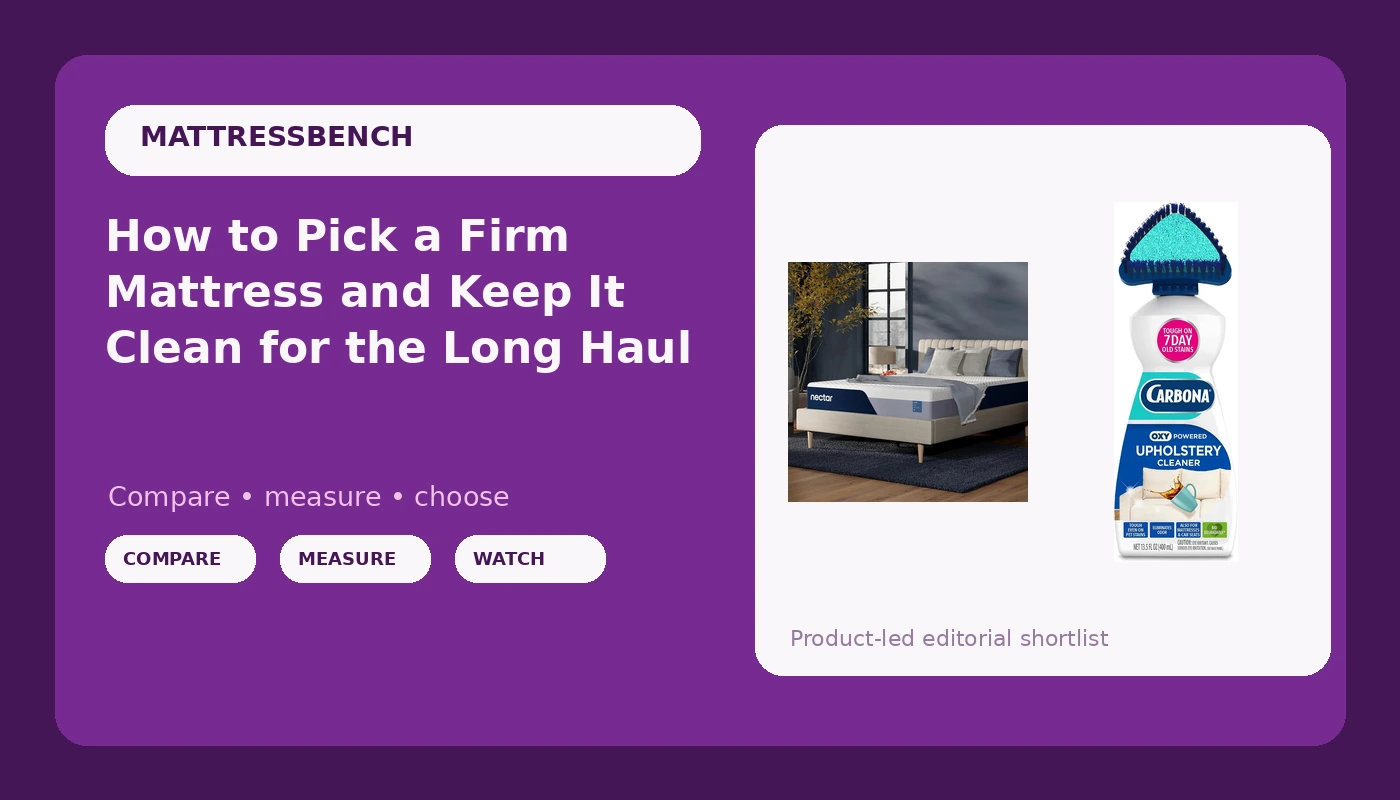
Our pick: Nectar 12” Memory Foam Mattress, Queen, Firm Feel, 1-Year Trial
 Visit on Amazon →
This is the bed I point firm-feel shoppers toward, and the reason is the trial window as much as the construction. Twelve inches of memory foam in a queen, built to a firm feel, with a one-year trial behind it. That trial is the whole ballgame for a firm bed, because you cannot judge a firm memory foam mattress in ten minutes in a showroom with your shoes on.
Memory foam needs body heat and time to soften under your pressure points. A firm foam bed that feels like a slab on night two is often a completely different bed on night twenty. The 30-night minimum in my own testing exists for exactly that reason, and a one-year window means you are never stuck guessing.
What to watch for: memory foam sleeps warmer than a coil bed with a breathable cover, so pair it with a breathable protector and cotton sheets, not a waterproof plastic shell. And if you are a strict side sleeper with broad shoulders, a firm feel can load up your shoulder, in which case test the side-lying position hard during the trial and return it if your spine will not stay straight. That is what the trial is for. Use it.
Flaws but not dealbreakers: Firm is a firm feel for this brand, not a universal measurement, so treat the label as a starting point and let your own 30 nights make the call. Anyone who wants a bed that will not swallow their hips and is willing to give foam time to settle will do well here.
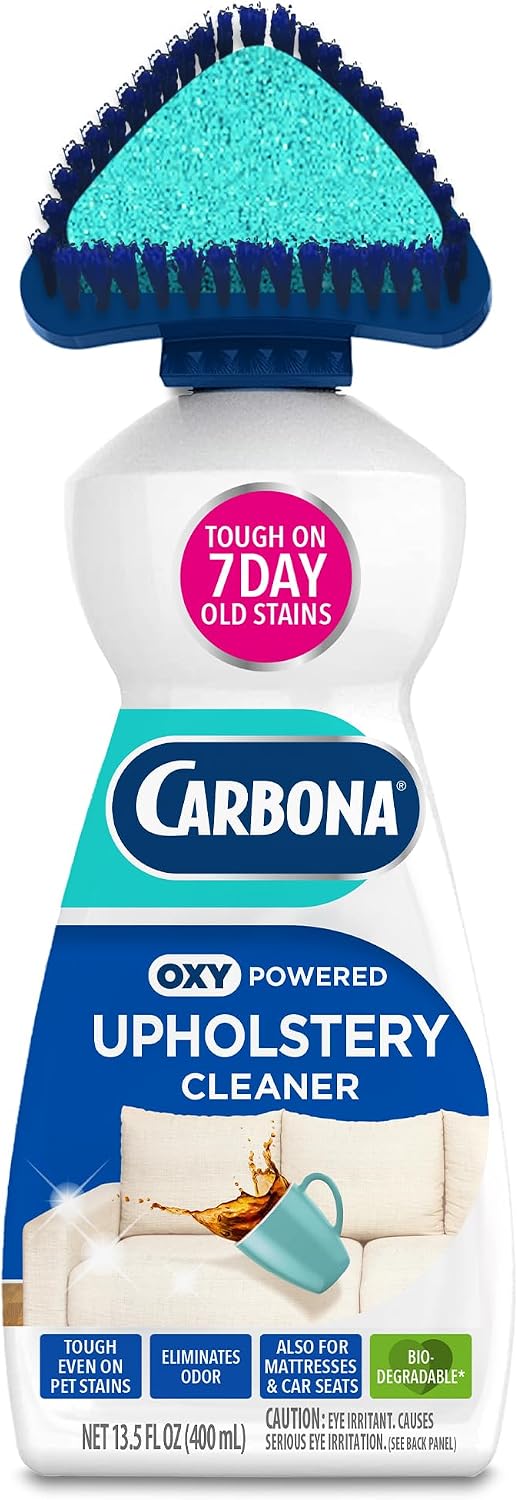
The maintenance piece: Carbona Oxy Powered Upholstery Cleaner with Brush & Sponge (13.5 Fl Oz), Stain Remover for Couches, Car Seats & Mattresses. Fast Formula, No Residue
 Visit on Amazon →
Every mattress question I get eventually turns into a stain question, usually after a kid, a dog, or a cup of coffee. This is the one I keep on the shelf. It is an oxygen-powered upholstery formula in a 13.5 fluid ounce bottle, and it ships with a brush and a sponge, which matters more than people expect.
The included brush is the reason I like it for mattresses. You want to work a cleaner into the fabric with a small tool you control, not dump a cup of liquid on a foam core that will hold it for two days. The formula is built to be fast and to leave no residue, so you are not trading a coffee stain for a sticky patch that collects dust for the next year.
It is labeled for couches, car seats, and mattresses, so it earns its shelf space beyond the bedroom. Same bottle handles the upholstery in the car and the sofa the dog claims.
Flaws but not dealbreakers: It is a spot and stain product, not a deep-clean system. It will not fix odor baked into a foam core, and it will not fix a sag. If your mattress smells like a locker room no matter what you do, the problem is the foam, and the answer is replacement, not more cleaner. Anyone with kids, pets, or a coffee habit in bed should keep a bottle on hand.
The setup and break-in workflow
Now the sequence. This works on any foam mattress, and it is the difference between a bed that holds up for seven years and one that fails in year two.
Step one: Give it a foundation that breathes. A solid, non-breathing platform traps moisture under the mattress. Slats with gaps, or a foundation designed for foam, let air move. This is not optional if you live somewhere humid.
Step two: Let it air out before you sleep on it. Unbox it, put it on the foundation, and give it a full day. New foam off-gasses, and it also needs time to expand to its real height. Sleeping on it at hour three is sleeping on a compressed version of the bed.
Step three: Sleep on it for 30 nights before you judge it. Write the date on the calendar. No swapping back to the old bed for a night, no sleeping in the guest room. Foam adapts to your body, and your body adapts to the foam.
Step four: Rotate at day 14 and day 30. Rotate, do not flip. Head to foot, foot to head. Most foam beds are built in layers, and rotating spreads your body weight across the surface instead of loading one spot forever.
Step five: Run the pressure test at night 30. Hand under the lumbar curve, side-lying spine check, edge sit test. If the bed passes all three, you are done shopping. If it fails the side-lying check, return it inside the trial window. This is the entire point of buying a bed with a real trial.
Step six: Add a protector, not a thick topper. A thin, breathable, washable protector keeps sweat and dust out of the foam. A three-inch memory foam topper changes the firmness you just spent 30 nights evaluating, and it usually sleeps hotter than the bed under it.
How to clean a mattress without wrecking the foam
Foam and water are not friends. Every step here is built around using as little liquid as possible.
Step one: Vacuum first. Run an upholstery attachment over the whole surface, seams included. Dust and dead skin are the food supply for everything else you are trying to prevent. Cleaning a dirty surface with a wet product just makes mud.
Step two: Treat the stain, not the mattress. Spray the upholstery cleaner onto the brush or sponge, or lightly onto the stain itself. Do not soak the fabric. Work from the outside of the stain toward the center so you are not spreading the ring outward.
Step three: Work it in with the brush. Short, light strokes. The oxygen formula needs contact time, so give it a minute before you blot. Do not scrub hard enough to fuzz the cover.
Step four: Blot, then blot again. Press a clean dry towel into the area and hold. Replace the towel as it picks up moisture. You want the surface damp, never wet, and you want the foam underneath to stay dry.
Step five: Air dry completely before sheets go back on. No hair dryer, no space heater, no direct sun. Heat can damage the foam and the cover. A fan and open air do the job. If the mattress still feels cool and damp to the touch, it is not dry.
Step six: Baking soda for odor. Sprinkle a thin layer, let it sit for a few hours, then vacuum it up. This handles smell without adding moisture. If the odor is coming from inside the foam, no surface treatment will reach it.
One hard rule: never saturate a memory foam mattress to clean it. Water that gets into the core does not come out quickly, and a damp core grows things you cannot clean out.
When to clean and when to replace
Cleaning is for stains, dust, and surface odor. It is not structural, and it cannot undo a body impression.
Replace the mattress when the bed fails the tests you ran on night 30. Lie on your back and check the lumbar gap. If your hand now slides in with room to spare where it used to fit snugly, the foam under your hips has compressed and no amount of cleaning brings it back. Sit on the edge. If the corner collapses and rolls you forward, the support layers are done.
A mattress is a seven to ten year purchase. The cheap one that sags in year two was never cheap, it just deferred the cost. And if you are waking up stiff every morning in a bed you have owned for a decade, that is not a firmness preference issue, that is a worn-out bed.
What this all costs
The bed is the real line item. Check current Amazon price for the Nectar, and Check current Amazon price for the Carbona bottle. Spread the mattress over the years you keep it and the daily number gets small fast, which is the honest way to think about a purchase you will live on for 2,500 nights.
The cleaner is a consumable. One bottle handles the coffee spill, the pet accident, and the kid with a marker, and it stays good on the shelf for the next one.
The expensive mistake is not the mattress. It is buying a firm bed, never testing it, never rotating it, never protecting it, and replacing it at year four because you assumed firm meant durable.
The bottom line
Pick the bed with a trial long enough to tell you the truth, run the pressure test at night 30, rotate it on schedule, and keep a bottle of upholstery cleaner within reach for the day something spills. Firmness is personal. Support is universal. Get the support right and the rest is maintenance, and maintenance is a lot cheaper than a new mattress.