Most people who think they need a new mattress actually need a mattress topper for back support, plus an honest look at what is underneath it. I have watched this play out in my clinic for 18 years. A patient comes in with a dull ache between the shoulder blades, tells me their bed is too soft, and then mentions they have been sleeping on it for eleven years. When I ask what they did about it, they say they flipped it once in 2019.
The order of operations matters. A topper changes how a mattress feels at the surface, which is exactly where your hips and shoulders need give. A topper cannot fix a base layer that has lost its structure, and no amount of premium foam will hold a spine that a sagging support core has already dropped out of alignment.
So this is the sequence I give patients: check the base, then fix the surface. Get it right and you can add years to a bed you were ready to haul to the curb. Get it wrong and you will spend real money on foam that just makes a bad mattress softer.
Why you should trust me
I am a chiropractor in Charlottesville, Virginia, and I have been in practice for 18 years. I started reviewing mattresses because too many patients with back pain traced back to a 10-year-old mattress and a habit of buying the firmest thing on the showroom floor. I have slept on more than 60 mattresses in the last decade, each one for at least 30 nights, because a weekend on a bed tells you almost nothing. Every mattress I evaluate gets a pressure map reading, a 30-night trial, and a durability check at six months. I keep a logbook of which mattresses my patients stop complaining about.
I am not going to tell you a mattress cures back pain. It does not. What it can do is stop contributing to it.
How I test and what actually matters
The number I trust most is the pressure map, a sensor pad that shows where your body weight concentrates. High pressure at the heels, hips, or shoulders means the surface is not letting you sink in enough. Low pressure everywhere, with nothing pushing back under the lumbar curve, means the opposite problem, and that one is worse for alignment.
Two more things I measure. Foam density is the weight of the foam per cubic foot, and it is the best predictor of how long a layer will last. Edge support is how well the mattress holds you when you sit on the side, which you do, even if you think you don't.
A quick note on cooling, because it shows up in every product listing I read. Cooling claims are the most overhyped thing in this industry. A gel layer is not air conditioning. If you sleep hot, airflow through the construction matters more than whatever name is printed on the cover.
What you need before you start
Two pieces, and one of them you probably already own.
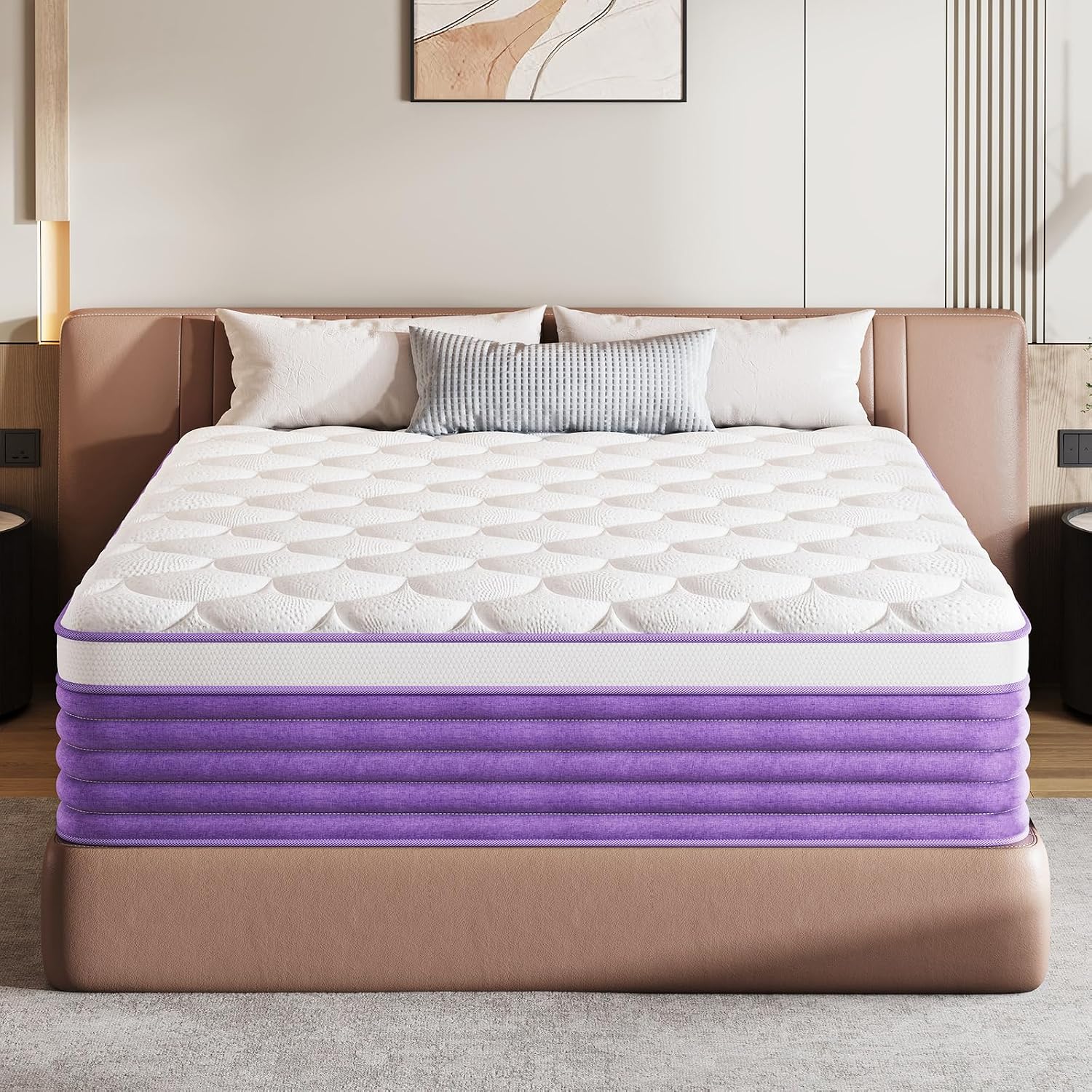
The base layer: Queen Mattress 12 Inch,Queen Size Mattresses in a Box,Hybrid Mattress
 Visit on Amazon →
If your current mattress has failed the sag test, this is where I would start. It is a 12-inch hybrid, which means coils for support under a foam comfort layer, and that combination is what I want under a spine. Coils give you the pushback that keeps your hips from sinking lower than your shoulders. Foam gives you the pressure relief at the contact points.
Hybrids in a box have gotten genuinely good in this price band. What I look for, and what this one has: a support core that does not collapse when you sit on the edge, and enough thickness that you are not bottoming out onto the deck. A 12-inch profile is the practical minimum for a hybrid. Anything thinner and a 200-pound sleeper will feel the foundation through the comfort layer.
Flaws but not dealbreakers: A bed in a box needs time. Give it 24 to 48 hours to fully expand, and expect the first week to feel firmer than it will in a month. It breaks in.
Anyone replacing a mattress that has visibly dipped, or anyone setting up a guest room where the bed sits unused for months at a time, should look here first.
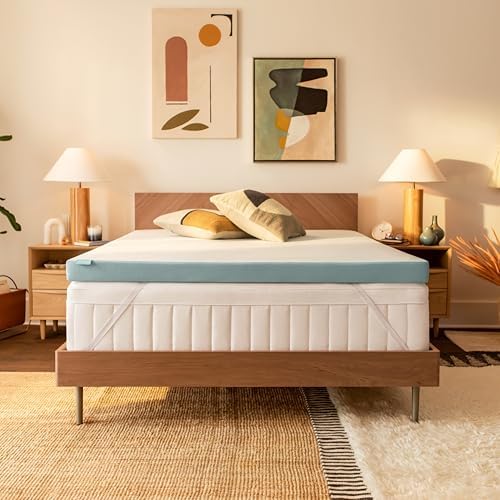
The fix layer: Tempur-Pedic TEMPUR-Adapt + Cooling 3-Inch Queen Mattress Topper Medium Luxury Premium Foam, Washable Cover, Medium Cooling Topper,White
 Visit on Amazon →
This is the piece that fixes a mattress that is too firm. Tempur-Pedic is still the best memory foam on the market. The pressure relief is real, and it shows up on a pressure map as a flatter distribution across the hips and shoulders. You pay heavily for it, and this topper is not cheap, but three inches of the genuine material is a different product than a two-inch slab of generic foam.
Memory foam is slow. It takes a few seconds to let you in and a few seconds to let you go. Some sleepers love that. Some sleepers hate it. If you have never slept on real memory foam, the adjustment period is real, and it lasts about two weeks.
Flaws but not dealbreakers: It sleeps warmer than latex or a coil topper, cooling cover or not. If you run hot, that is the tradeoff you are making for the pressure relief. A washable cover helps, and so does a breathable protector, but neither one turns it into a cool surface.
Anyone with hip or shoulder pressure on a firm mattress, and anyone who wakes up with a numb arm, should start here.
The workflow, step by step
Step one: Test for sag before you spend anything
Lay a straight edge along the length of the bed and see whether the middle dips below the ends. If the surface drops more than about an inch, the support core is done and a topper is a bandage. Replace the mattress.
Step two: Find out where you hurt
Your body tells you which layer failed. Shoulder and hip pressure in the morning, with no lower back involvement, points to a surface that is too firm. Lower back ache that shows up in the second half of the night, once your muscles have relaxed, points to a support core that is not holding your lumbar curve. That second one is not a topper problem.
Step three: Sit on the edge of your bed
Literally sit down on the edge with your feet on the floor and stay there for 30 seconds. If you slide forward or the corner collapses, edge support is gone. Edge support is the first thing to fail on a cheap mattress, and it fails long before the middle does.
Step four: Match the surface to the sleeper, not the label
A 130-pound side sleeper needs more give than a 220-pound back sleeper on the same mattress. This is why the word medium is meaningless. Every brand's medium is different, and it means nothing without a body weight attached to it. Side sleepers need a surface that lets the shoulder drop in far enough to keep the spine straight. Back sleepers need less sink and more pushback under the lumbar curve.
Step five: Add the topper, then wait
Give a new topper a full two weeks before you judge it. Foam needs to warm up and compress under your body weight, and your body needs to unlearn the old surface. The first three nights are not a review. They are an adjustment.
Step six: Recheck your alignment
Lie on your side and have someone look at your spine from behind. Your ears, shoulders, and hips should form a straight line. If your hips sit lower than your shoulders, the surface is too soft. If your waist hangs with a gap under it, the surface is too firm.
Step seven: Give it thirty nights
That is the minimum I will accept before I call anything a verdict, and it is the same standard I hold myself to. Sleep is variable, and a bad week at work will make a good mattress feel wrong.
Step eight: Rotate, do not flip
Most modern mattresses are one-sided. Rotate head to foot every three months for the first year, then every six months after that. Rotating spreads compression across the whole surface instead of wearing a crater where you sleep. It is the cheapest thing you can do to make a bed last.
What not to expect
A topper will not fix a broken support core. It will not cure back pain, and anyone who tells you otherwise is selling something. It will not make a hot sleeper cool if the construction does not breathe. And it will not turn a queen into a king, so measure your bed before you order, because centering a queen topper on a queen mattress is a two-person job.
Also, do not stack a topper on a mattress that is already too soft. Adding three inches of memory foam to a bed that sags makes the sag worse and puts your hips lower than your shoulders, which is the exact position your spine does not want.
What this all costs
The hybrid mattress in a box is the bigger line item. The topper is the smaller one, though neither is trivial. Check current Amazon price on both before you commit, because both move.
The math that matters is not the sticker, it is the cost per night. A mattress you keep for eight years and a topper you keep for three spread that spend across thousands of nights of sleep. A cheap mattress that sags in year two was never cheap. It was two mattresses, plus the two years you spent sleeping badly in between.
When to replace instead of fix
Replace the mattress if the surface dips more than an inch, if you can feel the coils through the foam, if the edge collapses when you sit on it, or if the bed is more than eight years old and you have already tried a topper. Fix the surface if the core is sound and the problem is pressure at your shoulders or hips.
That is the whole decision. Check the base, fix the surface, then give it thirty nights. Your spine will tell you the rest.