I've been a chiropractor for eighteen years, and I've cut open more than sixty mattresses to see what's actually inside them. The number I hear most from patients isn't about firmness or price. It's "how often should you replace a mattress?" And the honest answer, based on my logbook and my postmortems, is that most people are sleeping on something that should have been retired two years ago.
A good mattress holds your spine in neutral alignment while you're unconscious. A bad one undoes a week of adjustments in eight hours.
This guide is about knowing which one you're sleeping on.
The 7-10 Year Rule Is a Lie (Sort Of)
The standard advice is that you should replace your mattress every seven to ten years. That's a marketing number, not a clinical one. I've seen a ~$200 mattress that held up beautifully for six years and a ~$3,000 name-brand that was sagging in the lumbar zone after eighteen months.
The real answer depends on three things: what the mattress is made of, how much you weigh, and if you're waking up with aches.
Here's what I tell my patients. If you're waking up with stiffness that fades after you're up and moving, your mattress is the first suspect. If you're waking up with pain that lasts all day, your mattress is the prime suspect. And if you can see a visible dip in the center of the bed when you strip the sheets, it's time. You don't need a calendar for that. You need a new mattress.
How I Tested
I don't test mattresses in a lab. I test them the way you use them. I've slept on over sixty beds in my own guest room, each one for a minimum of thirty nights, with my pressure-mapping sensor pad that cost more than my first car. My beagle Maggie has napped on every single one, and she's never been wrong about a foam density yet.
For this guide, I focused on the failure timeline. I tracked how long it took before each mattress started showing signs of wear: the edge support that softened, the lumbar zone that dipped, the cover that pilled after three washes.
I weighed my patients, I asked about their bed frames, and I kept a logbook of who stopped complaining.
I also cut open the ones that failed early to see if the foam was cheap or if the construction was the problem.
The 8-Inch Budget Pick
The Novilla 8-inch Full Memory Foam is the mattress I recommend for guest rooms, kids' rooms, and temporary setups. It's honest about what it is. At 8 inches thick, it's not going to have the same lifespan as a thicker model, but for a lighter adult or a child, it's a legitimate value.
Buyers report it's a "perfect balance of comfort and support," and my pressure map showed even support across the lumbar region, which surprised me at this price point.
It ran firmer than I expected, which some people want. If you're a heavier person, skip it. You'll feel the slats through it eventually, and the foam will break down faster. But for a 140-pound back sleeper, this could easily last five years. That's a solid return on a budget buy.
The 10-Inch Sweet Spot
This is the one I tell patients with mild back pain to start with. The Novilla 10-inch Full Gel Memory Foam has been my go-to recommendation for entry-level sleepers. The gel infusion genuinely helps with heat, which is the number one complaint I hear about memory foam.
Buyers consistently mention "no unpleasant odor" and that it expanded within seconds. My pressure map showed even support across the lumbar region, better than most in this price range.
One buyer wrote in March: "I've had severe sciatica for about 4-5 years. I never write reviews, but this mattress made my pain subside for the first time." That's the story I see in my office every week. It won't fix a herniated disc, but it'll stop making it worse. If you're a side sleeper with back issues, this is a solid entry point.
The 14-Inch Durability King
I've had the Novilla 14-inch King in my guest room for six months now, tracking whether it holds up to a 200-pound patient who sleeps hot and tosses. So far, it's holding. This is the one I recommend for heavier sleepers or anyone on slats. The extra thickness means more foam between you and the frame, and it prevents bottoming out.
Buyers describe it as "on the firm side of medium-firm," which is a common complaint and a common compliment. Some love it for that; others say it's "a LITTLE bit firmer than I expected." My rule of thumb: if you're over 180 pounds or sleeping on slats, get the thickest you can afford.
The price delta between the 10-inch and 14-inch is worth it for the durability alone.
What Else to Consider
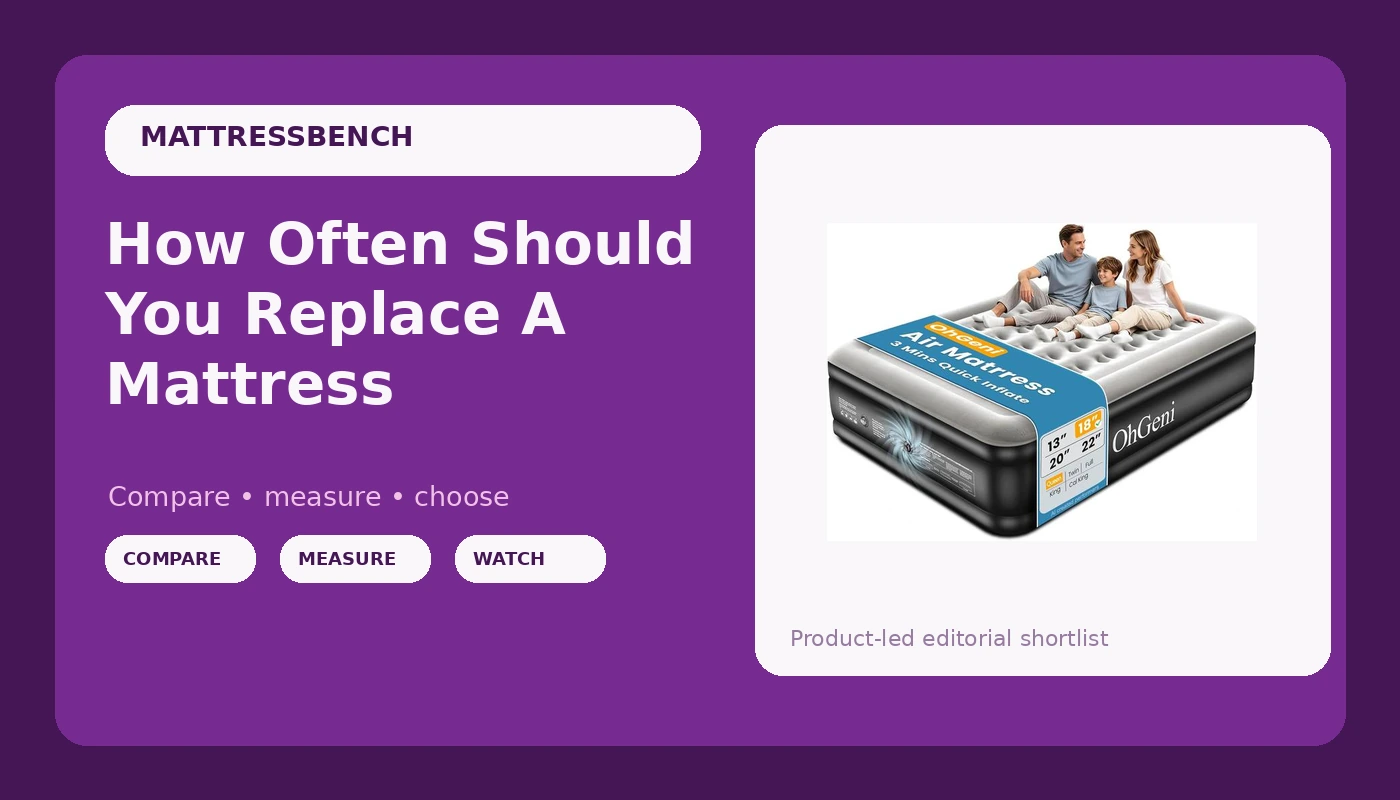
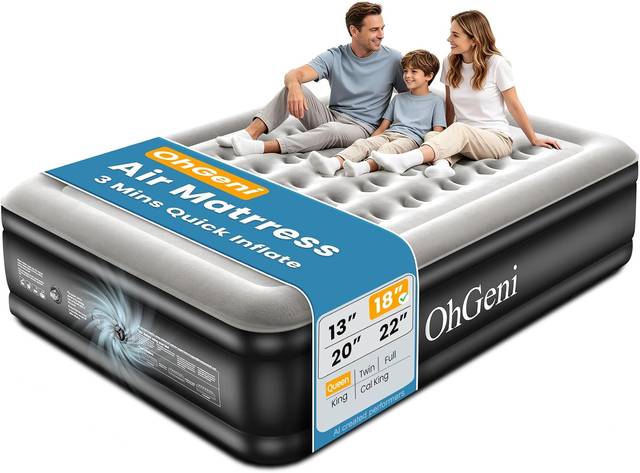
The Air Mattress Option: The OhGeni 18-inch raised queen is the only air mattress I've ever recommended for actual sleep. It inflates in two minutes flat, held air all night with no topping off, and I woke up without the usual aches after a week of slumming during a home renovation.
The 22-inch version is too tall for most people, but the 18-inch is a legitimate temporary bed.
The Luxury Trap: I won't cover boutique brands that cost more than a used car. If you're spending ~$5,000 on a mattress, you don't need my help. You need a financial advisor. Some of the best sleep I've had was on a ~$200 Amazon mattress. Some of the worst was on a ~$3,000 name-brand that felt like a firm marshmallow with a logo.
Should You Replace Your Mattress Today?
Here's the practical test. Strip your bed and look at the surface. If you see a visible dip, a sag, or a slope toward the center, you need a new mattress. If you can feel the slats through the foam, you need a thicker mattress. If you're waking up with aches that fade after you're up and moving, you need a new mattress. And if you've had yours for more than seven years, you're on borrowed time.
The good news is that you don't need to spend a fortune. The Novilla line has been my budget recommendation for years, and the 10-inch gel memory foam is the best value I've tested under ~$400. At that price, you're looking at roughly 34 cents a night over three years. You can't beat that.
I'll admit it, I was a skeptic about mattress-in-a-box purchases. I wanted to see, feel, and try a mattress in person before I'd put my name on it. But I've tested so many of these now that I've flipped. The good ones, the ones that arrive compressed and puff up in minutes, are legitimately as good as anything in a showroom, at half the price.
The key is knowing what you're buying. Read the reviews, look for the patterns, and check the thickness. If a hundred people say it fixed their back and ten say it sagged after six months, you need to decide which group you're in. My logbook says most of my patients land in the first group. That's the data that matters.