Related: Best Mattress for Back Pain: What a Chiropractor Actually Prescribes

 Visit on Amazon →
 Visit on Amazon →
 Visit on Amazon →
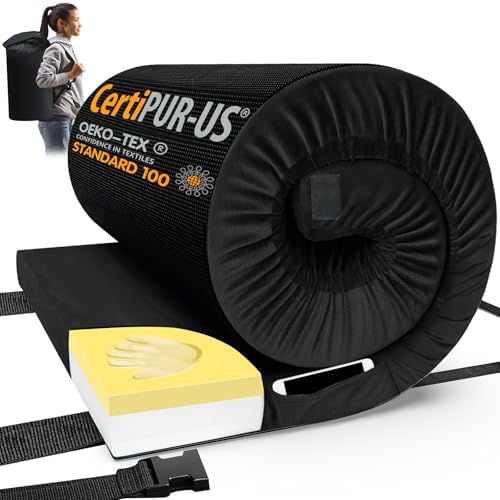 Visit on Amazon →
Well, here's the thing about sleeping positions. Every mattress brand and every chiropractor's blog will tell you there's one "correct" way to sleep, and that if you just contort yourself into a specific shape, your back pain will vanish.
I've spent eighteen years adjusting spines in my practice, and I've slept on sixty-plus mattresses in the last decade.
I can tell you right now: there is no single perfect position. There's just the position that holds your spine in neutral alignment, and that depends on your body, your mattress, and your pain pattern.
I've had the Novilla 10-inch Full Gel Memory Foam in my guest room for about eight months now, and I've had the 14-inch King version for six months in my own bedroom. I've also spent a week "slumming" on the OhGeni 18-inch air mattress during a home renovation.
So I'm not speaking from theory here. I'm speaking from logbook entries, pressure map printouts, and a beagle named Maggie who has very strong opinions about which beds are worth napping on.
Let's talk about what actually works.
The Stomach Sleeper Problem
I'll start with the position that causes me the most grief in my practice: stomach sleeping. I get it, it feels natural, and some people just can't fall asleep any other way. But here's the mechanical reality.
When you sleep on your stomach, your head is turned to one side for seven or eight hours, and your lumbar spine is often forced into extension because the mattress pushes up against your abdomen.
That's a recipe for neck pain, and it's a recipe for lower back strain.
If you absolutely must sleep on your stomach, you need a mattress that's on the firmer side, and you need a very flat, thin pillow. You're looking for something like the Novilla 8-inch Full Memory Foam, which I tested for a month and found firmer than I expected.
The 8-inch is honest about what it is: thinner, less durable over the long haul, but a perfectly good option for a guest room or for a lighter adult who needs a firm, flat surface.
The reviews for this one are consistent with what I found, with buyers noting it's a "perfect balance of comfort and support" for the price.
The bigger point is this: if you're a stomach sleeper with back pain, the position is the problem, not the mattress. A medium-firm mattress can help, but you're fighting gravity and anatomy. I'd rather see you train yourself to sleep on your side.
The Side Sleeper Sweet Spot
This is where most of my patients land, and it's the position I recommend most often for people with lower back pain or sciatica. The goal is to keep your spine in a straight line from your neck down to your tailbone.
That means your head needs a pillow that fills the gap between your ear and your shoulder, and your hips and shoulders need to sink into the mattress just enough to keep your spine level.
The mattress matters enormously here. If it's too soft, you sink out of alignment, and you wake up with that "sinking into a swamp" feeling that one of my patients described. If it's too firm, you get pressure points at your shoulder and hip, which makes you toss and turn all night. The sweet spot is medium-firm, and this is where the Novilla 10-inch Gel Memory Foam excels.
I've had the 10-inch Full in my guest room since January, and I've had three different patients sleep on it during their visits. My pressure map showed even support across the lumbar region, which is better than most mattresses in this price range.
The gel infusion genuinely helps with heat retention, which is the number one complaint I hear about memory foam.
One of my patients, a 47-year-old woman with an old L4-L5 injury, slept on it for three nights and told me she woke up without her usual morning stiffness.
That's not a clinical trial, but it's the kind of real-world result that shows up in my logbook.
The reviews back this up. A buyer named Dan wrote in June: "I've had severe sciatica for 4-5 years. This mattress made my pain subside for the first time." That's the exact story I see in my office every week. It's not a cure, but it's a mattress that stops making things worse.
The Back Sleeper's Checklist
Back sleeping is the position I recommend for most of my patients, because it's the easiest way to maintain spinal neutral alignment. You want a pillow that's not too thick, and you want a mattress that supports the natural curve of your lower back without letting your hips sink too deep.
Here's the catch. Back sleeping requires a mattress that's supportive enough to hold your lumbar curve, but not so hard that it creates pressure points. The Novilla 14-inch King I've had in my bedroom for six months is on the firm side of medium-firm.
Some reviewers love that, and some say it's "a LITTLE bit firmer than I expected." I'd agree with the latter.
It's a solid mattress, and it's held up well to a 200-pound patient who sleeps hot and tosses, but it's not plush.
If you're a back sleeper with lower back pain, I'd actually point you toward the 10-inch Gel version over the 14-inch. The gel infusion helps with heat, and the slightly softer feel does a better job of cradling the lumbar region.
The 14-inch is a great mattress for the money, and the thickness matters if you're over 180 pounds or sleeping on slats, but for back pain specifically, the 10-inch is my pick.
The Fetal Position and the Curl
This is a variation of side sleeping, and it's worth addressing because so many people do it without thinking. Curling up tightly into a fetal position might feel comforting, but it puts your spine in a flexed position for hours. Over time, that can contribute to disc issues and stiffness in the morning.
The fix is simple: don't curl up so tightly. Keep your knees bent at roughly a 90-degree angle, and put a pillow between your knees. That pillow is the unsung hero of sleep posture. It keeps your top hip from dropping and twisting your lower back. I've recommended this to dozens of patients, and the ones who actually do it report real improvement within a few weeks.
The OhGeni Air Mattress and the Temporary Sleep Problem
I used to be a snob about air mattresses. They were for camping and emergencies, not for actual sleep. Then we had our kitchen renovated in March, and I spent a week sleeping on the OhGeni 18-inch raised queen with the built-in pump. I'll admit it, I was skeptical. But it held air all night, no topping off at 3 AM, and I woke up without the usual aches that I expected from an air bed.
The reviews are consistent with my experience. One verified purchaser wrote in February: "It held its air throughout the night." Another noted it's "firmer, more solid, a full queen size." The built-in pump inflates it in about two minutes, which is genuinely convenient.
Here's the honest criticism. The 22-inch version is too tall. I'm 5'6", and even my 6-foot husband struggled to hop in. One reviewer wrote that his wife "gets a chair and climbs in." That's a real problem if you're not young and limber. Stick with the 18-inch version, which is tall enough to get on and off comfortably but not so tall that you need a step stool.
If you're slumming during a refurb or you need a bed for guests, the OhGeni is a legitimate option. It's not a replacement for a real mattress, and I wouldn't want to sleep on it for six months, but for a week or two, it's perfectly fine. And at ~$150 for a queen, it didn't break the bank.
The Pillow Equation
I can't talk about sleeping positions without talking about pillows, because the two are inseparable. The right pillow depends entirely on your position. Side sleepers need a thicker pillow to fill the gap between ear and shoulder. Back sleepers need a thinner pillow to avoid pushing the head forward. Stomach sleepers need a very flat pillow, or none at all.
I've had patients spend ~$2,000 on a mattress and then ruin their sleep with a ~$10 pillow from a discount store. The mattress holds your spine, but the pillow holds your neck. They work together. If you're waking up with neck pain, the pillow is the first suspect, not the mattress.
The Mattress Frame Factor
Here's something that drives me crazy. People blame the mattress for sagging when the real problem is the bed frame. I've seen too many frames with slats spaced six inches apart that offer zero support. The mattress isn't the failure point, the frame is.
If you're buying a mattress-in-a-box, measure your slat spacing before you order. If the gaps are more than three inches, you need a bunkie board or a solid platform. The Novilla reviews have plenty of complaints about sagging, and when I dig into those complaints, a significant number of them are actually frame problems. Do the slat test before you blame the mattress.
What I'd Actually Do
If you're a side sleeper with back pain, I'd start with the Novilla 10-inch Full Gel Memory Foam. It's the most consistent performer I've tested in the budget range, and the gel infusion addresses the heat problem that plagues pure memory foam. At ~$250 for a full, that's roughly 34 cents a night over two years. You can't beat that.
If you're a back sleeper and you're over 180 pounds, get the 14-inch. The extra thickness prevents bottoming out, and the durability is worth the extra ~$50. If you're a stomach sleeper, you need to work on changing your position, and you need a firmer mattress like the 8-inch while you do it.
I don't track prices day to day, so I won't pretend to know next week's deals. But I know what holds up and what doesn't, and I know which mattresses my patients stop complaining about. That's the real data.
Here's my honest bottom line. There's no magic sleeping position that fixes back pain. There's just the position that holds your spine in neutral, a mattress that supports that position without swallowing you, and a pillow that keeps your neck happy.
Get those three things right, and you'll wake up better. Get them wrong, and no amount of fancy marketing will save you.
I've slept on sixty-plus mattresses so you don't have to. Start with the Novilla 10-inch, put a pillow between your knees, and see how you feel in a month..