Related: How to Tell If Your Mattress Is Sagging (and When to Replace It)
Most of the back pain I treat in my Charlottesville clinic does not start at the gym. It starts in a bed that is nine years old and has a body-shaped divot in the middle. I have been a chiropractor for 18 years, and for the last decade I have slept on more than 60 mattresses so I can tell patients something more useful than "buy a firm one." A mattress in a box is where most of them end up shopping, because the prices are honest and the returns are simple. The problem is that the labels on those boxes are close to meaningless.
Here is what I tell patients before they click buy: firmness is personal, but support is universal. A mattress that does not hold your spine in alignment is a mattress that will hurt you, no matter how plush it feels on night one. This guide covers four beds at four different price points and four different jobs, from a queen hybrid built for couples to a twin that belongs in a guest room.
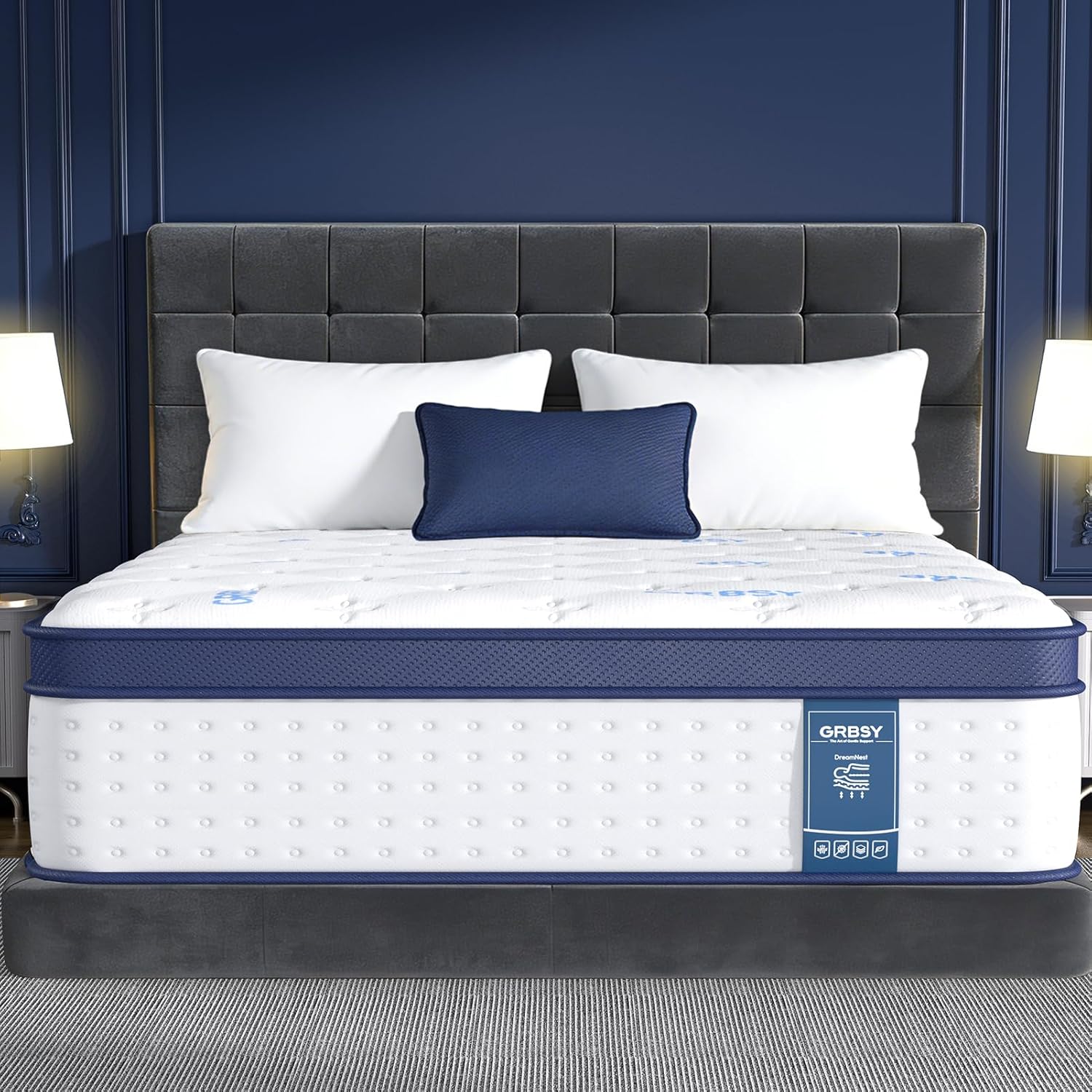
Best Overall: 14 Inch Queen Hybrid with 7-Zone Support
This is the one I would start with for most adults. It is a hybrid, which means pocket coils under a layer of cooling gel memory foam, and it is built in seven zones. Zoning is not a gimmick when it is done honestly. The idea is that the coil section under your hips is firmer than the section under your shoulders, so your hips do not sink lower than your spine wants them to. That is the whole ballgame for back sleepers.
The coils do two other jobs that foam cannot. They let air move through the mattress, which is the only cooling mechanism that actually works, and they hold the perimeter, so you can sit on the edge of the bed to put your socks on without sliding off. Edge support is one of my pet peeves. If the edge collapses under your weight, the usable sleeping surface is smaller than the mattress you paid for.
The terms here are the longest in this group: a 365-night trial and a 10-year warranty. That matters more than any spec sheet, because the honest test of a mattress is what it feels like in month eight, not night one. The feel is listed as medium firm, and I will say plainly that "medium" means something different at every brand. Sleep on it for 30 nights before you decide anything. If your lower back aches in the morning, that is data. If it does not, you are done.
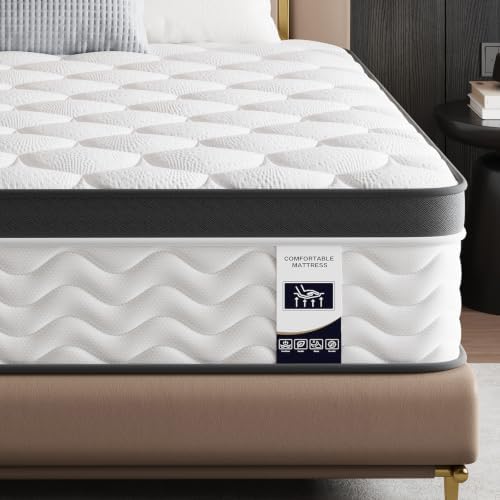
Best Value Hybrid: 12 Inch Full Size Hybrid in a Box
The full size is the forgotten mattress size, and I think that is a mistake. A full is 54 inches wide by 75 inches long. One adult sleeps well on that. Two adults who like each other can manage. Two adults who do not want to touch should be shopping for a queen, and that is a measurement decision, not a comfort decision.
What you get here is a 12 inch hybrid in a box, which is the same basic construction idea as the queen above at a smaller size and a lower number. For a teenager's room, a first apartment, or a guest room that gets used four times a year, this is the sensible buy. A hybrid at this size gives you the coil layer for airflow and edge support without paying for a queen footprint you do not have room for.
Two things to check on the listing before you buy, because I will not invent terms that are not published: the trial window and the warranty length. Those are the two numbers that decide whether a budget mattress is a good deal or a gamble. A cheap mattress that sags in year two was never cheap. Confirm the return policy in writing, and keep the box until you are sure.
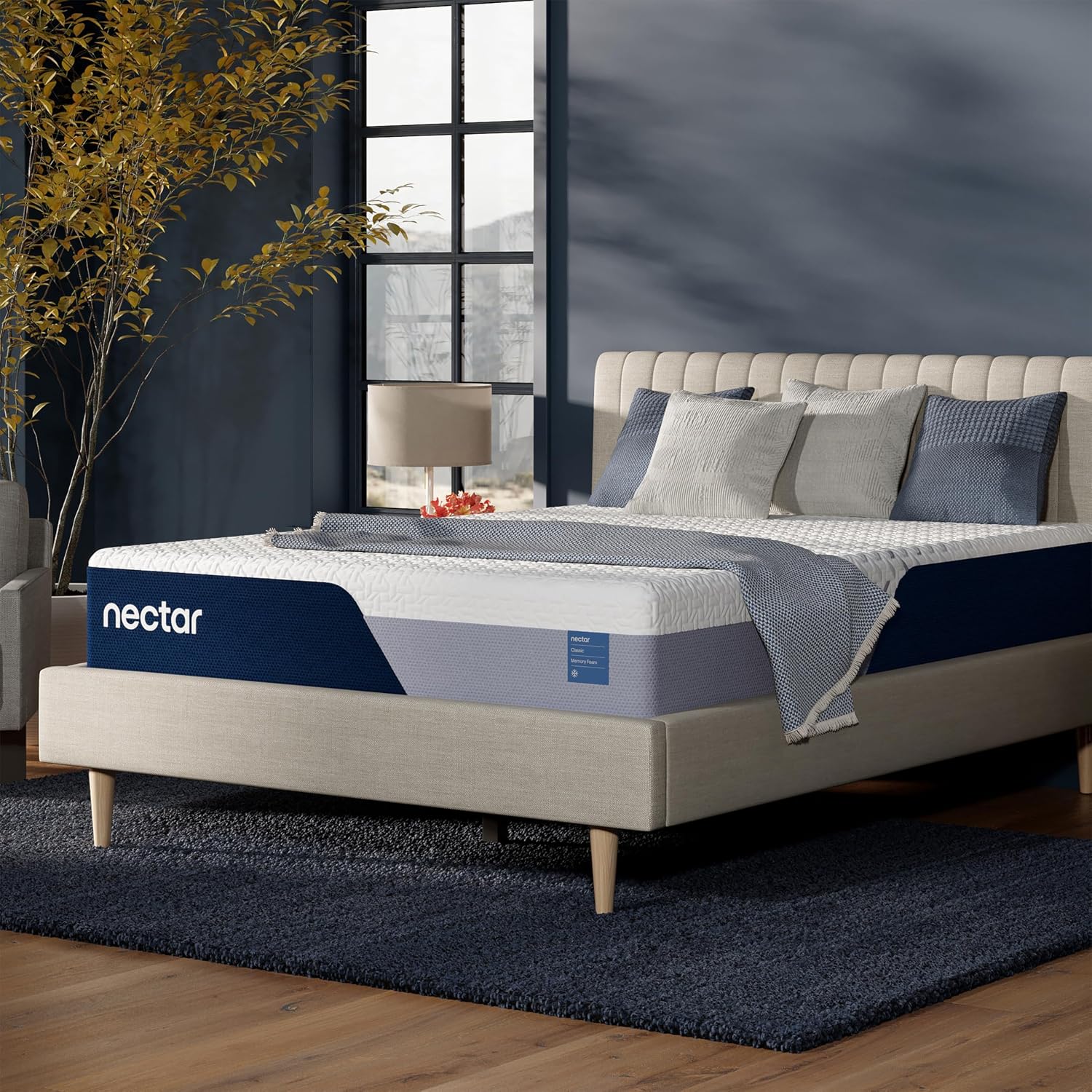
Best Firm Memory Foam: Nectar 12 Inch Memory Foam, Firm Feel
Memory foam is the material that started this whole category, and it still does one thing better than anything else: pressure relief. The trade-off is heat and motion transfer. Foam holds your shape, which is why your shoulders and hips stop complaining, and it also holds your body heat, which is why people wake up sweaty at 3 a.m. If you run hot, a hybrid with coils underneath is the better call.
Where firm memory foam earns its place is stomach sleeping. If you sleep on your stomach on a soft bed, your hips drop and your lower back arches all night. That is a recipe for a morning that starts with stretching. A firm surface keeps your spine flat, and that is the point of this mattress. It is a full size, 12 inches thick, with a one-year trial.
A year is a long trial, and it is there for a reason. Firm is the firmness people return most often, because they confuse "firm" with "supportive." They are not the same thing. Firm means less give. Supportive means your spine stays neutral. This bed is firm, and it is supportive if you sleep on your back or your stomach. If you are a side sleeper with wide shoulders, it may press into your shoulder in a way you will feel by morning.
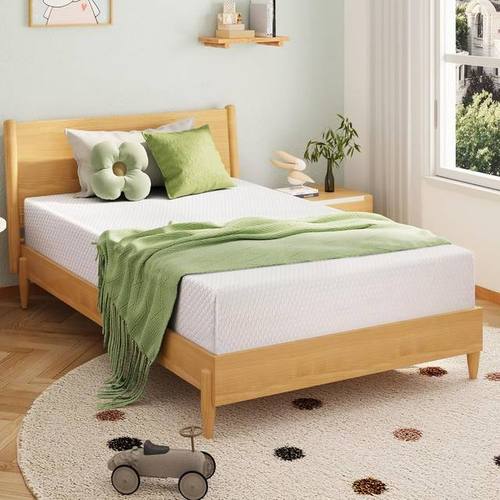
Best Small-Room Option: EGOHOME 8 Inch Twin
A twin measures 38 inches wide by 75 inches long, and this one is 8 inches thick with a green tea gel infusion in the foam and a medium firm feel. Green tea gel is a cooling additive, and I want to be honest with you about what that means. A gel infusion can pull heat away from the surface for a while. It is not air conditioning. No gel layer in any mattress is air conditioning. The only real cooling in a mattress comes from airflow, which is why coils beat foam on a hot night.
Where this bed makes sense is a kid's room, a dorm, a guest room, or an RV. Eight inches is thin, so there is not much foam between you and whatever is under the mattress. A 90-pound kid will never notice. A 200-pound adult will feel the base through it. That is not a flaw, it is physics, and it is the reason I would not put this in a master bedroom.
The CertiPUR-US certification is worth mentioning because it is one of the few labels in this industry that means something specific. It is a third-party standard for foam emissions and content, not a slogan someone typed onto a box. If you are buying a budget foam mattress for a child, that certification is the line I would not cross.
How I test a mattress
Every bed I recommend goes through the same four gates, and nothing skips them.
First, 30 nights of sleep. Not three. Not a weekend in a showroom. A mattress that feels wrong on night two can feel right on night twenty once your body stops fighting it, and the reverse is also true. Second, a pressure map. A sensor pad shows where your weight concentrates, and it does not care what the label says. That is the honest test of support, and it is the reason I do not trust the word "medium" from any brand. Third, an edge sit test. I sit on the perimeter, and I see whether the mattress holds me or dumps me. Fourth, a six-month durability check, because sagging in year two is the most common failure I see in this category.
I also test motion transfer, which is the partner test. If your spouse rolls over and you wake up, the mattress failed a real-world requirement that no spec sheet lists.
What the specs actually tell you
Thickness is not quality. A 14 inch mattress is not better than a 12 inch mattress because it is taller. Height usually means more foam layers or a taller coil unit, and both can help, but a tall mattress with low-density foam will still develop a divot. Foam density, the weight of the foam per cubic foot, is the number that predicts lifespan, and it is the number brands bury. Higher density costs more and lasts longer.
Coils change three things: airflow, edge support, and motion transfer. Airflow is real and it is the only cooling claim I take seriously. Edge support is real, and it matters every time you sit on the side of the bed. Motion transfer is worse with coils than with all-foam, so if you share a bed with a light sleeper, that trade-off is yours to make.
Trial length is the single most valuable line on any listing. It is the manufacturer admitting that firmness is personal. A 365-night trial and a 10-year warranty tell you more about confidence in the build than any diagram of foam layers.
The four mattresses side by side
| Mattress | Build | Feel | Best for | Price |
|---|---|---|---|---|
 Visit on Amazon → 14 Inch Queen Hybrid, 7-Zone Support |
Pocket coils, cooling gel memory foam | Medium firm | Couples, back sleepers, hot sleepers | $259.99 |
 Visit on Amazon → 12 Inch Full Size Hybrid in a Box |
Hybrid, coil and foam | Not published | Teens, guest rooms, first apartments | $209.99 |
 Visit on Amazon → Nectar 12 Inch Memory Foam |
All-foam memory foam | Firm | Stomach sleepers, back sleepers who want flat support | $599.00 |
 Visit on Amazon → EGOHOME 8 Inch Twin |
Memory foam with green tea gel, CertiPUR-US certified | Medium firm | Kids, dorms, guest rooms, RVs | $114.99 |
Should you buy the 14 inch queen hybrid?
Yes, for most adults. It is the only bed here with published long-term terms, and the coil core gives you airflow and edge support that foam alone cannot. If you share a bed and you run hot, this is where I would spend the money. Just give it 30 nights before you judge it.
Should you buy the 12 inch full size hybrid?
Yes, if the room is small or the sleeper is one person. A full is 54 inches wide, so measure your space and measure your sleeping partner's patience. Confirm the trial and warranty terms on the listing, because those decide whether the low price is a deal or a trap.
Should you buy the Nectar 12 inch memory foam?
Yes, if you sleep on your stomach or your back and you want a surface that will not let your hips sink. No, if you are a side sleeper with broad shoulders, or if you sleep hot. Memory foam holds your shape and your body heat in equal measure.
Should you buy the EGOHOME 8 inch twin?
Yes, for a child, a dorm, a guest room, or an RV. No, for a master bedroom shared by adults, because 8 inches of foam will let a heavier sleeper feel the foundation. The CertiPUR-US certification makes it a reasonable choice for a kid's room, which is where it belongs.