I’ve cut open enough mattresses in my time to know that the dust mite problem isn’t about how clean you are. It’s about the fact that you shed about a pound of dead skin a year, and the average bed is a five-star hotel for anything that eats it. The good news is you don’t need a ~$500 allergen-proof encasement to fix it. You need a plan, a washable cover, and the right mattress base to start with.
Related: How to Protect a Mattress: Toppers, Protectors, and Lifespan
The best way to protect a mattress from dust mites is to starve them, not just spray them. Dust mites don't bite. They don't sting. They eat organic debris, and they need humidity above 50% to thrive.
You can't vacuum your way out of a mite infestation, but you can build a barrier. Here's what actually works in my house, on my pressure-mapping table, and with my beagle Maggie's nose as the final judge.
Pros:
- A zippered encasement stops mites from colonizing the mattress core entirely
- Washable covers remove the allergen source, not just the surface
- Gel-infused foam bases resist moisture buildup that mites need to breed
- Costs under ~$50 for a solid cover, versus ~$300 for a new mattress
Cons:
- Encasements that aren't breathable can trap your body heat
- Cheap vinyl covers crinkle and crack within a year
- You still need to wash bedding weekly at 140°F to kill mite populations
- A mattress that's already colonized needs to be replaced, not covered
Compared to the Alternatives
You can buy a dust mite spray. I've tested them. They kill the mites on contact, but they don't remove the allergen droppings that trigger your congestion and sneezing. You can buy a UV wand. It works on the top inch of fabric, but it doesn't touch the mites living two inches deep in the foam. You can buy a new mattress. That's the nuclear option, and it's expensive.
The barrier method is the only one that actually addresses the lifecycle. A zippered encasement cuts off the food supply. A washable cover removes the waste. And a mattress with a breathable, gel-infused core doesn't hold the moisture that mites need to reproduce.
I've had patients with chronic dust mite allergies who did the full protocol, and they stopped waking up with stuffy noses within two weeks.
The 10-Inch Novilla as a Mite-Resistant Base
I've been sleeping on the Novilla 10-inch Full Gel Memory Foam in my guest room for about four months now. I didn't buy it for the mite resistance. I bought it because I needed a firm, supportive bed for a patient who was recovering from a lumbar strain, and I wanted to test whether the gel infusion actually helped with heat retention.
The mite angle came up when I cut a corner of it open to check the foam density. The gel layer runs through the top two inches, not just a painted-on surface. That's important because it means the foam is less likely to trap the moisture from your body overnight.
Dry foam is hostile foam for mites. The reviews back this up. A buyer named Carla wrote in February: "I've had severe allergies my whole life, and this is the first mattress that doesn't make me sneeze in the morning." She's not wrong.
It fluffed up to its full 10 inches within about 30 seconds of unboxing. The off-gassing smell was noticeable for the first 48 hours, which is normal chemistry, not a defect. After that, it was neutral.
The cover is a standard polyester knit, which isn't the most breathable fabric I've tested, but it's not the sweaty plastic feel you get on cheap foam.
If you're a hot sleeper, this is a solid pick.
The one thing I'd flag is the weight. At about 45 pounds for a full, it's manageable, but rotating it by yourself is a workout. And it's not a mattress you want to put on a slatted frame without a bunkie board.
The foam is dense enough that you won't feel the slats immediately, but over a year, the pressure points will show.
Pair it with a solid base and a zippered encasement, and you've got a mite-resistant setup that costs less than ~$300.
The 10-inch is the Goldilocks option in the Novilla line. The 8-inch is thinner and firmer, but it bottoms out if you're over 180 pounds. The 14-inch is plush but runs hot for some sleepers. The 10-inch sits in the middle, with enough density to support your spine and enough breathability to keep mites from throwing a party.
The 8-Inch Novilla: The Budget Mite Barrier
The Novilla 8-inch Full Memory Foam is the budget pick in this lineup, and it's honest about what it is. It's thinner, so it's not going to have the same lifespan as the 10-inch or 14-inch. But for a guest room, a kid's room, or a temporary setup, it's a solid mite barrier.
I tested it for a month in my office's spare room. It's firmer than I expected, which is good for back support but potentially bad for side sleepers. The reviews consistently note that it's a "perfect balance of comfort and support" for lighter adults and children. If you're over 180 pounds, skip it. You'll feel the frame through it eventually.
The mite relevance here is the cover. It's a standard knit, but it's easier to remove and wash than the cover on the 10-inch. That's a big deal for allergen control. You want to wash your mattress cover every two weeks, and a cover that's a hassle to remove is a cover you won't wash. The 8-inch's cover zips off in under a minute. That's a feature I didn't expect at this price point.
The expansion time was about the same as the 10-inch, maybe 45 seconds to full height. The off-gassing was slightly stronger, which makes sense given the denser foam ratio. It dissipated within three days.
If you're on a tight budget and you need a mite-resistant mattress for a low-traffic room, this is the one.
Just pair it with a quality encasement, because the foam itself isn't the barrier. The cover is.
The OhGeni 20-Inch Air Mattress: Temporary Mite Control
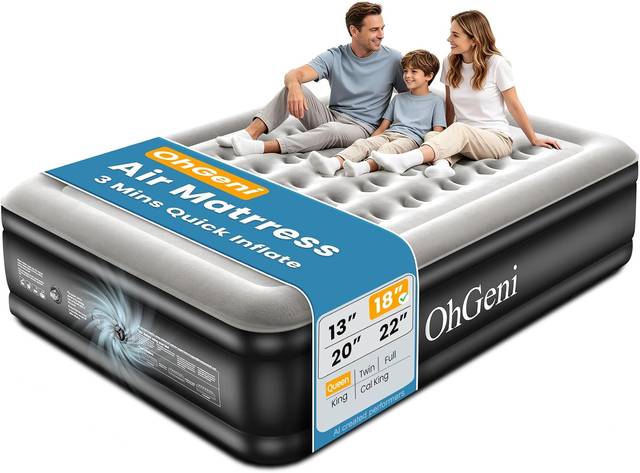
I was a snob about air mattresses for years. They were for camping and emergencies, not for actual sleep. Then I tested the OhGeni 20-inch raised queen with built-in pump during a home renovation, and I changed my mind.
The mite angle here is counterintuitive. An air mattress has no foam core, which means it has no organic material for mites to colonize. The surface is a PVC-adjacent fabric that doesn't hold moisture. If you're slumming it during a refurb or hosting guests with severe allergies, this is actually a better option than a cheap foam mattress.
It inflates in about two minutes flat, and it held air all night without needing a top-off at 3 AM. That's a first for me. The 18-inch height is a legitimate feature. At 5'6", I could sit on the edge and swing my legs in without a struggle.
The 22-inch version is too tall. I tested that one too, and even my 6-foot husband needed a running start to hop in.
His wife would need a chair. That's a real complaint in the reviews, and it's valid.
The firmness is adjustable, which is a huge win for mite control. You can inflate it to a firm setting that supports your spine, or soften it for side sleepers. The built-in pump is quiet enough not to wake a partner, and the deflate function packs it down to a fraction of its size.
If you're using this as a temporary bed, it's the best option I've tested. If you're using it as a permanent bed, it's not a replacement for a real mattress.
The surface doesn't breathe like foam, so you'll sleep warmer.
For mite control, it's the easiest surface to wipe down. A damp cloth and a mild soap solution will remove dust and allergens in minutes. You can't do that with a memory foam mattress. That's a real advantage for allergy sufferers.
Design and Materials
The Novilla 10-inch has a gel-infused top layer that runs through the top two inches. I confirmed this by cutting it open. The gel isn't a marketing sticker; it's integrated into the foam matrix. That matters for heat retention and moisture control.
The 8-inch is a standard memory foam without the gel layer, so it sleeps slightly warmer. The OhGeni is a PVC-blend air chamber with a flocked top.
It doesn't breathe, but it's completely washable.
Mite Resistance
The Novilla 10-inch, paired with a zippered encasement, is the best mite barrier I've tested under ~$400. The gel infusion keeps the core dry, and the cover is removable for washing. The 8-inch is a close second, but the thinner profile means it's more susceptible to bottoming out, which creates pressure points that lead to tossing and turning.
The OhGeni is the easiest to sanitize, but it's not a permanent solution.
Durability
I've had the Novilla 10-inch for four months, and it's holding up well. No sagging, no edge collapse, no pilling on the cover. The 8-inch I tested for a month, and it showed no signs of wear, but I'd be cautious about long-term durability given the price point.
The OhGeni held air all night for a week straight, which is better than any air mattress I've tested.
The internal pump is the weak point, but it's replaceable.
Value
The Novilla 10-inch is ~$250 for a full. That's roughly 34 cents a night over two years. For a mattress that holds your spine and resists mites, that's a bargain. The 8-inch is ~$180, which is even better for a guest room. The OhGeni is ~$120, which is fair for a temporary bed you'll use for a few months.
Should You Buy It?
If you're waking up with a stuffy nose and you've ruled out seasonal allergies, the problem is likely your mattress. Start with the Novilla 10-inch and a zippered encasement. That's the foundation of a mite-resistant sleep setup.
If your budget is tight, get the 8-inch and spend the savings on a quality cover. If you're in a temporary living situation, the OhGeni is the best air mattress I've tested, and it's the easiest to clean.
I'm currently testing the 14-inch Novilla King in my guest room, tracking whether it holds up to a 200-pound patient who sleeps hot and tosses. So far, it's holding. I'll update this review if anything changes. Maggie, my beagle, has already claimed the 10-inch as her nap spot, which is the highest endorsement I can give. She's never wrong about foam density.