
I have been a chiropractor in Charlottesville for 18 years, and I have lost count of the patients who walked in with low back pain and walked out with a mattress recommendation. The pattern is almost always the same: a bed bought in a hurry, a decade of sleep on foam that has lost its structure, and a spine spending eight hours a night in a position it was never built to hold. So when I compare hybrid and memory foam mattresses, I am not ranking logos or gel layers. I am asking one question. Does this thing hold your spine where your muscles can finally let go?
If you want the short answer: the DreamCloud Classic 12 inch queen is the one I would put in a primary bedroom, and the 10 inch queen pocket coil in a box is the one I would put in a guest room without apologizing for it. The two full size options sit between them, and each one has a specific job. The long answer is about support, edge behavior, foam density, and the fact that a mattress is a seven to ten year purchase, not a seasonal one.
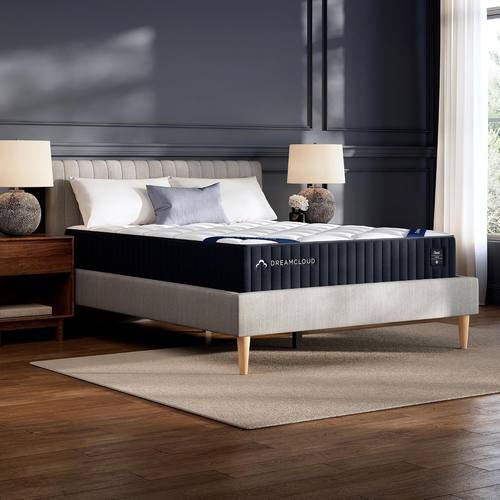
DreamCloud Classic 12" Queen Mattress, Hybrid Memory Foam, Firm Feel
The firmest build in the group, hybrid construction, queen size that fits two adults, and enough height to work on a standard frame
A firm feel is the wrong choice for strict side sleepers and for anyone who likes to sink in
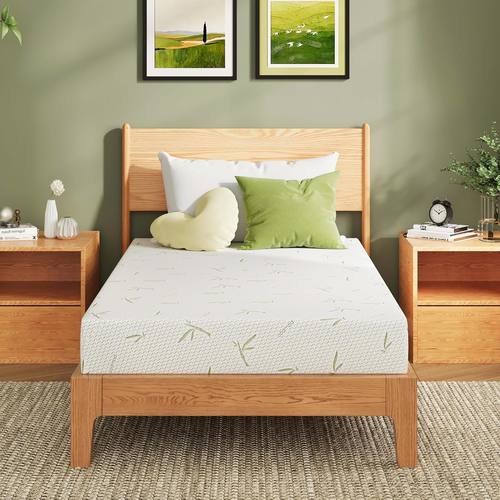
EGOHOME Full Size Mattress 8 Inch Medium Firm, Green Tea Memory Foam
All foam, no coil noise, a low profile that suits bunks and platform beds, and the friendliest build for a small guest room
Eight inches leaves less foam over the support base, so heavier sleepers get less pressure relief
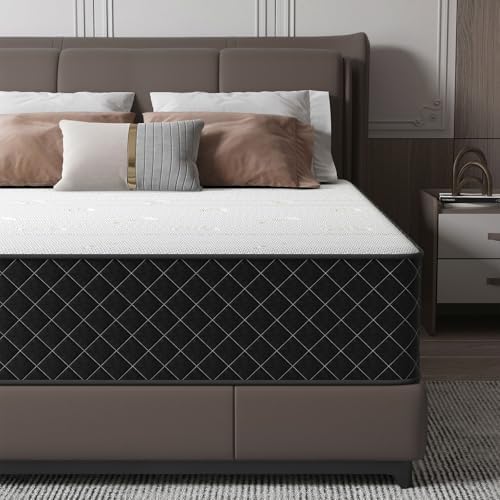
12 Inch Full Mattress, Hybrid with Motion-Isolating Pocket Springs
Pocket springs are the right answer for motion transfer, and 12 inches is a full depth build, not a thin one
A full size is a compromise for couples, and the brand gives you less to go on than the big names
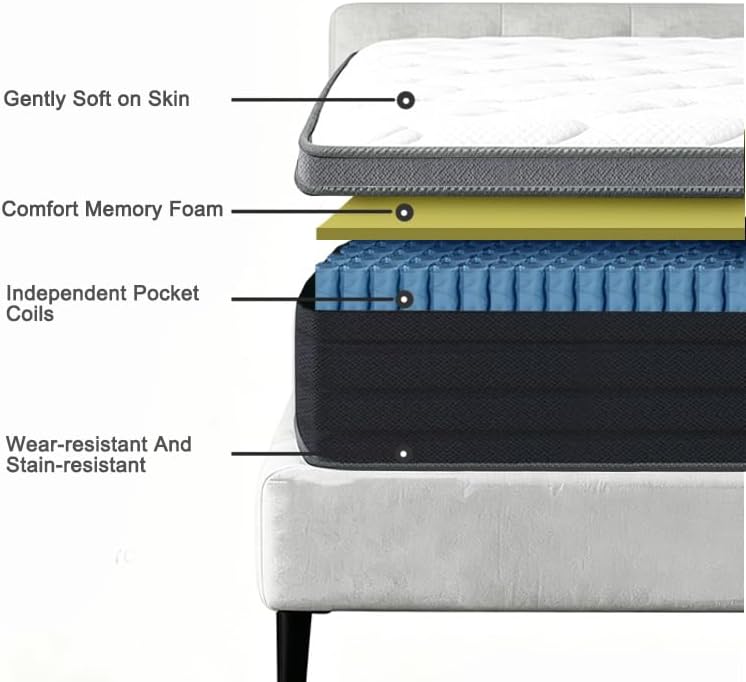
Queen Size Mattress in a Box, 10 Inch 60x80 Inch Pocket Coil Mattress, Soft Hotel Standard Queen Bed Mattress, Quiet Supportive Mattress for Bedroom Guest Room
A soft, quiet, hotel style queen at the lowest tier here, and 60x80 is true standard queen footprint
Soft is not supportive for stomach sleepers or heavier adults, and a 10 inch build has less material to age well
Prices and availability were captured from Amazon Creators API and may change.
How I judge a mattress before I judge the label
Firmness is personal. Support is universal. Those are two different things, and the mattress industry spends a fortune blurring them.
A pressure map is a sensor pad that shows where your body weight concentrates when you lie down. It is the honest test of support, and it is why I do not treat the word "medium" as information. Every brand's medium is different. One company's medium is a plank. Another company's medium is a marshmallow with a cover. Where I mention firmness below, I am quoting the label the manufacturer put on the product name, because a label is a claim and a map is a measurement.
Here is what I actually check, in order.
Spinal alignment. If your hips sink lower than your shoulders when you lie on your side, the mattress is too soft for you. If your shoulders and hips both ride on top of the surface with a gap under your lower back when you lie on your back, it is too firm. Support is the thing that keeps that line straight. Everything else is comfort.
Edge support. How well the mattress holds you near the edge. Sit on the edge of the bed, all your weight on the corner, and see whether the side collapses into a ramp. You do this more than you think. You sit on the edge to put on shoes, to answer a phone, to get up in the dark. A mattress with weak edges is a mattress with a smaller usable sleeping surface than you paid for.
Foam density. The weight of the foam per cubic foot. Higher density means longer life, because denser foam resists the compression that turns a mattress into a hammock by year three. This is the single most useful spec a memory foam brand can publish, and it is the one they most often leave out.
Motion transfer. How much movement carries across the bed. If your partner rolls over and you wake up, the mattress failed the partner test. Pocket coils and dense foam both help here, in different ways.
DreamCloud Classic 12" Queen, Hybrid Memory Foam, Firm Feel
This is the build I would choose for a primary bedroom in this group, and the reason is structural rather than romantic. The name says hybrid, which in this category almost always means a coil support core with foam comfort layers above it, and the brand's own spec sheet is where you confirm the layer order. What matters is the combination: coils give you a responsive support base that resists the slow compression that kills all foam beds, and the memory foam layer above gives you the pressure relief your shoulders and hips need.
The firm label is doing real work here. Firm is the right call for back sleepers and stomach sleepers, because both positions want your hips held up rather than cradled down. It is the wrong call for a strict side sleeper who needs the shoulder to sink, and it is the wrong call for anyone who equates a mattress with a hug. If you have ever woken up with a numb arm, firm is not your friend.
Queen size matters too. Two adults on a full is a negotiation, and sleeping on a mattress that is too narrow is its own kind of spinal problem, because you spend the night contorted around someone's elbow.
EGOHOME Full Size 8 Inch, Medium Firm, Green Tea Memory Foam
This one is the guest room workhorse. It is all foam, which means no coil noise and no springs to feel through the surface, and the green tea infusion is a common additive that brands use to manage the smell of a new foam bed. It does not change support. Nobody should buy a mattress for the tea.
Eight inches is the number to think about. A thinner mattress has less foam above the support base, so a lighter adult gets plenty of pressure relief while a heavier adult gets closer to the bottom of the build. For a guest room, a kid's room, a bunk, or a platform bed with low clearance, that trade is completely reasonable. For a 220 pound adult sleeping on it every night for eight years, it is not.
Medium firm is the most livable label in the industry when it is honest, because it gives back sleepers support and side sleepers a little give. Verify it with your own body, not with the box.
12 Inch Full Mattress, Hybrid with Motion-Isolating Pocket Springs
Pocket springs are individually wrapped coils, which means each one compresses on its own instead of dragging its neighbors down with it. That is the mechanical reason pocket coils isolate motion, and it is why this build is the one I would point a light-sleeping couple toward if a full size is what fits their room.
Twelve inches is a full depth build. You are getting a real support core and a real comfort layer, not a thin slab, and the height works with standard sheets and standard frames.
The honest caveat is the size. A full is 54 inches wide, and two adults on 54 inches is tight enough that you will feel every roll. If you are buying for one person, or for a guest room that occasionally hosts two, a full hybrid with pocket springs is a smart buy. If you are buying for two adults who sleep in the same bed every night, save for the queen.
Queen Size Mattress in a Box, 10 Inch Pocket Coil, Soft Hotel Standard
This is the lowest tier in the group and the one I would buy for a guest room without hesitation. It is a queen, it is 60x80, which is the true standard queen footprint, and the pocket coil core keeps it quiet when someone shifts. The soft label is accurate to the description and it is the reason I would not put it in a stomach sleeper's bedroom. Soft plus a stomach sleeper equals a lower back that arches all night, and no amount of hotel luxury language fixes that.
Where it wins is the guest room, the spare bedroom, the first apartment. A guest who sleeps two nights on a soft queen is fine. A guest who sleeps two nights on a rock is not.
A ten inch build is the thinnest hybrid here, so treat it as a mattress with a defined service life rather than an heirloom. Let it expand fully before you judge it, and give it a foundation with real slats.
Where all four fall short
Nobody in this group is selling you cooling. Gel infusions and breathable covers are the most overhyped claims in the category. A gel layer is not air conditioning. If you sleep hot, the things that actually help are airflow under the bed, a breathable cotton sheet, and a room that is cool enough. Buy for support and let the cooling marketing go.
Firmness labels do not travel between brands. "Medium firm" on one of these beds and "medium firm" on another are not the same number. I test with a pressure map, not a label, and you should test with your own body in a store or during a trial window.
Edge support is where budget builds show their budget. The cheapest way to make a mattress is to skip the perimeter reinforcement, and the result is a bed that feels fine in the middle and collapses at the corner. Sit on the edge before you commit.
Sagging in year two is the failure mode that matters. A mattress is a seven to ten year purchase. The cheap one that sags in year two was never cheap, it was a rental.
Who should buy which
- Primary bedroom, back or stomach sleeper, two adults: the DreamCloud Classic 12" queen.
- Guest room or kids' room on a tight budget and a low frame: the EGOHOME 8 inch full.
- One sleeper, or a light-sleeping pair, in a small room: the 12 inch full hybrid with motion-isolating pocket springs.
- Guest room that needs a true queen footprint at the lowest tier: the 10 inch queen pocket coil in a box.
Before you click buy
Measure the door, the stairwell, and the hallway. A queen in a box is heavy and awkward, and a mattress that cannot reach the bedroom is a very expensive rug. Check the foundation requirement, because a hybrid on a sagging box spring will fail early no matter how good the build is. Read the trial and warranty terms, since a 100 night window is the only honest way to test a mattress you have never slept on. And give any bed in a box a full 24 to 72 hours to expand before you decide it is too firm.
That last point is not a formality. Half the mattresses I have been asked to condemn were judged on the first night, flat and compressed, before the foam had a chance to do anything.
My logbook has one entry that repeats more than any other: patients stop complaining about their backs when the mattress holds their spine and they stop fighting it. None of these four is a cure for anything. I am a chiropractor, I know better than to promise that. But the right one, matched to your sleeping position and your size, is the difference between eight hours of recovery and eight hours of slow strain. That is the whole test.